 Daniel Okoye
Property inheritance is one of the most common ways people become land or house owners in Nigeria. At the same time, it is also one of the biggest sources of disputes, confusion, and long-running family conflicts. Many inherited properties remain unusable or unsellable for years because ownership is not properly understood or documented.
Understanding how inheritance affects property ownership can help families avoid disputes and protect the value of what was left behind.
What Property Inheritance Means
Property inheritance happens when a property owner dies and their land or building passes to family members or beneficiaries. This transfer can happen through a written will or through customary, religious, or statutory laws if no will exists.
In Nigeria, inheritance does not automatically mean full ownership by one person. In many cases, multiple people inherit the same property jointly, which directly affects how that property can be used, developed, or sold.
Ownership When There Is a Will
When a deceased person leaves a valid will, property ownership is generally clearer. The will specifies who gets what and in what proportion.
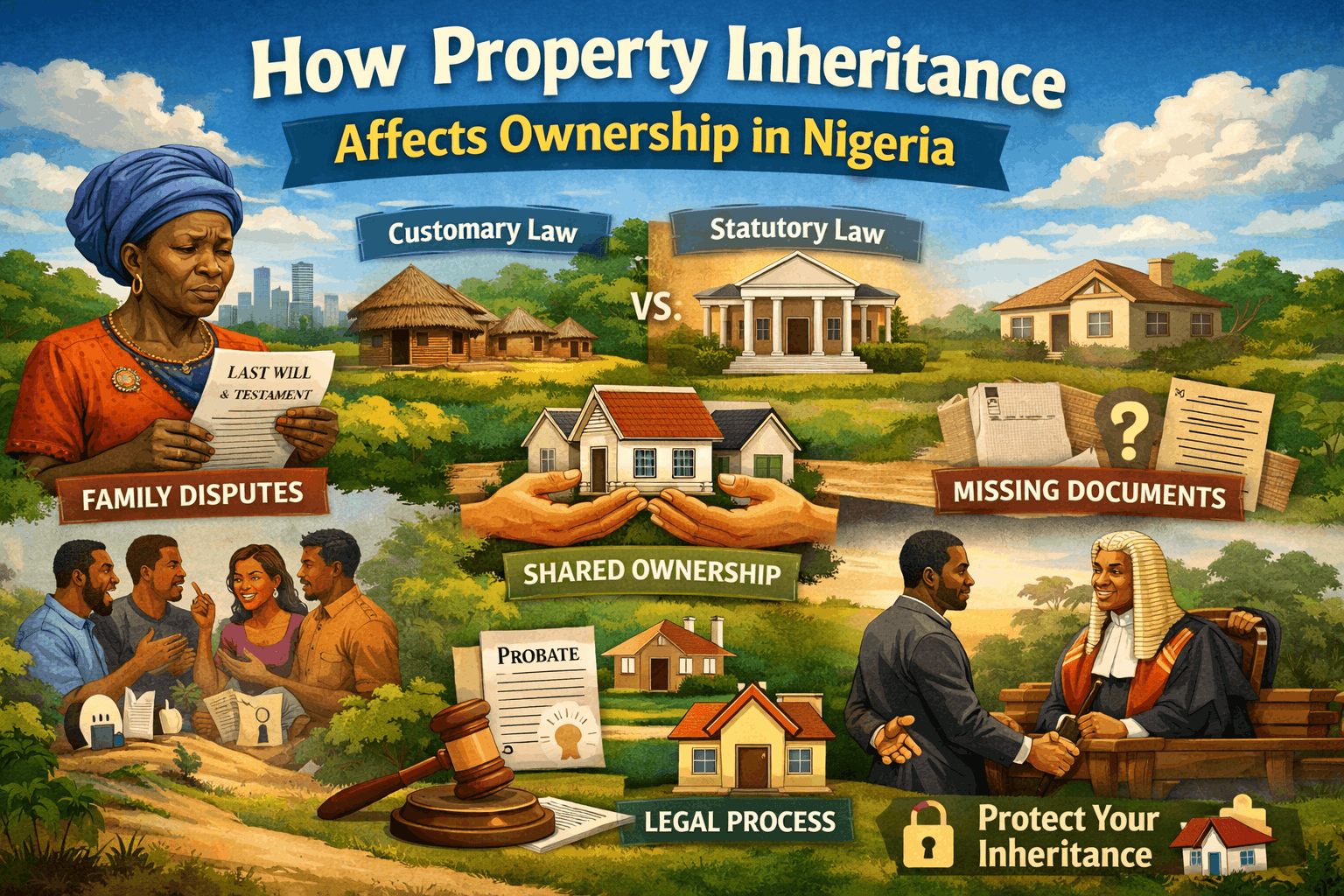
However, even with a will, ownership does not immediately transfer. The beneficiaries must go through a legal process called probate. Probate gives legal authority to carry out the instructions in the will and formally recognize the beneficiaries as the new owners.
Until probate is granted, beneficiaries may live in or manage the property, but they do not yet have full legal ownership. This delay often causes problems when someone tries to sell, lease, or use the property as collateral.
Ownership When There Is No Will
When there is no will, property inheritance becomes more complicated. Ownership is determined by customary law, religious law, or statutory law, depending on the family background and location.
In many Nigerian families, inherited property becomes family or communal property. This means all eligible heirs jointly own the property. No single person has exclusive ownership unless the family formally agrees to divide or transfer it.
This joint ownership often leads to restrictions. One family member cannot legally sell or mortgage the property without the consent of the others. Even development decisions may require collective agreement.
Family Property and Shared Ownership
Family property is one of the most common outcomes of inheritance in Nigeria. In this situation, ownership belongs to the family as a unit rather than to individuals.
Shared ownership affects property use in several ways. Decisions must be made collectively, disagreements can stall progress, and documentation is often neglected because no one feels solely responsible. Over time, this can reduce the value of the property and increase the risk of external claims or encroachment.
In many cases, younger generations inherit a property but do not know its exact boundaries, documents, or legal status, making future ownership even more uncertain.
How Inheritance Affects the Right to Sell Property
One major effect of inheritance on ownership is the ability to sell. An inherited property cannot be legally sold unless all rightful owners agree or a court authorizes the sale.
Many property disputes arise when one family member secretly sells inherited land without consent. Such sales are often challenged later and may be declared invalid, leading to losses for buyers and further family conflict.
Proper ownership documentation and clear agreement among beneficiaries are essential before any sale can take place.
Impact on Property Documentation
Inheritance often creates gaps in documentation. Original documents may be missing, outdated, or still in the name of the deceased owner. Without updating these documents, ownership remains unclear in the eyes of the law.
To fully secure ownership, inherited property should be properly transferred through legal processes. This may include probate, letters of administration, deed of assent, and updating land records.
Failure to complete these steps leaves the property vulnerable to disputes, government acquisition issues, or rejection during transactions.
Customary Practices and Ownership Challenges
Customary inheritance practices play a major role in Nigeria. In some traditions, certain family members may be excluded or given limited rights to inherited property. These practices can conflict with statutory laws, creating confusion over who truly owns the property.
When customary practices are followed without legal backing, ownership becomes difficult to defend in court. This is why inherited property should be regularized legally, even when family agreements exist.
How Disputes Change Ownership Outcomes
Inheritance-related disputes can drastically affect ownership. Court cases can freeze property use for years, prevent development, and reduce market value. In extreme cases, properties become abandoned because no one can legally act on them.
Disputes also strain family relationships and can split ownership into complex shares that are difficult to manage.
How to Protect Ownership of Inherited Property
To protect ownership, families should clarify beneficiaries early, document agreements in writing, and complete all legal processes required to transfer ownership. Seeking professional guidance helps ensure that inherited property remains secure and usable.
Clear ownership allows families to develop, lease, or sell property without fear of future challenges.
Final Thoughts
Property inheritance shapes ownership in powerful ways in Nigeria. While it can be a valuable way to build generational wealth, it can also create long-term problems if not handled properly. Understanding how inheritance affects ownership helps families make informed decisions, protect their assets, and avoid disputes that can last for decades.
Proper documentation, clear agreements, and legal recognition are the foundations of secure ownership for inherited property.

 Daniel Okoye