 Daniel Okoye
Death is a sensitive but inevitable part of life, and beyond the emotional loss families experience, there are legal and administrative responsibilities that must be fulfilled. One of the most important of these responsibilities is obtaining a death certificate. In Nigeria, a death certificate is the official government document that confirms a person’s death and records when, where, and how it occurred. Without it, families may struggle to access bank accounts, claim insurance, process inheritance, or complete burial arrangements.
Understanding how death certificates are issued in Nigeria can help families avoid confusion, delays, or exploitation during an already difficult time. This article explains the process clearly, including the authorities involved, requirements, steps, and common challenges.
What is a Death Certificate?
A death certificate is an official document issued by the government that legally confirms a person has died. It typically contains:
• Full name of the deceased
• Date of birth or age
• Date and time of death
• Place of death
• Cause of death
• Gender and occupation
• Informant’s details
• Official stamp and signature
In Nigeria, this document is recognized for legal, financial, and administrative purposes nationwide.
Authorities Responsible for Issuing Death Certificates
Several institutions play roles in death registration and certification:
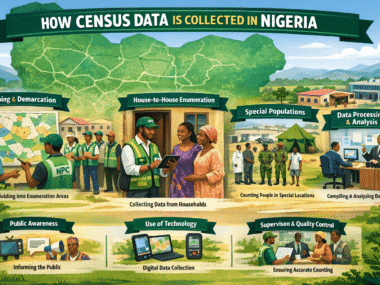
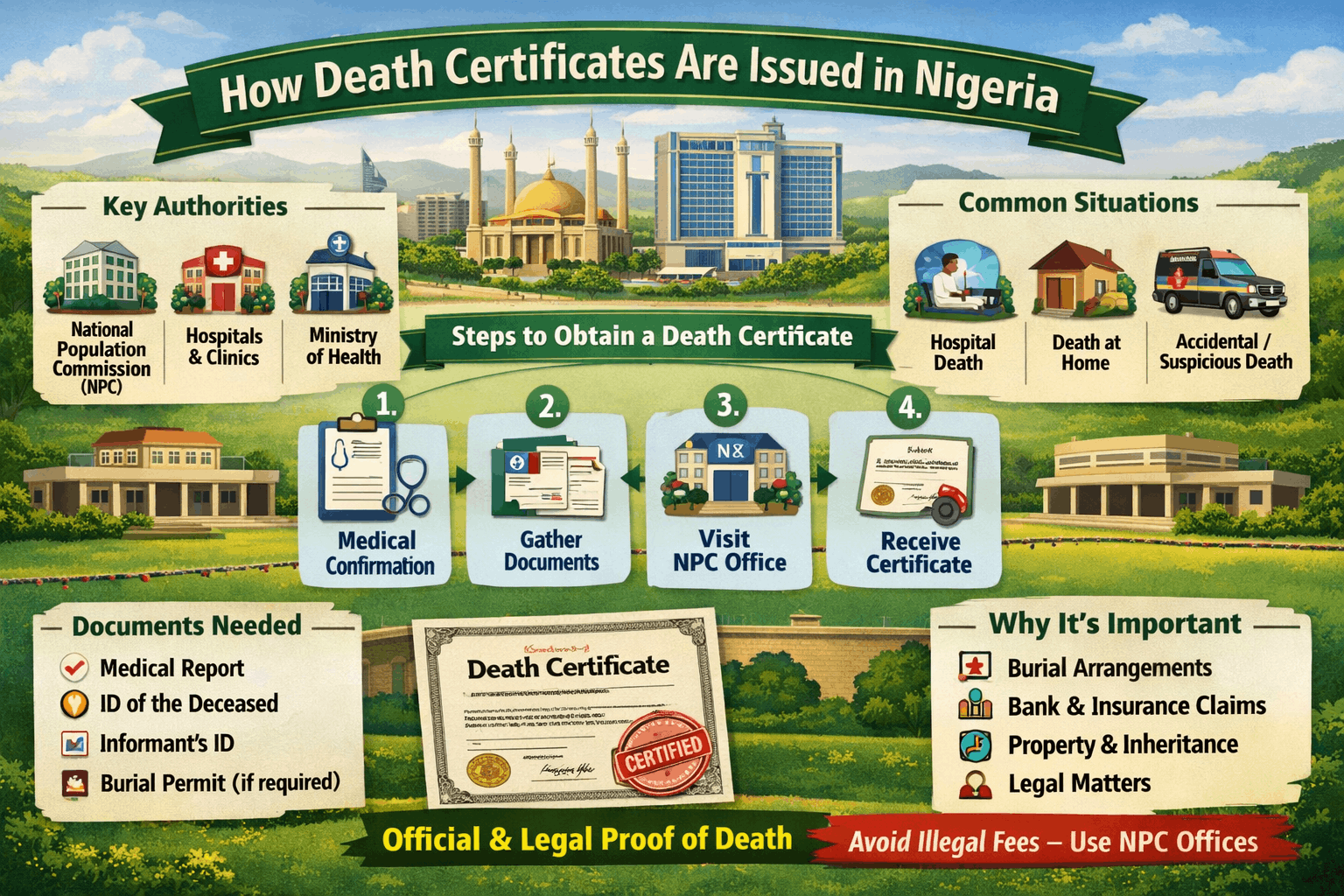
1. National Population Commission (NPC)
This is the primary government body responsible for civil registration in Nigeria. NPC handles:
• Birth registration
• Death registration
• Issuance of official certificates
Most official death certificates are eventually processed and issued through NPC offices.
2. Hospitals and Health Facilities
Government and private hospitals certify the medical cause of death when someone dies under medical supervision.
3. State Ministries of Health
For example, the Lagos State Ministry of Health oversees hospital procedures and may authenticate medical reports before civil registration.
4. Local Government Councils
Some local government offices assist with registration, especially in rural communities.
Types of Death Situations in Nigeria
The process depends on how and where the death occurred.
Natural or Hospital Death
If a person dies in a hospital due to illness or natural causes:
• A doctor confirms death
• A medical report is prepared
• Cause of death is documented
This is usually the simplest process.
Death at Home
If death occurs at home:
• Family reports to nearest hospital or police
• A doctor or authorized health officer may examine the body
• A medical confirmation is issued
Accidental or Suspicious Death
If death is caused by accident, violence, or unknown reasons:
• Police must be informed immediately
• Investigation may occur
• Autopsy may be required
• Coroner’s report is issued
The certificate is only processed after legal clearance.
Step-by-Step Process of Getting a Death Certificate
Step 1: Obtain Medical Confirmation of Death
This is the first and most important step.
If death occurs in a hospital:
• The attending doctor issues a Medical Certificate of Cause of Death (MCCD)
If death occurs outside a hospital:
• A doctor or coroner examines the body
• A report is issued
Without this confirmation, you cannot proceed.
Step 2: Gather Required Documents
Family members or representatives must prepare:
• Medical certificate or doctor’s report
• National ID or any identification of the deceased
• Informant’s ID (family member or guardian)
• Passport photograph (sometimes required)
• Burial permit (in some states)
Step 3: Visit the NPC Office
Take all documents to the nearest NPC registration center.
At the office:
• You fill out a death registration form
• Provide personal and family information
• Submit supporting documents
• Officials verify details
Step 4: Registration and Entry into Records
NPC staff record:
• Identity of the deceased
• Cause of death
• Date and place
• Informant details
The information is entered into the national civil register.
Step 5: Issuance of Death Certificate
After verification:
• An official death certificate is printed
• Stamped and signed
• Given to the applicant
Processing time can range from same day to several days depending on location.
Cost of Death Certificates in Nigeria
Generally:
• Registration is officially free or very low cost
• Small administrative charges may apply
• Extra copies may require additional fees
However, costs may vary by state or local government. Families should always insist on official receipts to avoid exploitation.
Why Death Certificates Are Important
A death certificate is not just paperwork. It is legally required for:
• Burial and funeral arrangements
• Bank account closure
• Insurance claims
• Pension processing
• Transfer of property
• Probate and inheritance
• Court cases
• Immigration matters
Without it, families may face serious legal and financial delays.
Common Challenges Families Face
Lack of Awareness
Many people don’t know registration is mandatory, especially in rural areas.
Delays
Bureaucracy can slow down processing, particularly when:
• Records are incomplete
• Cause of death is unclear
• Police investigations are ongoing
Corruption
Some officials may demand illegal fees. Families should report such practices.
Rural Access Problems
Remote communities may not have nearby NPC offices, making registration difficult.
Tips for a Smooth Process
To avoid stress and delays:
• Register the death immediately
• Keep hospital reports safe
• Use only official NPC offices
• Avoid middlemen or agents
• Request receipts for any payment
• Collect multiple certified copies
Digital Improvements in Death Registration
Nigeria is gradually modernizing civil registration. NPC has started introducing:
• Digital record keeping
• Centralized databases
• Faster processing
• Better tracking of statistics
These improvements aim to reduce fraud and improve national data accuracy.
Legal Importance of Death Registration
Death registration is also important for government planning. It helps authorities:
• Track mortality rates
• Monitor diseases
• Plan healthcare services
• Allocate resources
• Develop public health policies
Without accurate death records, national planning becomes difficult.
Conclusion
Obtaining a death certificate in Nigeria may seem complicated during a period of grief, but understanding the process makes it manageable. The key steps include medical confirmation, proper documentation, and registration through the National Population Commission.
Families should treat death registration as a priority, just like birth registration. Beyond fulfilling legal requirements, it protects the rights of survivors and ensures smooth handling of estates, benefits, and property.
By following the proper procedures and dealing only with official institutions, Nigerians can obtain death certificates without unnecessary stress or extra costs.

 Daniel Okoye