 Daniel Okoye
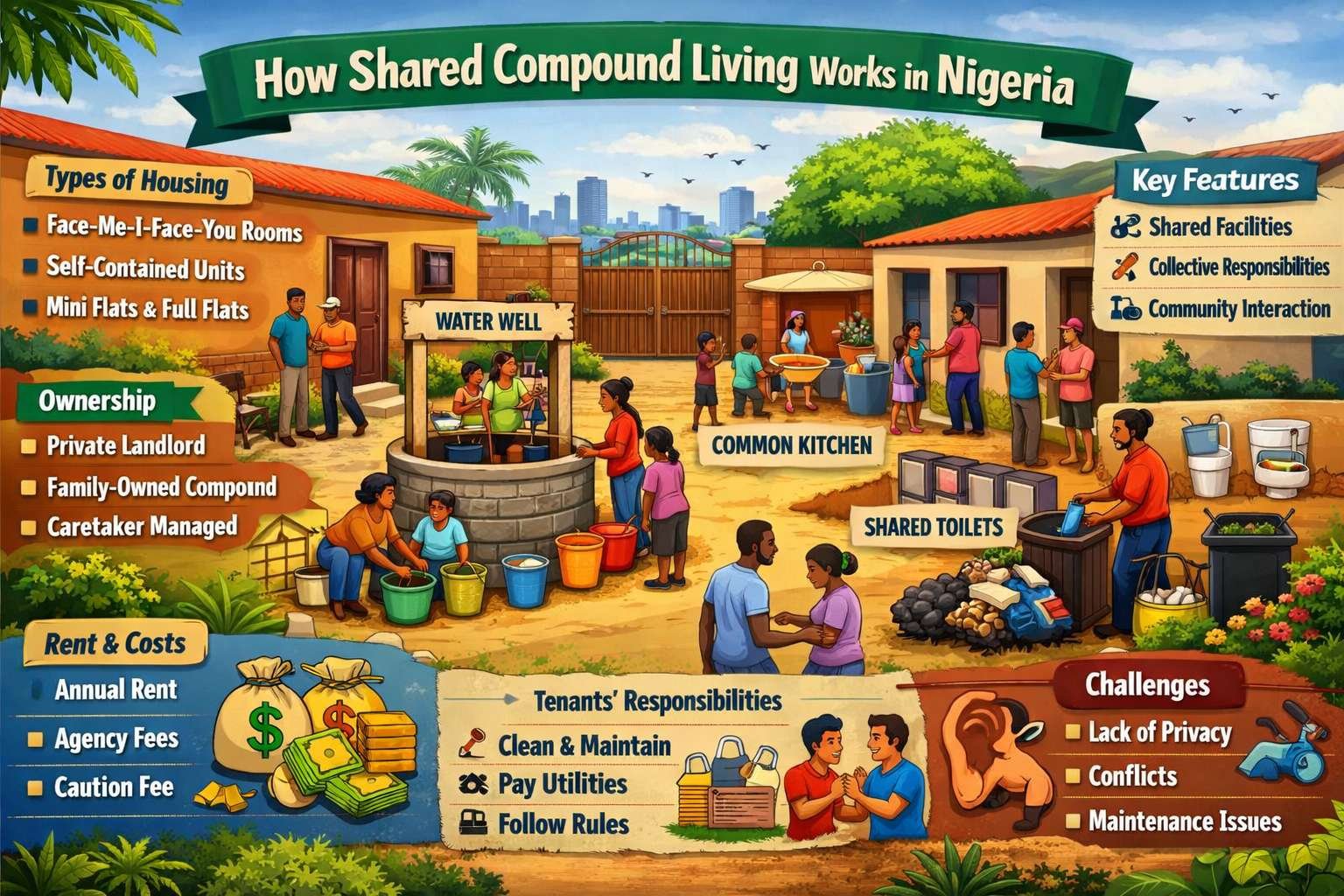
Shared compound living is one of the most common housing arrangements in Nigeria. It involves multiple individuals or families living within the same fenced property (compound) while occupying separate rooms or flats and sharing certain facilities. This lifestyle exists in cities like Lagos, Abuja, Port Harcourt, Onitsha, and Ibadan, and also in rural communities. It is driven by economic realities, cultural traditions, and urban housing shortages.
This article explains how shared compound living works in Nigeria, the structure, rules, costs, advantages, and challenges.
What Is Shared Compound Living
Shared compound living refers to a housing arrangement where several tenants or families live inside one compound and share common spaces such as the entrance, yard, water source, and sometimes kitchen and toilets.
A compound usually contains:
-
Single rooms (“face-me-I-face-you”)
-
Self-contained rooms (room and toilet inside)
-
Mini flats (room, parlour, kitchen, toilet)
-
Full flats (2-bedroom or 3-bedroom units)
Each tenant rents their own unit but shares the overall compound environment.
This arrangement is different from estates where facilities are more private and controlled.
Types of Shared Compound Housing in Nigeria
There are different forms of shared compounds depending on the building structure and income level of tenants.
Face-Me-I-Face-You Compounds
This is the most basic and popular form.
Features include:
-
Multiple single rooms facing each other
-
Shared toilet and bathroom
-
Shared kitchen, sometimes in the corridor
-
Shared water source
-
Shared electricity meter or prepaid meter
This type is common among students, low-income earners, and young workers.
Self-Contained Compound Units
In this arrangement:
-
Each tenant has their own toilet and bathroom
-
Kitchen may be inside or outside
-
Electricity may be individual or shared
-
Compound gate and yard are shared
This offers more privacy than face-me-I-face-you.
Mixed Compound Structures
Some compounds contain:
-
Single rooms
-
Self-contained units
-
Mini flats
-
Full flats
This allows people of different income levels to live in the same compound.
Family Compounds
These compounds are owned by extended families and occupied by relatives and sometimes rented out to outsiders.
Characteristics include:
-
Generational living
-
Shared responsibilities
-
Cultural and traditional authority structure
Ownership Structure of Shared Compounds
Shared compounds can be owned by different types of landlords.
Private Individual Landlord
This is the most common.
The landlord:
-
Owns the land and building
-
Collects rent from tenants
-
Maintains the property
The landlord may live inside or outside the compound.
Family-Owned Compound
Owned by a family or inherited property.
Management may be handled by:
-
Family head
-
Eldest son
-
Appointed caretaker
Rent collected may be shared among family members.
Caretaker-Managed Compound
The landlord appoints a caretaker who:
-
Collects rent
-
Handles complaints
-
Supervises maintenance
Caretakers usually live in the compound.
Rent and Payment Structure
Rent in shared compounds depends on location, facilities, and room type.
Tenants usually pay:
-
Annual rent
-
Agency fee
-
Legal agreement fee
-
Caution fee
-
Sometimes service or maintenance fee
Example breakdown:
-
Room rent: ₦200,000 per year
-
Agency fee: 10%
-
Legal fee: 10%
-
Caution fee: ₦20,000
Payment is typically made yearly, although monthly rent is slowly becoming more common in major cities.
Shared Facilities and Responsibilities
Shared compound living involves sharing certain facilities and responsibilities.
Shared Facilities
Common shared areas include:
-
Compound entrance gate
-
Yard or open space
-
Water source (well, borehole, or tank)
-
Staircase
-
Waste disposal area
-
Generator area
In some compounds, tenants share:
-
Toilets
-
Bathrooms
-
Kitchen
Shared Responsibilities
Tenants contribute to:
-
Cleaning compound environment
-
Security arrangements
-
Waste disposal
-
Electricity maintenance
-
Water pumping
In some compounds, tenants contribute money for:
-
Generator fuel
-
Compound repairs
-
Gate repairs
Rules and Social Structure
Shared compounds often operate under informal or formal rules.
Common Compound Rules
These rules help maintain order:
-
Respect neighbors
-
Avoid noise at night
-
Keep environment clean
-
Pay rent on time
-
Avoid illegal activities
-
Do not damage property
Some landlords restrict:
-
Pets
-
Subletting
-
Loud parties
Compound Leadership
Many compounds have leadership structure such as:
-
Caretaker
-
Compound chairman
-
Senior tenant
These leaders help resolve disputes and coordinate activities.
Social and Cultural Aspects
Shared compound living promotes social interaction and community.
Benefits include:
-
Neighbors helping each other
-
Shared celebrations
-
Childcare support
-
Security awareness
In many compounds:
-
Tenants greet each other daily
-
Share food occasionally
-
Watch over each other’s children
This creates a strong community feeling.
Utility Management in Shared Compounds
Utilities such as electricity and water are handled in different ways.
Electricity
Options include:
-
Shared prepaid meter
-
Individual prepaid meters
-
Shared postpaid meter
When shared, tenants contribute based on usage or equal sharing.
Water
Water sources include:
-
Borehole
-
Well
-
Public water supply
Tenants may contribute money for:
-
Borehole repairs
-
Pump fuel
-
Tank maintenance
Waste Disposal
Waste is handled through:
-
Private waste collectors
-
Government waste services
-
Compound cleaning arrangements
Tenants may contribute monthly fees.
Advantages of Shared Compound Living
Shared compound living offers many benefits.
Affordable Housing
It is cheaper than private houses or estates.
This makes it accessible for:
-
Students
-
Young workers
-
Low and middle income earners
Security Through Community
More people means:
-
Increased awareness
-
Neighbors monitoring activities
-
Reduced crime risk
Social Support System
Neighbors often help each other during:
-
Emergencies
-
Financial difficulties
-
Childcare
Efficient Land Use
Shared compounds allow multiple families to live on one land, helping reduce housing shortages.
Challenges of Shared Compound Living
Despite its benefits, there are challenges.
Limited Privacy
Sharing spaces can reduce personal privacy.
Issues include:
-
Noise from neighbors
-
Lack of quiet space
-
Shared walls
Conflict Between Tenants
Disputes may arise over:
-
Noise
-
Cleaning responsibilities
-
Electricity usage
-
Water usage
Maintenance Problems
Some landlords delay repairs such as:
-
Broken plumbing
-
Faulty electricity
-
Structural damage
Overcrowding
Some compounds have too many tenants, causing:
-
Stress on facilities
-
Poor sanitation
-
Faster wear and tear
Legal and Tenancy Framework
Shared compound living is governed by Nigeria’s tenancy laws, especially state tenancy laws such as Lagos State Tenancy Law.
Tenants have rights such as:
-
Right to peaceful enjoyment
-
Right to proper notice before eviction
-
Right to habitable environment
Tenants also have responsibilities such as:
-
Paying rent on time
-
Avoiding property damage
-
Following tenancy agreement
A written tenancy agreement is important to protect both landlord and tenant.
Role of Shared Compounds in Nigerian Urban Life
Shared compounds play a major role in Nigerian housing.
They help:
-
Reduce housing shortage
-
Provide affordable accommodation
-
Support migration into cities
-
Provide temporary housing for workers
Many Nigerians live in shared compounds before moving to private apartments or buying their own homes.
Shared compound living is often seen as a stepping stone toward better housing.
Conclusion
Shared compound living is a central part of Nigeria’s housing system. It allows multiple individuals and families to live within one compound while sharing facilities and responsibilities. This arrangement provides affordable housing, promotes community interaction, and helps address housing shortages, especially in urban areas.
Although it comes with challenges such as limited privacy and shared responsibilities, it remains an important and practical housing solution for millions of Nigerians. Understanding how shared compound living works helps tenants, landlords, and property investors manage properties better and make informed housing decisions.


 Daniel Okoye