 Daniel Okoye
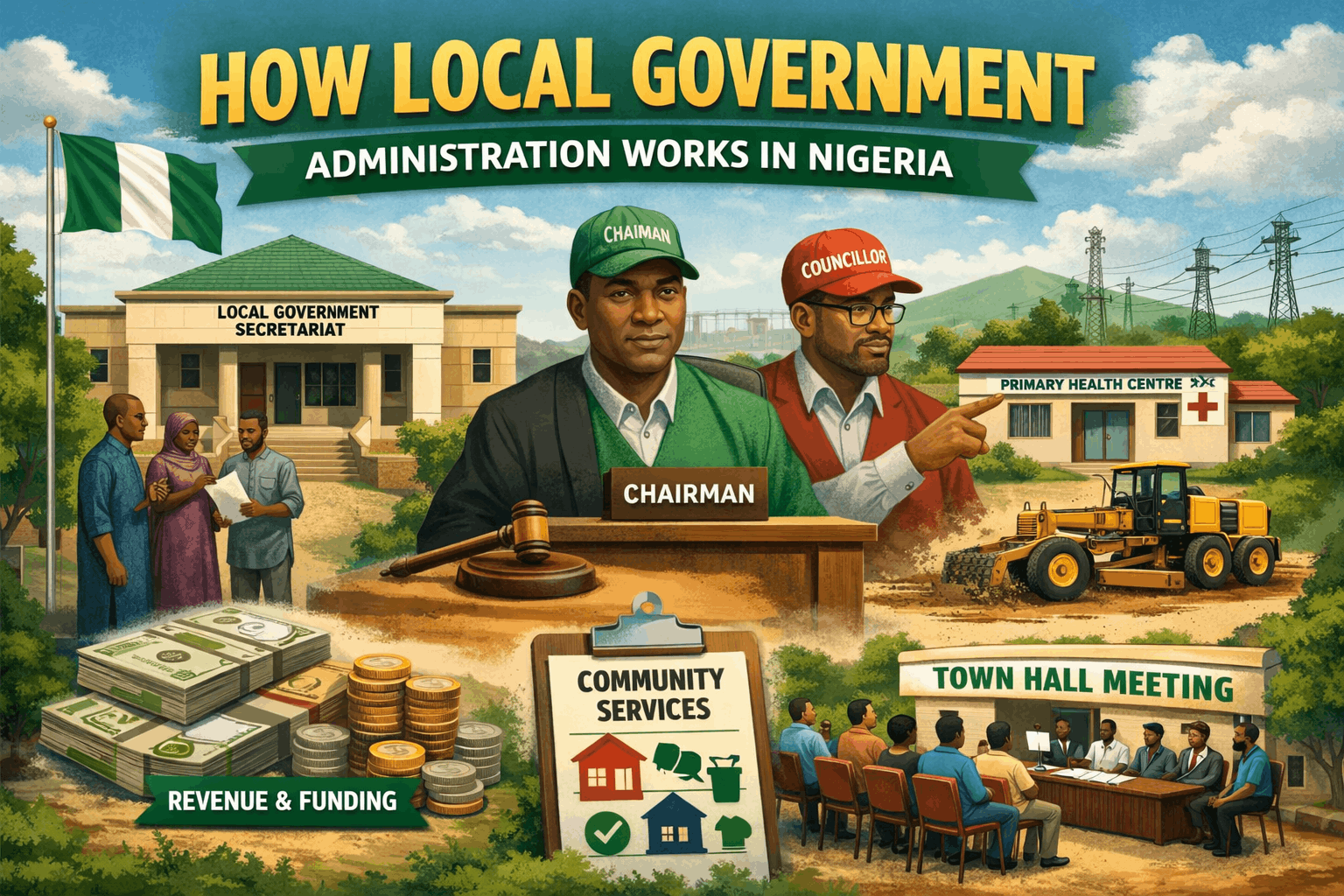
Local government administration in Nigeria is an essential part of the country’s governance system. It plays a significant role in ensuring that government policies, services, and resources reach citizens at the grassroots level. Understanding how local government administration works helps ordinary Nigerians know how decisions are made, how resources are allocated, and how they can participate in the governance process.
Structure of Local Government in Nigeria
Nigeria operates a three-tier government system, which includes the federal, state, and local governments. The local government is the third tier and is the closest to the people. Each state in Nigeria is divided into Local Government Areas (LGAs), and currently, there are 774 LGAs across the country. Each LGA serves as an administrative and political unit responsible for the day-to-day needs of its communities.
The leadership structure of a typical local government includes the Local Government Chairman, who serves as the chief executive, and a council composed of elected councillors representing different wards within the LGA. The chairman oversees administration, implements policies, and coordinates projects, while the council legislates on matters affecting the LGA.
Functions of Local Government Administration
Local governments in Nigeria have several key responsibilities designed to promote development at the grassroots. These functions include:
1. Provision of Basic Services
Local governments are primarily responsible for providing essential services such as primary education, healthcare, waste management, and maintenance of local roads. For example, public primary schools and primary health care centers in towns and villages are often under the direct control of the local government. Waste collection, street cleaning, and drainage maintenance are also managed at this level to ensure sanitation and public health.
2. Revenue Collection
Local governments collect various forms of revenue to fund their activities. Common sources include property rates, market taxes, licenses, and fees for permits. Some local governments also receive statutory allocations from the federal government, which are part of the federation account. Revenue collection enables LGAs to fund projects and provide services to their communities effectively.
3. Planning and Development
Local government councils play a role in community planning and development. They are responsible for approving building plans, regulating land use, and coordinating development projects in collaboration with state agencies. Local governments may also initiate projects such as constructing local markets, community centers, and small-scale infrastructure aimed at improving the quality of life for residents.
4. Representation and Advocacy
Local governments act as the voice of the people at the grassroots. Councillors represent their wards and bring community concerns to the council for discussion and resolution. They advocate for development projects, policies, and funds that benefit their constituents. Citizens can attend public meetings or communicate with their councillors to ensure their needs are considered in local government planning.
5. Conflict Resolution
Local governments often play a role in mediating community disputes. Whether it involves land conflicts, market disagreements, or minor social disputes, the local council can serve as a platform for resolving issues amicably. This function reduces the burden on courts and ensures peace and stability within communities.
Sources of Funding for Local Governments
Local governments rely on two main sources of funding: internally generated revenue and statutory allocations. Internally generated revenue includes taxes, fines, fees, and levies collected directly from residents and businesses within the LGA. Statutory allocations come from the federal government through the Federation Account, often distributed via state governments. These allocations are meant to support local development projects and cover operational costs.
Despite these sources, many local governments face funding challenges due to low revenue collection efficiency and delayed federal allocations. These limitations often affect the ability of LGAs to provide adequate services to residents.
Challenges Facing Local Government Administration
Although local governments play a crucial role in grassroots development, several challenges hinder their effectiveness:
-
Poor Funding – Many LGAs struggle to generate sufficient revenue internally, making them heavily dependent on federal allocations.
-
Corruption – Mismanagement of funds by officials reduces the resources available for public projects.
-
Limited Autonomy – In some states, local governments are heavily controlled by state governments, reducing their ability to make independent decisions.
-
Inadequate Infrastructure – Many local government offices lack the facilities and technology needed to operate efficiently.
-
Low Civic Engagement – Residents often do not participate in local government activities, limiting accountability and oversight.
How Citizens Can Engage with Local Governments
Understanding local government administration is incomplete without knowing how citizens can participate. Active citizen engagement ensures accountability and encourages better service delivery. Here are practical ways to get involved:
-
Attend Public Meetings – Many LGAs hold town hall meetings to discuss development plans and projects.
-
Communicate with Councillors – Residents can contact their ward representatives to voice concerns or request services.
-
Participate in Development Projects – Community members can volunteer or contribute to local initiatives, especially in areas like schools, healthcare, and sanitation.
-
Monitor Revenue and Spending – Being aware of how funds are collected and used helps citizens demand transparency and accountability.
Conclusion
Local government administration is the foundation of grassroots governance in Nigeria. It is designed to bring government closer to the people by managing resources, providing essential services, and facilitating community development. While challenges such as funding shortages, corruption, and limited autonomy exist, active citizen participation can help improve accountability and service delivery. By understanding how local governments work, Nigerians can make informed decisions, contribute to development, and ensure that the system serves the communities effectively.


 Daniel Okoye