 Daniel Okoye
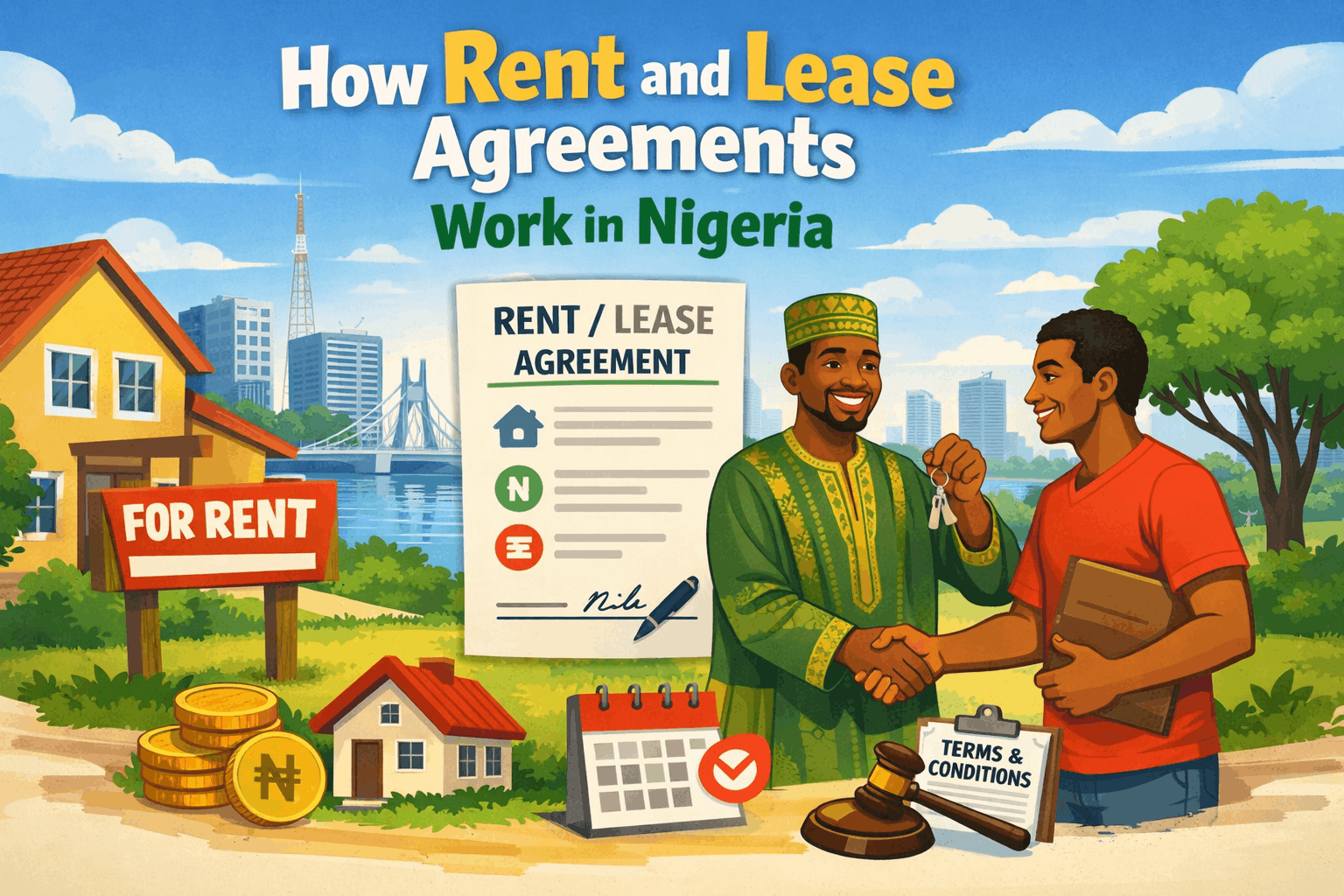
Rent and lease agreements are part of everyday life in Nigeria, yet many tenants and landlords enter these arrangements without fully understanding how they work. This often leads to disputes, unexpected costs, or even loss of property rights. Understanding how rent and lease agreements operate in Nigeria helps both parties protect their interests and avoid common problems.
What a Rent or Lease Agreement Means
A rent or lease agreement is a legally recognized arrangement between a landlord and a tenant. The landlord grants the tenant the right to occupy and use a property, while the tenant agrees to pay rent and comply with certain conditions.
In Nigeria, these agreements can be written or verbal. However, written agreements are strongly recommended because they clearly state the rights and responsibilities of both parties and serve as evidence if disputes arise.
While “rent” is often used for shorter periods, such as monthly or yearly arrangements, “lease” usually refers to longer-term occupancy, often several years. In practice, Nigerians commonly use both terms interchangeably.
Types of Rent and Lease Agreements in Nigeria
The most common type is a yearly tenancy, where rent is paid once a year. This is widely used for residential apartments. Some landlords also allow monthly or quarterly rent, although this is less common.
Lease agreements are more common for commercial properties such as offices, shops, warehouses, and large business spaces. These leases may last between two and ten years, depending on what both parties agree on.
There are also informal arrangements where tenants occupy properties without written agreements. While this still creates a tenancy relationship, it exposes both parties to higher risks.
How Rent Is Determined
Rent in Nigeria is influenced by several factors. Location is the biggest determinant. Properties in major cities or high-demand areas usually attract higher rent.
The condition of the property, availability of amenities, and demand also play major roles. Economic conditions can also affect rent, especially during periods of inflation.
Landlords often review rent at the end of a tenancy period. Any increase should ideally be communicated before renewal, although sudden increases are common in practice.
Agreement Fees and Additional Charges
In many parts of Nigeria, tenants are required to pay more than just rent. Common additional charges include agreement fees, agency fees, and caution or security deposits.
Agreement fees cover the preparation of tenancy documents. Agency fees are paid to agents who help secure the property. Caution deposits are refundable amounts meant to cover damages or unpaid bills.
While these fees are widely practiced, they are not always regulated, which is why tenants should ask for clarity before making payments.
What a Typical Agreement Contains
A proper rent or lease agreement usually includes the names of both parties, a description of the property, the rent amount, payment duration, and the length of the tenancy.
It also outlines responsibilities such as who handles repairs, utility bills, and maintenance. Rules on subletting, property use, and termination of the agreement are also included.
Tenants should read agreements carefully before signing. Once signed, the terms become binding.
Rights and Responsibilities of Tenants
Tenants have the right to peaceful enjoyment of the property as long as they comply with the agreement. They are entitled to reasonable notice before eviction and should not be forcefully removed.
Tenants are responsible for paying rent on time, maintaining the property, and complying with the rules stated in the agreement. Failure to do so may lead to termination of the tenancy.
Rights and Responsibilities of Landlords
Landlords have the right to receive rent as agreed and expect the tenant to take reasonable care of the property. They can also inspect the property, usually with notice.
However, landlords must follow legal procedures when terminating a tenancy. Self-help actions such as locking out tenants or removing their belongings are unlawful in Nigeria.
How Termination and Eviction Work
Termination of a rent or lease agreement usually requires proper notice. The length of notice depends on the type of tenancy. For yearly tenants, a six-month notice is common, while shorter tenancies require shorter notices.
If a tenant refuses to leave after notice, the landlord must seek a court order for eviction. Although this process can be slow, it is the legal way to regain possession.
Common Mistakes People Make
One major mistake is not insisting on a written agreement. Another is paying large sums without receipts or documentation.
Tenants also often fail to understand clauses related to rent review and termination. Landlords, on the other hand, sometimes ignore legal eviction procedures, which can backfire legally.
What Most People Do Not Know
Many people do not realize that tenancy laws differ slightly across states in Nigeria. Some states have specific tenancy laws that regulate rent and eviction processes.
Another overlooked point is that verbal agreements, while valid, are harder to enforce. This is why documentation is crucial.
Conclusion
Rent and lease agreements in Nigeria are built on mutual understanding and legal recognition. When both landlords and tenants understand how these agreements work, they can avoid unnecessary conflicts and protect their interests.
Taking time to read agreements, ask questions, and follow proper procedures makes renting or leasing property in Nigeria smoother and more secure for everyone involved.


 Daniel Okoye