 Daniel Okoye
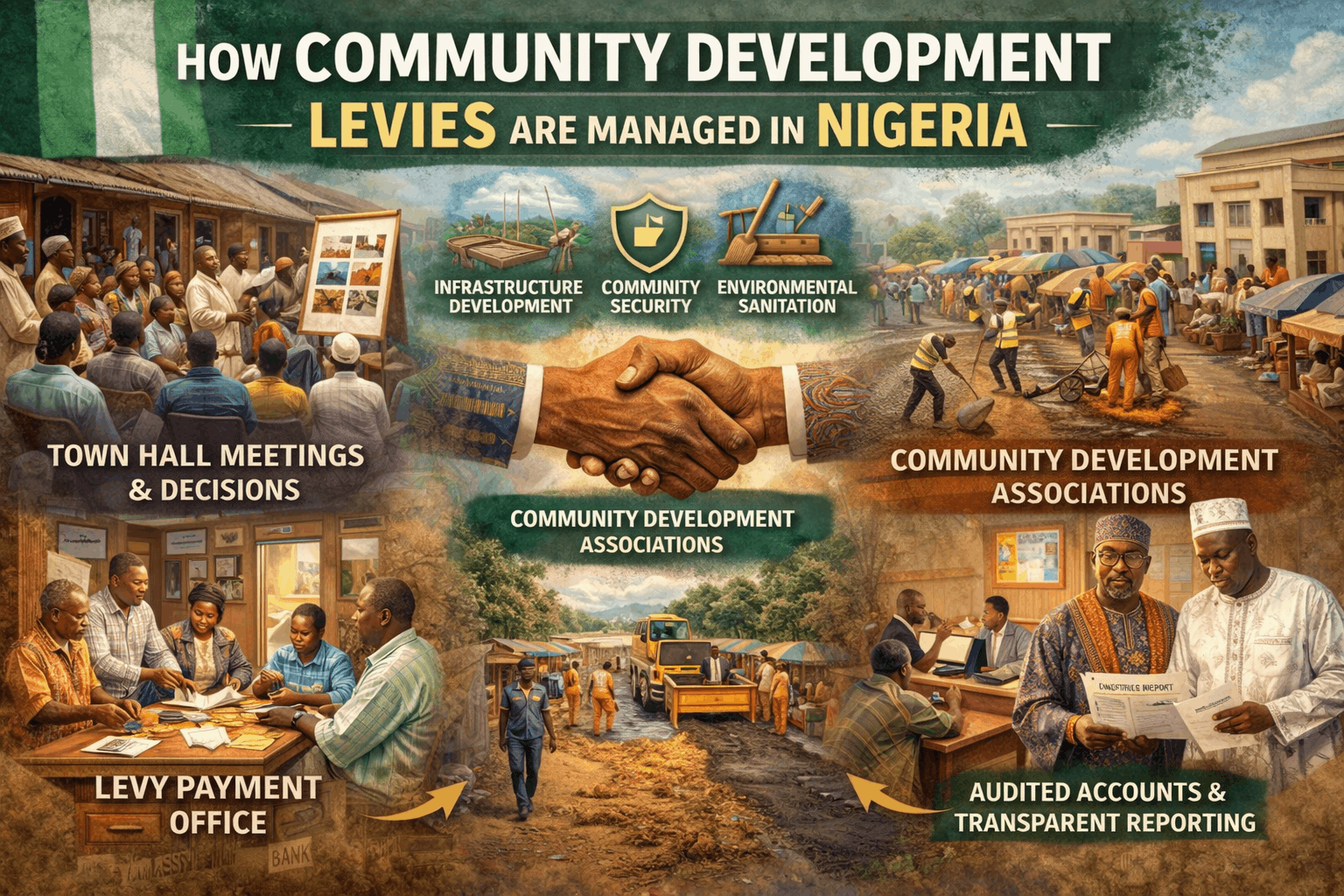
Across Nigeria, many communities contribute money regularly to improve their environment through what are known as community development levies. These levies are small financial contributions collected from residents, traders, landlords, or business owners to fund projects that benefit everyone. They help build roads, repair schools, provide security, install streetlights, and maintain sanitation.
While government budgets often fall short, these locally organized contributions allow communities to take development into their own hands. When properly managed, community levies transform neighborhoods faster than waiting for government intervention.
What Are Community Development Levies?
Community development levies are collective contributions agreed upon by members of a town, estate, or neighborhood. They are not exactly taxes imposed by the federal government. Instead, they are locally organized payments approved by community associations, traditional institutions, or local government authorities.
They may be
- Monthly dues
- Annual contributions
- Project-based payments
- Special emergency levies
For example, a community may agree that every household pays ₦2,000 monthly for security or ₦10,000 once a year to repair roads.
Who Organizes the Levies?
Community Development Associations (CDAs)
The most common managers of these levies are Community Development Associations. CDAs are registered groups representing residents of a particular area. They act as the link between citizens and the government.
In states like Lagos State, CDAs are very active and structured. Almost every street or estate has one. They hold meetings, set dues, and supervise projects.
Town Unions and Traditional Institutions
In many eastern states such as Anambra State and Imo State, town unions and traditional rulers play a strong role. These bodies collect levies for festivals, schools, roads, and security.
Local Government Authorities
Sometimes, local councils also support or supervise levy collection, especially for bigger infrastructure projects. They may provide technical assistance or match community funds.
How Levies Are Decided
Community Meetings
Before any levy is introduced, residents usually meet in a town hall or general assembly. Leaders explain the problem and propose a solution.
For example
- Bad roads
- Flooded drainage
- Lack of streetlights
- Security threats
The cost of solving the problem is discussed openly. After deliberation, members agree on how much each household or business should contribute.
Voting or Consensus
Most communities use consensus or voting to decide the final amount. This democratic approach helps reduce resistance and increases compliance because everyone feels involved.
Approval by Executives
Once agreed, the CDA or town union executives formalize the decision and announce payment schedules.
Collection Methods
Door-to-Door Collection
In smaller communities, collectors visit homes or shops to collect payments. They issue receipts immediately to maintain accountability.
Central Payment Points
Some associations set up offices where residents come to pay manually. Payment records are logged in books or registers.
Digital Payments
Modern communities now use bank transfers, mobile payments, or POS machines. This method reduces cash handling and improves transparency.
Digital systems also make it easier to track who has paid and who has not.
How Funds Are Managed
Executive Committee Oversight
Most CDAs have elected officers such as:
- Chairman
- Secretary
- Treasurer
- Financial secretary
- Auditor
The treasurer handles funds, while the financial secretary records transactions. The auditor checks the books to prevent misuse.
Separate Bank Accounts
Responsible associations open dedicated bank accounts for levy funds. This prevents mixing personal money with community funds.
Payments are deposited directly into the account to enhance security.
Budget Planning
Before spending, leaders prepare a budget outlining:
- Total money collected
- Project costs
- Contractor fees
- Maintenance expenses
This ensures money is used strictly for agreed projects.
Transparent Reporting
Regular financial reports are presented during meetings. Residents are informed how much was collected and how it was spent.
Transparency builds trust and encourages future cooperation.
How Funds Are Used
Infrastructure Development
- Levies commonly fund
- Road grading and repairs
- Drainage construction
- Boreholes and water supply
- Street lighting
- School renovations
These improvements directly impact daily life.
Security Services
Many communities hire private security guards or vigilante groups. Levy funds pay their salaries and buy equipment like torches and communication devices.
Environmental Sanitation
Money may be used for waste collection, clearing gutters, or organizing sanitation exercises.
Social Projects
Some levies support scholarships, health outreaches, or youth empowerment programs.
Enforcement and Compliance
Social Pressure
Unlike government taxes, enforcement is often social. Community members encourage one another to pay.
Defaulters may face:
- Public reminders
- Restriction from community benefits
- Denial of voting rights
- Exclusion from certain services
Penalties
Some associations impose small fines for late payment. However, enforcement is usually peaceful and cooperative rather than aggressive.
Incentives
Certain communities offer discounts for early payment or recognition for consistent contributors.
Challenges in Managing Levies
Mismanagement of Funds
If leaders misuse funds, trust breaks down. Residents may refuse to pay future levies.
Lack of Transparency
Poor record-keeping causes suspicion. Without clear reports, people assume corruption.
Payment Resistance
Some residents avoid paying, believing development should be government responsibility.
Multiple Levies
When too many contributions are introduced at once, people feel overwhelmed.
Improvements and Best Practices
Financial Accountability
Using audited accounts and professional bookkeeping strengthens credibility.
Digital Tracking
Mobile banking and online payment systems reduce fraud.
Regular Communication
Frequent meetings and updates keep everyone informed.
Government Collaboration
Working with local councils ensures projects meet standards and receive support.
Conclusion
Community development levies have become a powerful tool for grassroots progress in Nigeria. When properly managed by organized associations and transparent leaders, these small contributions create big changes.
They empower citizens to solve problems themselves rather than waiting endlessly for government action. From better roads to safer streets and cleaner environments, community levies show that collective effort can transform neighborhoods.
Ultimately, success depends on trust, accountability, and shared responsibility. When everyone contributes fairly and leaders manage funds wisely, communities grow stronger, safer, and more united.

Daniel Okoye
Daniel Okoye is a writer and researcher at ProcesslyHub. I focus on explaining Nigerian systems, housing processes, and everyday business workflows in simple and practical terms. My goal is to help readers understand how real-world processes work so they can make informed decisions and avoid costly mistakes.
 Daniel Okoye