 Daniel Okoye
Electricity is one of the most essential utilities in Nigeria, yet it is also one of the most misunderstood. Many Nigerians struggle to understand their electricity bills, why they are sometimes high, and why there are differences between prepaid and estimated billing. Understanding how electricity billing works can help you manage your electricity usage better and avoid unnecessary costs. In this article, we will break down the two main billing systems in Nigeria — estimated billing and prepaid billing and explain how each system works.
The Two Main Types of Electricity Billing in Nigeria
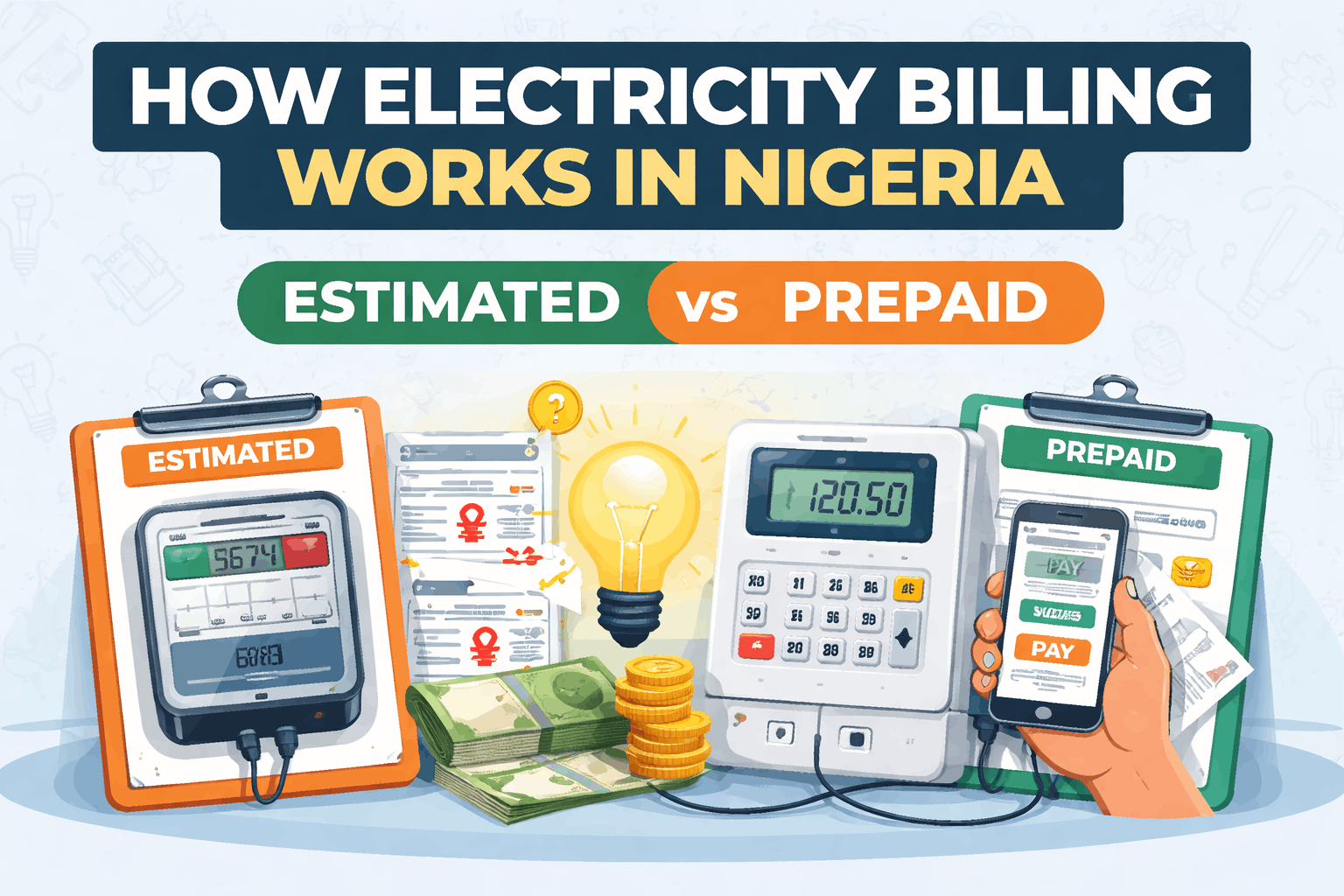
In Nigeria, electricity billing is primarily done in two ways: estimated billing and prepaid billing. These methods determine how much you pay for electricity and how the electricity company measures your consumption.
Estimated Billing
Estimated billing is the traditional method used by electricity distribution companies (DisCos) in Nigeria. In this system, your monthly electricity bill is calculated based on your estimated consumption rather than your actual usage. DisCos use historical data, the number of appliances in your home, and previous consumption patterns to estimate how much electricity you have used.
Estimated billing is often used when your electricity meter is faulty or not functioning correctly. Unfortunately, this system has several drawbacks, including inaccurate charges, delayed readings, and disputes between consumers and the electricity company.
Prepaid Billing
Prepaid billing, also known as the “token system,” is a more modern and increasingly popular method. With a prepaid meter, you pay for electricity before using it. You purchase a token, usually through an online platform, bank, or vendor, and enter the token into your meter. Once the token is entered, the meter allows you to consume electricity up to the value of the token.
Prepaid billing is generally more accurate and transparent than estimated billing. It allows consumers to monitor their electricity usage, budget effectively, and avoid unexpected high bills.
How Estimated Billing Works
In the estimated billing system, your electricity consumption is calculated by the DisCo based on several factors:
-
Meter Readings: If your meter is working, readings are supposed to be taken monthly. However, in many cases, readings are not collected regularly, and estimated bills are sent instead.
-
Historical Consumption: The DisCo may use your previous consumption patterns to estimate your current usage. This is especially common when meters are faulty.
-
Appliance Count and Household Size: Some DisCos consider the number of rooms, household size, or appliances to estimate electricity usage, although this method is less common.
One of the major challenges with estimated billing is inaccuracy. Some consumers report bills that are much higher than expected, leading to disputes. In some cases, DisCos issue adjusted bills in later months, which can be confusing for consumers.
How Prepaid Billing Works
Prepaid meters are digital devices that measure electricity consumption in real time. To use electricity, you must first purchase a token, which comes in the form of a numeric code. Here’s how the system works:
-
Purchase Token: You can buy electricity tokens online, at banks, through mobile apps, or from authorized vendors.
-
Enter Token into Meter: Input the token code into your prepaid meter. The meter will display the amount of electricity credit available.
-
Consumption Tracking: The meter automatically deducts electricity usage from your balance. Once your credit runs out, the meter will cut off power, prompting you to purchase another token.
-
Usage Monitoring: Prepaid meters often display remaining credit, allowing you to manage consumption and avoid unexpected disconnections.
Prepaid billing has several advantages over estimated billing, including transparency, control, and reduced disputes. Consumers can easily track usage and make informed decisions about electricity consumption.
Differences Between Estimated and Prepaid Billing
Understanding the key differences between estimated and prepaid billing can help you choose the best system for your household.
-
Payment Method: Estimated billing bills you after consumption, while prepaid billing requires payment before consumption.
-
Accuracy: Prepaid meters are accurate and real-time, whereas estimated billing can be inaccurate and often leads to disputes.
-
Control: Prepaid billing gives consumers full control over their usage, while estimated billing may result in unexpected high charges.
-
Transparency: With prepaid billing, you can see exactly how much electricity you are consuming. Estimated billing relies on the DisCo’s estimates, which may not reflect actual usage.
-
Budgeting: Prepaid billing allows you to manage your budget by buying tokens within your financial capacity. Estimated billing may surprise you with high bills at the end of the month.
Advantages of Prepaid Meters
-
Transparency: You pay for what you use.
-
Budget Control: Helps households manage spending on electricity.
-
Reduced Disputes: Eliminates disagreements over bills.
-
Convenience: Tokens are easily available online or from vendors.
-
Energy Conservation: Consumers are more conscious of usage because they see credit running out.
Challenges of Estimated Billing
-
Overcharging: Consumers often receive bills higher than actual usage.
-
Delayed Adjustments: Corrections may take months to reflect.
-
Disputes: Estimated bills often lead to disagreements with the electricity company.
-
Lack of Transparency: It is hard to know how the bill was calculated.
Tips to Manage Electricity Bills in Nigeria
-
Switch to Prepaid Meter: If possible, get a prepaid meter for accurate billing.
-
Track Consumption: Even with estimated billing, keep track of appliances and usage.
-
Check Your Meter: Report faulty meters to the DisCo to avoid estimated billing.
-
Use Energy-Efficient Appliances: Reduce electricity consumption with energy-saving bulbs, fans, and devices.
-
Avoid Unauthorized Vendors: Always buy tokens from authorized sources to prevent fraud.
Conclusion
Electricity billing in Nigeria can be confusing, especially with the differences between estimated and prepaid billing. While estimated billing relies on guesses and historical patterns, prepaid billing offers transparency, control, and convenience. Understanding these systems empowers you to make better decisions, manage costs, and avoid disputes. If you are still on estimated billing, consider switching to a prepaid meter to enjoy accurate billing and full control over your electricity usage. Managing electricity wisely not only saves money but also ensures a smoother experience with your electricity provider.


 Daniel Okoye