 Daniel Okoye
Environmental sanitation is a regular public health practice in Nigeria aimed at keeping communities clean, preventing disease, and maintaining healthy surroundings. Across many towns and cities, residents are required to participate in periodic sanitation exercises and follow waste management rules.
To ensure compliance, governments and local authorities enforce sanitation laws through inspections, monitoring teams, and penalties. These enforcement measures help reduce blocked drains, flooding, and outbreaks of illnesses like malaria and cholera.
What Is Environmental Sanitation?
Environmental sanitation refers to organized efforts to keep the environment clean and safe. It includes
• Sweeping streets
• Clearing gutters and drainage
• Proper waste disposal
• Cutting overgrown bushes
• Removing illegal dumpsites
• Cleaning markets and public spaces
These activities are often coordinated by state or local governments in partnership with communities.
Who Is Responsible for Enforcement?
State Environmental Agencies
Most states have environmental protection or waste management authorities. For example, Lagos Waste Management Authority supervises waste collection and sanitation enforcement in Lagos State.
Other states have similar agencies that oversee sanitation policies.
Local Government Councils
Local governments play a direct role by organizing sanitation days, deploying task forces, and monitoring neighborhoods.
Sanitation Task Forces
Special officers or marshals are assigned to patrol streets and markets. They check compliance and educate residents.
Community Leaders and Associations
Community Development Associations and market unions also help mobilize residents and ensure participation.
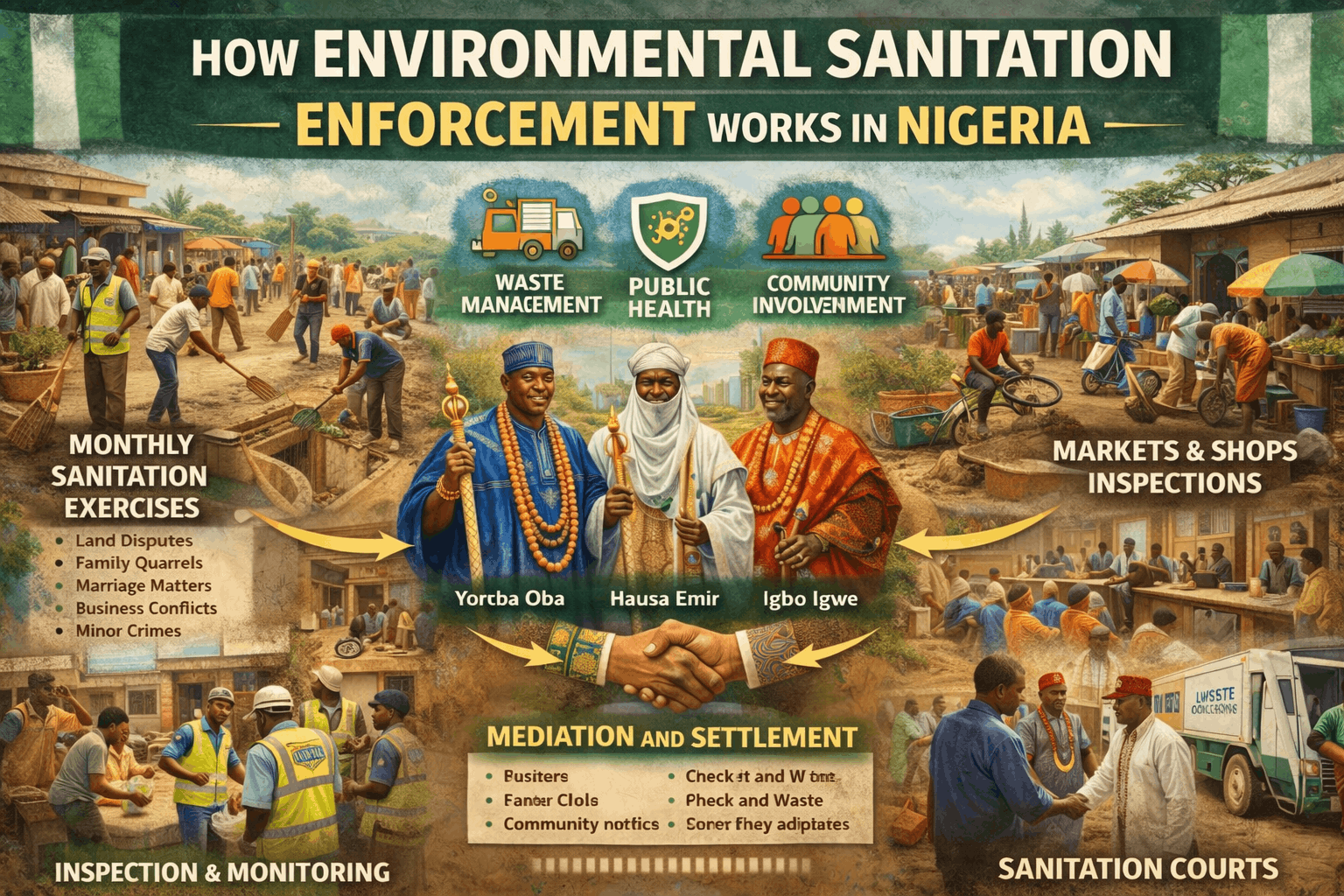
Monthly Sanitation Exercises
In many states, sanitation exercises take place once a month, usually on a Saturday morning.
During this period
• Movement may be restricted for a few hours
• Shops and markets may remain closed
• Residents clean their surroundings
• Waste is gathered for disposal
Sanitation officers patrol to confirm that people are participating.
How Enforcement Works
Inspection and Monitoring
Sanitation officers move around neighborhoods to inspect homes, shops, and public areas.
They check for
• Dirty surroundings
• Blocked gutters
• Open dumping of refuse
• Bushes that can harbor pests
• Illegal structures blocking drainage
If a location fails inspection, warnings or penalties may follow.
Door-to-Door Checks
In some areas, officials visit houses and ask residents to show that their environment is clean. Refuse bins and drainage areas are inspected.
Market and Business Monitoring
Markets, restaurants, and shops are closely monitored because they generate more waste.
Officials may
• Check waste bins
• Ensure proper disposal
• Verify waste collection subscriptions
• Inspect food hygiene conditions
Non-compliant businesses risk fines or temporary closure.
Waste Collection Verification
Residents and businesses are often required to register with licensed waste collectors. Officers confirm that households pay for waste services.
Failure to subscribe can result in penalties.
Penalties for Non-Compliance
To maintain seriousness, enforcement includes consequences.
Common penalties include
• Fines
• Environmental tickets
• Community service (cleaning public areas)
• Sealing of shops or premises
• Arrest in severe cases
For example, shops that refuse to clean their frontage may be locked temporarily until compliance.
Role of Sanitation Courts
Some states operate mobile or environmental sanitation courts. These courts handle minor environmental offenses quickly.
Offenders may
• Pay immediate fines
• Receive warnings
• Perform sanitation duties
This fast-track system discourages repeat violations.
Public Education and Awareness
Enforcement is not only about punishment. Education is equally important.
Authorities organize
• Awareness campaigns
• Radio announcements
• School programs
• Community meetings
They teach residents about hygiene, disease prevention, and proper waste disposal.
When people understand the health benefits, compliance improves naturally.
Community Participation
Environmental sanitation works best when communities cooperate.
Community efforts include
• Group cleanup exercises
• Drainage clearing days
• Youth volunteer sanitation teams
• Shared waste bins
• Reporting illegal dumping
This shared responsibility reduces the burden on government.
Challenges in Enforcement
Despite good intentions, enforcement faces obstacles.
Irregular Participation
Some residents ignore sanitation days or refuse to clean.
Illegal Dumping
People sometimes dump refuse secretly at night.
Poor Waste Infrastructure
Lack of trucks or bins makes compliance difficult.
Corruption or Selective Enforcement
In some places, officers may enforce rules unfairly.
Rapid Urban Growth
Overcrowding increases waste faster than authorities can manage.
Improvements and Modern Solutions
To strengthen sanitation enforcement, many states are adopting modern approaches.
These include
• Digital payment systems for waste bills
• Private waste management partnerships
• CCTV monitoring of illegal dumpsites
• Recycling programs
• More waste trucks and bins
• Stronger community engagement
Technology and better planning make enforcement more effective.
Benefits of Effective Sanitation Enforcement
When sanitation rules are properly enforced, communities enjoy
• Cleaner streets
• Reduced flooding
• Fewer mosquitoes and pests
• Lower disease rates
• Better air quality
• More attractive neighborhoods
• Improved business and tourism
Clean environments directly improve quality of life.
Conclusion
Environmental sanitation enforcement in Nigeria combines government regulation, inspections, penalties, and community participation. While enforcement teams ensure compliance, long-term success depends on citizens taking responsibility for their surroundings.
Cleanliness is not just a government duty but a shared obligation. When residents, businesses, and authorities work together, sanitation becomes easier, healthier, and more sustainable for everyone.


 Daniel Okoye