 Daniel Okoye
Event service pricing in Nigeria often looks confusing from the outside. Two people can organize similar events, yet the prices they are quoted may be very different. This is because event pricing in Nigeria is not fixed; it is shaped by a mix of market realities, location, scale, experience, and negotiation. Understanding how it works helps clients budget better and helps vendors explain their charges with confidence.
This article breaks down how event service pricing actually works in Nigeria, using real-life practices rather than theory.
What Counts as Event Services in Nigeria
Event services go beyond just decorations or renting chairs. In Nigeria, event services typically include event planning, decorations, catering, MC services, DJs, live bands, photography, videography, ushers, lighting, canopies, chairs, tables, generators, security, and logistics support.
Some vendors offer one service, while others bundle several services together. Pricing is affected by whether you are dealing with a single service provider or a full-service event company.
The Role of Event Type in Pricing
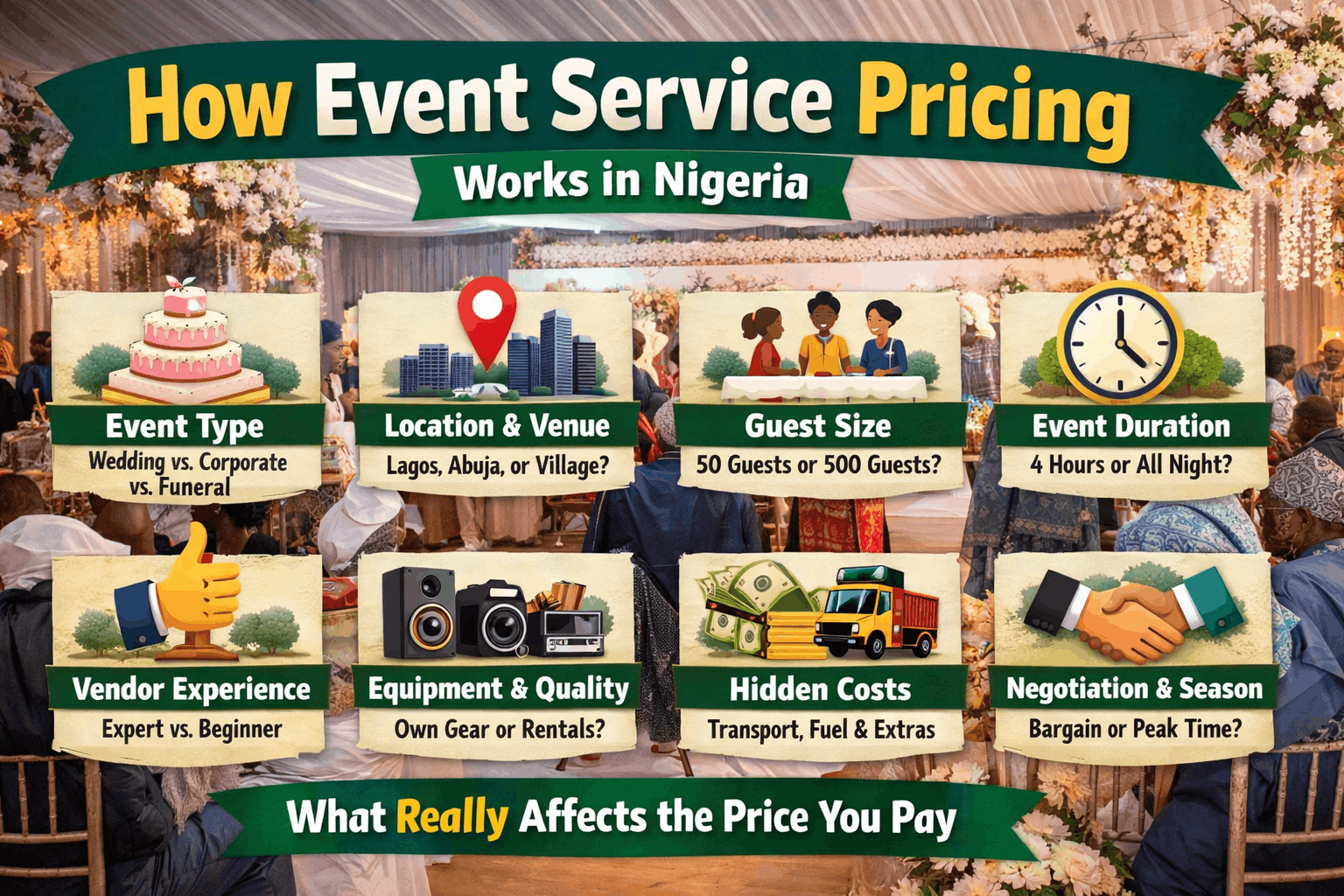
The type of event is one of the first things that affect pricing. Weddings, corporate events, birthdays, funerals, religious programs, political gatherings, and community ceremonies are priced differently.
Weddings usually attract higher prices because they are considered premium events with higher expectations, longer hours, and more emotional pressure. Corporate events are priced based on professionalism, branding requirements, and timelines. Funerals and community events are often negotiated with more flexibility, especially when they involve extended families or associations.
Vendors mentally categorize events before quoting, even if they do not say it openly.
Location and Venue Influence on Cost
Location plays a major role in event pricing in Nigeria. An event in Ikoyi, Maitama, or GRA areas will usually cost more than a similar event in a rural town or densely populated suburb.
This happens because of transportation costs, security concerns, venue rules, access difficulty, and the perceived spending power of the client. Some venues also have strict rules that increase vendor stress, such as limited setup time, noise restrictions, or mandatory use of venue-approved suppliers. Vendors factor all these into their prices.
Guest Size and Event Scale
The number of guests directly affects pricing, especially for catering, chairs, tables, ushers, and logistics. An event for 50 guests is very different from one for 500 guests, even if the venue is the same.
Larger events require more manpower, more equipment, longer setup time, and higher risk of issues. Vendors usually price based on scale brackets, even if they do not explain it clearly to clients.
Duration of the Event
Event duration matters a lot in Nigeria. Many clients assume that once they pay, the service covers the whole day, but vendors think differently.
An event that lasts four hours is priced differently from one that lasts ten hours. For DJs, MCs, photographers, videographers, and live bands, longer hours mean more energy, equipment usage, and sometimes extra assistants. If an event runs late into the night, vendors may also factor in security and transportation risks.
Experience and Reputation of the Vendor
In Nigeria, experience is currency. A vendor with years of experience, social proof, referrals, and a strong portfolio will charge more than a newcomer, even if they offer similar services.
Clients are not just paying for the service itself but for reduced risk. Experienced vendors are trusted to handle pressure, fix problems quickly, and deliver without excuses. This trust is priced into their fees.
Equipment Quality and Ownership
Pricing also depends on whether a vendor owns their equipment or rents it. Vendors who own high-quality sound systems, cameras, lighting, or decorative items often charge more because of maintenance, repairs, and replacement costs.
Cheaper quotes sometimes come from vendors who plan to rent equipment after collecting payment. This increases their risk and can affect service quality, but it also allows them to offer lower prices upfront.
Timing and Seasonality
Event pricing in Nigeria changes with seasons. Peak periods like December, Easter, festive weekends, and popular wedding months usually attract higher prices because demand is high.
Last-minute bookings also cost more. When a client contacts a vendor a few days before an event, the vendor may need to cancel other plans, rush preparations, or hire extra help. All these increase costs.
Negotiation Culture and Pricing Flexibility
Negotiation is a major part of event pricing in Nigeria. Many vendors initially quote higher than their minimum acceptable price, expecting negotiation.
However, not all prices are flexible. Costs tied to equipment rental, transportation, or hired staff have little room for reduction. Discounts often come from the vendor reducing their profit margin, not their actual expenses.
Clients who understand this tend to negotiate more respectfully and realistically.
Hidden Costs Clients Often Miss
Many clients focus only on the main service fee and overlook additional costs. These may include transportation, fuel for generators, accommodation for out-of-town events, feeding for crew, setup and dismantling fees, and overtime charges.
When these are not discussed early, misunderstandings happen. Clear communication upfront usually prevents disputes later.
Why Two Quotes Can Be Very Different
It is common for clients to receive widely different quotes for the same event. This does not always mean one vendor is cheating.
Differences may come from experience level, equipment quality, number of staff involved, duration assumptions, and hidden costs included or excluded in the quote. Understanding what each quote covers is more important than comparing prices alone.
Common Mistakes Clients Make
One common mistake is choosing the cheapest option without understanding what is included. Another is changing event details after agreeing on a price and expecting the cost to remain the same.
Some clients also delay payment, which can affect preparation and service quality. In Nigeria, many vendors depend on upfront payments to secure equipment and manpower.
How to Budget Smarter for Event Services
Smart budgeting starts with clarity. Clients should clearly state the event type, location, date, duration, and expectations before requesting quotes.
Asking vendors to explain what their price covers helps avoid surprises. It is also wise to prioritize critical services and be flexible on less important ones.
Final Thoughts
Event service pricing in Nigeria is shaped by real-life factors, not fixed price lists. When clients understand how pricing works, they make better decisions and enjoy smoother events. When vendors communicate transparently, trust increases and conflicts reduce.
At the end of the day, event pricing is about balancing value, risk, effort, and expectations. Understanding the process makes the experience better for everyone involved.

Daniel Okoye
Daniel Okoye is a writer and researcher at ProcesslyHub. I focus on explaining Nigerian systems, housing processes, and everyday business workflows in simple and practical terms. My goal is to help readers understand how real-world processes work so they can make informed decisions and avoid costly mistakes.

 Daniel Okoye