 Daniel Okoye
Renting a house in Nigeria involves more than agreeing on rent and making payment. One of the most important steps before committing to any property is conducting a proper house inspection. Inspection allows you to verify the condition of the property, confirm what was promised by the landlord or agent, and avoid unexpected problems after moving in.
Many tenants rush the process because they are under pressure to secure accommodation. Some rely solely on pictures or the agent’s description. This often leads to disappointment when hidden defects are discovered later. A proper house inspection protects your money, comfort, and peace of mind.
This guide explains how house inspection works in Nigeria, what to check, and how to protect yourself during the process.
What Is House Inspection?
House inspection is the physical examination of a rental property before agreeing to pay rent. It involves visiting the house to assess its condition, facilities, structure, and environment.
Inspection helps you confirm:
-
The house actually exists
-
The condition of the building
-
The size and layout of rooms
-
The availability of utilities
-
Whether the property matches the advertisement
Inspection should always be done in person. Renting without inspection increases the risk of fraud or hidden damage.
Why House Inspection Is Important
House inspection prevents surprises and disputes. It ensures transparency between you and the landlord.
Key reasons inspection matters include:
-
Confirming the house is available
-
Detecting structural or maintenance issues
-
Checking water and electricity functionality
-
Verifying that the property is worth the rent
Some fraudulent agents advertise old pictures or different properties entirely. Physical inspection eliminates this risk.
When House Inspection Should Be Done
In Nigeria, inspection typically happens before any major payment is made.
The common process is:
-
You see a house advertisement
-
You contact the agent or landlord
-
You schedule inspection
-
You inspect the property
-
You decide whether to proceed
-
You negotiate if necessary
-
You make payment
Never pay rent or large fees before inspecting the house yourself.
Who Is Present During Inspection?
House inspection is usually conducted by the prospective tenant, accompanied by:
-
The real estate agent
-
The landlord
-
A caretaker (if available)
The agent or landlord will show you around and explain features. However, it is your responsibility to check everything carefully.
Take your time. Do not feel pressured.
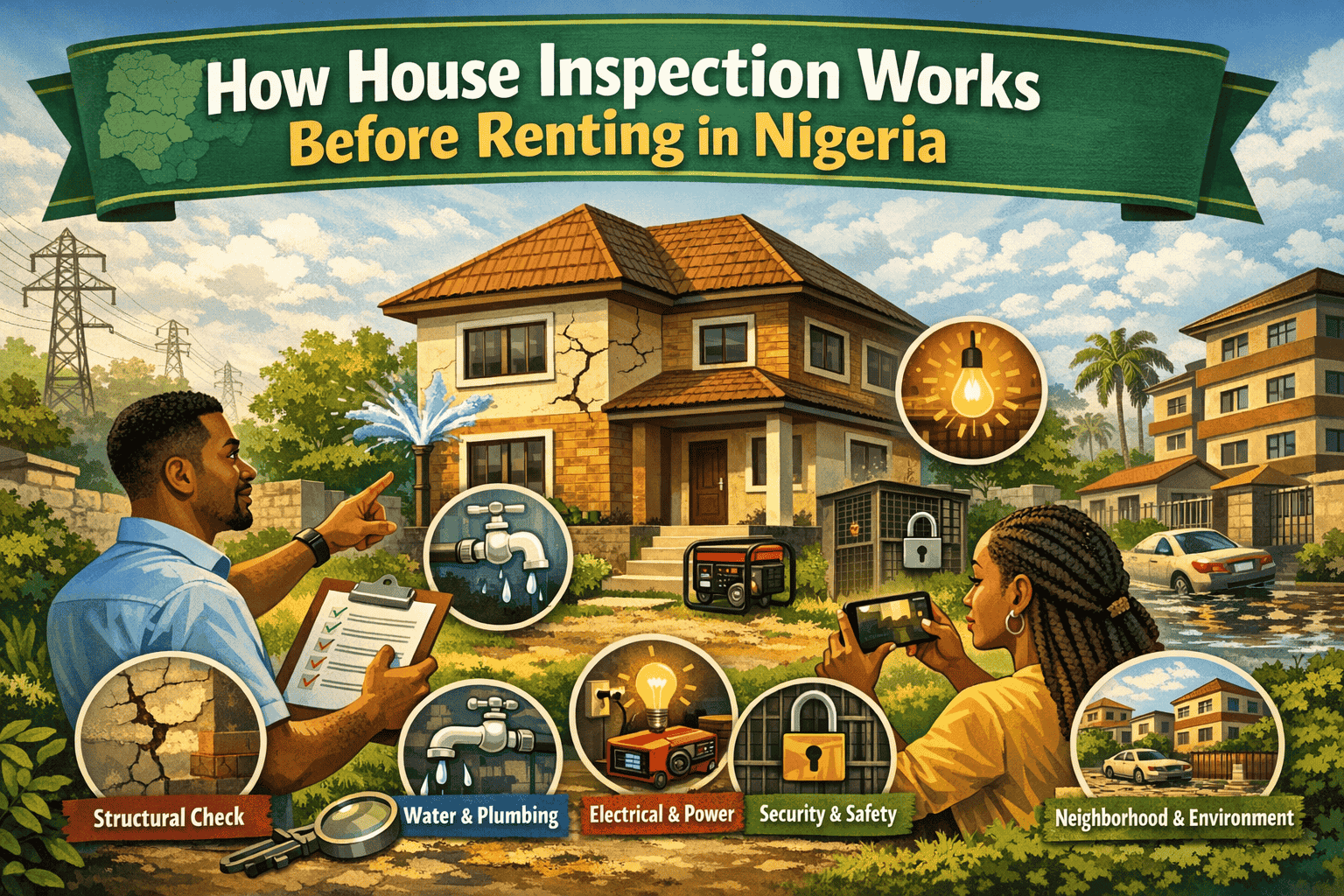
What to Check During House Inspection
There are several important areas to inspect.
Structural Condition
Examine the physical state of the building.
Look out for:
-
Cracks on walls
-
Weak ceilings or sagging POP
-
Broken tiles
-
Damaged doors and windows
-
Signs of roof leakage
Structural issues can become costly problems later.
Water Supply
Reliable water is essential in Nigerian homes.
Check:
-
If water flows from taps
-
Presence of borehole or well
-
Water pressure
-
Availability of overhead tanks
Ask how often water is available and whether supply is consistent.
Electricity Supply
Power supply varies across locations in Nigeria. Confirm:
-
Availability of electricity
-
Type of meter (prepaid or shared)
-
Functioning sockets and switches
-
Condition of wiring
-
Any backup power system
Ask about average power supply in the area.
Plumbing System
Test all plumbing facilities.
Check:
-
Toilet flushing properly
-
No leaking pipes
-
Functional sinks
-
Shower water flow
-
Proper drainage
Poor plumbing can cause flooding and inconvenience.
Doors and Security
Security is a major consideration.
Inspect:
-
Door strength
-
Functional locks
-
Burglary proof on windows
-
Condition of compound gate
-
Perimeter fencing
Also ask about security in the neighborhood.
Ventilation and Lighting
Comfort depends on good airflow and lighting.
Check:
-
Number and size of windows
-
Air circulation
-
Natural light entering rooms
-
Overall brightness
Poor ventilation can make rooms uncomfortable and unhealthy.
Kitchen Condition
The kitchen should be carefully examined.
Check:
-
Sink functionality
-
Water supply
-
Cabinet condition
-
Space for appliances
-
Ventilation
Ensure the kitchen suits your cooking needs.
Toilet and Bathroom
Bathrooms often reveal hidden issues.
Check:
-
Water flow
-
Tile condition
-
Drainage
-
Leakages
-
Cleanliness
Bathroom repairs can be expensive if ignored.
Compound and Environment
The surrounding environment is equally important.
Inspect:
-
Cleanliness of compound
-
Drainage system
-
Flood risk
-
Parking availability
-
Noise levels
A peaceful and safe environment improves quality of life.
Important Questions to Ask
Inspection is also the right time to ask questions.
Consider asking:
-
Why did the previous tenant leave?
-
What is the total cost (rent, agency, legal fees)?
-
Are there service charges?
-
Who handles repairs?
-
Is water free or paid separately?
-
Is electricity prepaid or shared?
-
How many tenants share the compound?
Clear answers help you make informed decisions.
Take Photos and Videos
It is wise to take photos or short videos during inspection.
This helps you:
-
Review details later
-
Compare with other houses
-
Keep evidence of the original condition
Documentation can prevent future disputes.
Common Mistakes Tenants Make
Avoid these common errors:
-
Paying before inspection
-
Rushing the inspection
-
Ignoring minor faults
-
Failing to test water and electricity
-
Trusting verbal assurances only
-
Inspecting only at night
If possible, inspect during the daytime for better visibility.
Negotiating After Inspection
Inspection gives you negotiation power.
If you notice faults, you can:
-
Request repairs before payment
-
Negotiate a lower rent
-
Ask for improvements
Many landlords are willing to fix issues to secure a reliable tenant.
Final Confirmation Before Payment
Before making payment, confirm:
-
You inspected the exact unit
-
You are satisfied with its condition
-
The landlord or agent is legitimate
-
All agreed repairs are addressed
Never rush into payment without full clarity.
Inspect With Someone Experienced
If possible, go with:
-
A trusted friend
-
A family member
-
A builder
-
A real estate professional
An experienced person may notice structural or technical issues you overlook.
Conclusion
House inspection is one of the most important steps before renting in Nigeria. It protects you from fraud, hidden defects, and unnecessary expenses. Never skip inspection because of pressure or urgency.
A careful inspection ensures you understand exactly what you are paying for. It helps prevent disputes, protects your finances, and gives you confidence in your decision.
Always inspect thoroughly, ask questions, verify everything, and only make paym

 Daniel Okoye