 Daniel Okoye
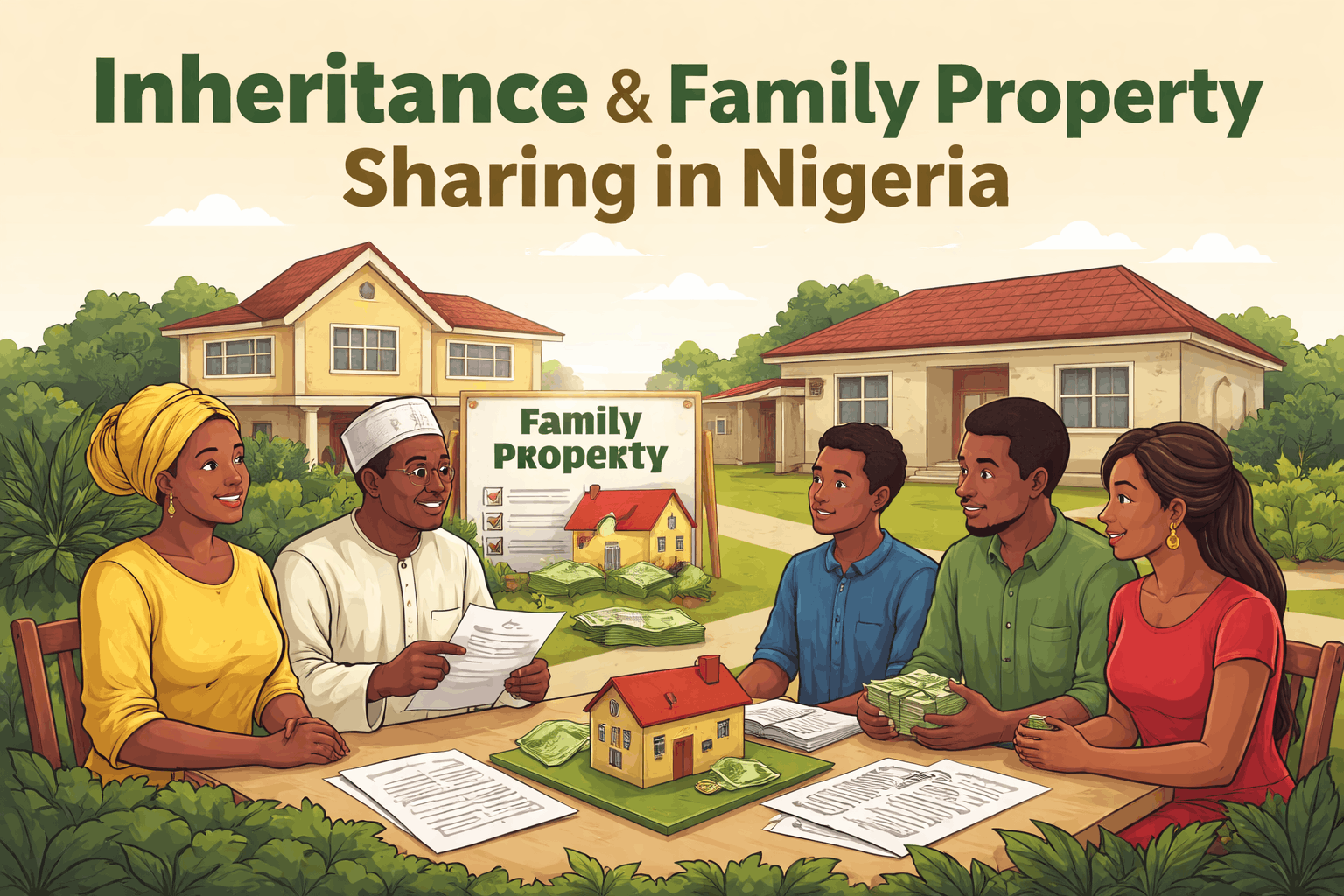
Inheritance and family property sharing is one of the most sensitive and misunderstood issues in Nigeria. Many families experience conflict, long-standing disputes, and even court cases because there is no clear understanding of how inheritance works or how family property should be shared. In practice, inheritance in Nigeria is influenced by a combination of customary law, statutory law, religion, and family agreements.
Understanding how these systems work can help families avoid unnecessary conflict and make better decisions.
What Inheritance Means in the Nigerian Context
Inheritance refers to the transfer of a deceased person’s property, assets, and responsibilities to surviving family members or beneficiaries. These properties may include land, houses, money, vehicles, businesses, and other personal belongings.
In Nigeria, inheritance does not follow one single rule. Instead, it depends on factors such as the deceased person’s ethnic background, religion, marital status, whether a valid will exists, and the location of the property.
The Role of a Will in Inheritance
A will is a legal document in which a person clearly states how their property should be shared after death. When a valid will exists, inheritance becomes relatively straightforward.
In Nigeria, a will generally takes priority over customary or family rules, provided it was properly written and does not violate certain legal or moral limits. For example, a will that completely disinherits dependents may be challenged in court.
When a will exists:
-
The property is shared according to the wishes of the deceased
-
Executors named in the will manage the process
-
The probate registry validates the will before distribution begins
Having a will significantly reduces confusion, family disputes, and delays.
Inheritance Without a Will (Intestate Succession)
When someone dies without a will, they are said to have died intestate. This is where most inheritance problems in Nigeria arise.
In intestate cases, inheritance is determined by:
-
Customary law
-
Statutory law
-
Religious law (for Muslims and Christians, depending on circumstances)
The applicable system depends on the family background and the type of marriage contracted by the deceased.
Customary Inheritance Systems
Customary law inheritance is based on ethnic traditions and varies widely across Nigeria.
In many parts of southern Nigeria, family property is considered communal. This means the property belongs to the extended family rather than one individual. The family head or elders usually oversee the sharing process.
In some traditions:
-
The eldest son may act as caretaker of the property
-
Male children may be prioritized over female children
-
Widows may have usage rights but not ownership
However, many of these practices are increasingly challenged in court, especially when they discriminate unfairly.
Statutory Inheritance Under Nigerian Law
Statutory inheritance applies when:
-
The deceased married under the Marriage Act
-
The property was acquired personally
-
The matter is taken to court
Under statutory law:
-
Spouses and children have defined inheritance rights
-
Discrimination based on gender is not allowed
-
Property is shared more equitably
Courts now often override harmful customary practices in favor of fairness and constitutional rights.
Religious Influence on Inheritance
Religion also plays a role in inheritance in Nigeria.
Under Islamic law:
-
Inheritance follows specific shares outlined in Sharia law
-
Male and female heirs receive defined portions
-
Distribution is structured and clearly guided
Christian families may rely on wills, statutory law, or family agreements, as Christianity does not provide a fixed inheritance formula.
Family Meetings and Agreements
In many Nigerian families, inheritance is resolved through family meetings rather than courts. Elders, community leaders, and respected relatives may come together to agree on how property should be shared.
These meetings often aim to:
-
Maintain family unity
-
Avoid public disputes
-
Respect traditions
However, verbal agreements can lead to problems later if not documented. Written agreements signed by all parties help prevent future conflicts.
Common Mistakes Families Make
Many inheritance disputes arise from avoidable mistakes.
Some common issues include:
-
Not writing a will
-
Leaving property documents unorganized
-
Assuming family members will be fair
-
Ignoring the rights of spouses or children
-
Relying solely on verbal agreements
These mistakes often result in long court cases and broken family relationships.
How Property Disputes Usually Start
Disputes often begin when:
-
One family member takes control of property
-
Documents are hidden or altered
-
Rent or proceeds are collected without transparency
-
New spouses or relatives are introduced into the equation
Once trust is broken, resolving the matter becomes difficult.
How to Avoid Inheritance Conflicts
Families can reduce inheritance problems by:
-
Encouraging property owners to write wills
-
Keeping land and house documents safe and accessible
-
Documenting family agreements
-
Seeking legal guidance when necessary
-
Addressing issues early rather than postponing them
Clear communication and proper documentation go a long way.
Final Thoughts
Inheritance and family property sharing in Nigeria is shaped by law, culture, religion, and family dynamics. While traditions remain important, modern legal frameworks increasingly protect fairness and individual rights.
Understanding how inheritance works helps families make informed decisions, avoid conflict, and preserve both property and relationships. Knowledge, planning, and transparency remain the strongest tools in ensuring that inheritance serves its true purpose rather than becoming a source of division.

 Daniel Okoye