 Daniel Okoye
Land ownership in Nigeria is not controlled only by government institutions. In many towns and villages, especially outside major cities, land is owned and managed by local communities. Understanding how land allocation works in these communities is important because the process is very different from buying land from a government or a real estate company.
This article explains how community land allocation works, who controls the land, the steps involved, and the mistakes many buyers make.
What Is Community Land?
Community land refers to land that is traditionally owned by:
-
A family
-
A kindred
-
A village
-
A group of families under a common ancestry
Such land is not originally owned by the government. Ownership is passed down through generations, and authority over the land is exercised by elders, family heads, or community leaders.
Who Has Authority Over Community Land?
Land in local communities is not controlled by one person alone. Authority is usually shared among several people to prevent abuse.
Common authorities include:
-
The family head (or head of kindred)
-
Elders of the family or community
-
The traditional ruler (where applicable)
-
Principal members or representatives of the land-owning group
Any valid land allocation must involve collective consent, not just one individual acting alone.
How Land Is Identified for Allocation
Before land is allocated, the community identifies:
-
Which portions of land are free
-
Which areas are reserved for farming, burial grounds, or communal use
-
Which areas are suitable for residential or commercial purposes
Some lands may not be allocated at all because they are considered sacred or reserved for future generations.
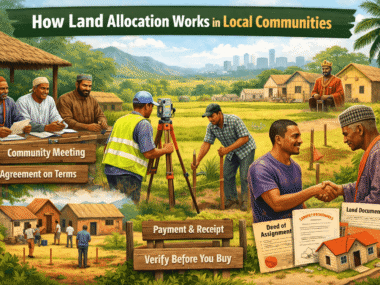
Step-by-Step Process of Community Land Allocation
Step 1: Initial Approach
A buyer or representative approaches a recognized member of the land-owning family or community. This could be an elder, a youth leader, or a local intermediary.
At this stage, discussions are informal. The goal is to confirm whether the land is truly available.
Step 2: Family or Community Meeting
Once interest is confirmed, a meeting is held involving:
-
Family heads
-
Elders
-
Witnesses from the community
This meeting is critical. Decisions about allocation are made collectively, and the land’s history is discussed to ensure there are no disputes.
Step 3: Agreement on Terms
The parties agree on:
-
The size of land
-
The price
-
Whether payment is full or installment
-
Any additional community levies
In many communities, there are traditional payments such as kola nuts, drinks, or symbolic fees, which signify acceptance.
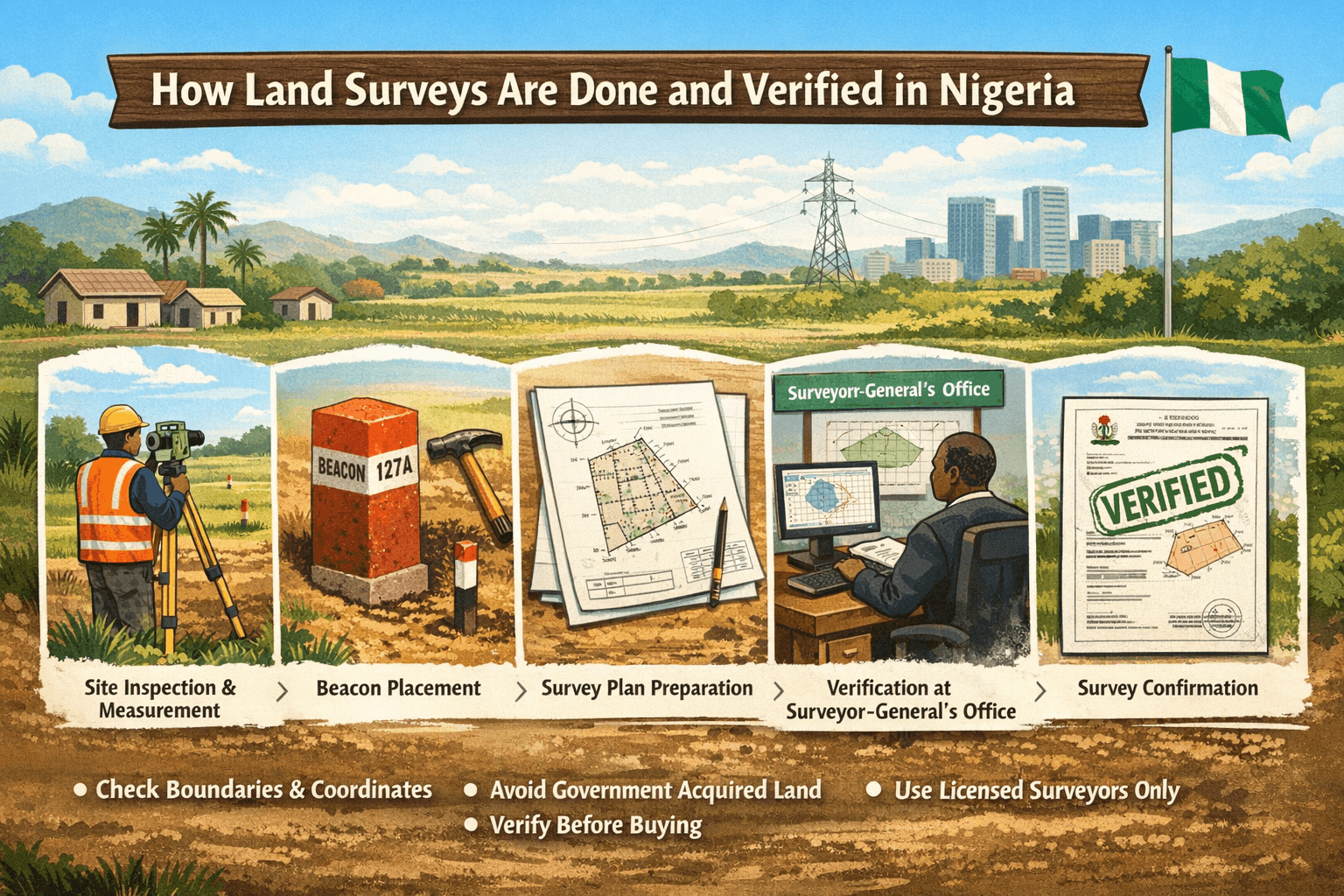
Step 4: Physical Inspection and Boundary Identification
The land is shown to the buyer on-site. Natural landmarks or pegs may be used to mark boundaries.
It is at this stage that buyers should involve a surveyor to avoid future boundary issues.
Step 5: Payment and Acknowledgment
Payment is made in the presence of witnesses. Once payment is completed:
-
The family acknowledges receipt
-
Allocation is formally recognized
Payment without witnesses is risky and discouraged.
Step 6: Documentation
Although community land is customary, documentation is still important.
Common documents include:
-
Family or community receipt
-
Deed of assignment
-
Survey plan
-
Letter of allocation or acknowledgment
These documents help protect the buyer’s interest and support future government processing.
Role of the Traditional Ruler
In some communities, the traditional ruler does not own the land but acts as a custodian. Their role may include:
-
Confirming the legitimacy of the land-owning family
-
Endorsing the transaction
-
Preventing disputes
However, approval from a traditional ruler alone does not replace family consent.
Why Disputes Commonly Occur
Land disputes in community areas often happen due to:
-
Sale by unauthorized individuals
-
Multiple sales of the same land
-
Boundary misunderstandings
-
Inheritance conflicts within the family
These disputes usually arise when proper process is ignored or rushed.
Common Mistakes Buyers Make
Many buyers get into trouble because they:
-
Pay one family member without confirming authority
-
Skip documentation
-
Refuse to involve professionals
-
Assume verbal agreements are enough
-
Do not investigate past disputes
Community land requires patience and verification.
Can Community Land Become Government-Recognized?
Yes. Community land can later be perfected by:
-
Survey registration
-
Governor’s Consent
-
Certificate of Occupancy (where applicable)
However, perfection depends on location, land status, and state regulations.
Final Thoughts
Community land allocation is a legitimate and common system in Nigeria, but it must be handled carefully. When done correctly, it offers affordable land ownership and long-term security. When done wrongly, it leads to disputes that can last for decades.
Understanding the process, respecting community structures, and documenting every step are the keys to safe land ownership in local communities.

Daniel Okoye
Daniel Okoye is a writer and researcher at ProcesslyHub. I focus on explaining Nigerian systems, housing processes, and everyday business workflows in simple and practical terms. My goal is to help readers understand how real-world processes work so they can make informed decisions and avoid costly mistakes.

 Daniel Okoye