 Daniel Okoye
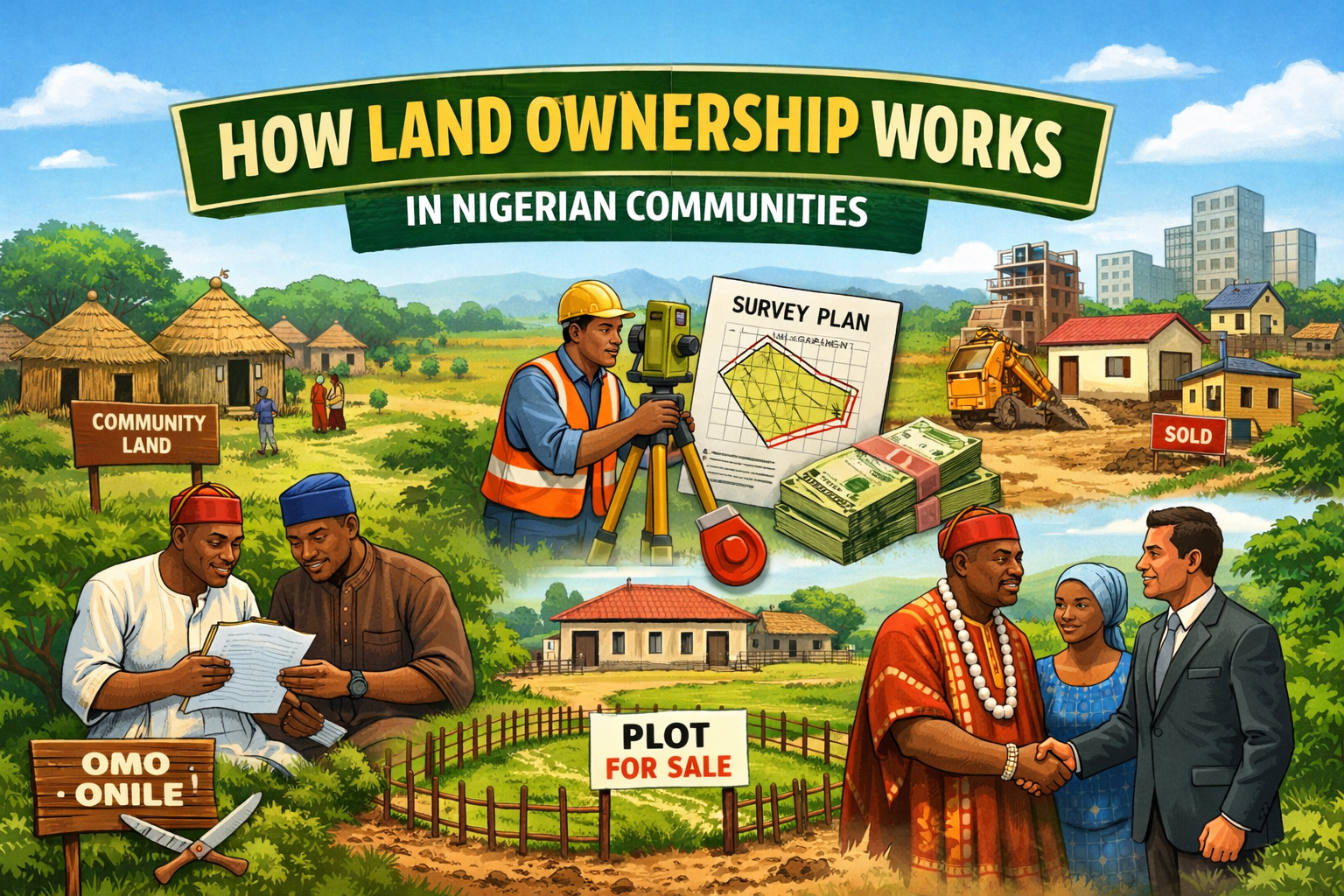
Land ownership in Nigeria is different from many other countries because it combines government law with traditional community systems. For first-time buyers, this can be confusing. Understanding how both the legal and customary systems work is essential if you want to buy land safely and avoid disputes.
Land ownership in Nigeria is not just about paying money and receiving documents. It involves verification, documentation, government approval, and sometimes community consent. Knowing how each part works will help protect your investment.
The Legal Foundation: The Land Use Act
The main law governing land ownership in Nigeria is the Land Use Act of 1978, introduced under the authority of the Federal Government of Nigeria. This law gives control of land in each state to the state governor, who holds it in trust for the public.
This means individuals do not technically “own” land permanently in the absolute sense. Instead, they are granted the legal right to use and occupy land. This right is formalized through documents such as:
-
Certificate of Occupancy (C of O)
-
Governor’s Consent
-
Deed of Assignment
These documents confirm that the government recognizes your right to use the land.
For example, if you buy land in Lagos, your ownership becomes fully recognized only after it is registered with the appropriate authority, such as the Lagos State Land Registry.
Customary Land Ownership in Communities
While statutory law exists, many lands in Nigeria—especially in rural areas—are still controlled by families, communities, or traditional institutions.
In these areas, land is usually owned collectively by:
-
Families
-
Villages
-
Clans
-
Traditional rulers
Chiefs, elders, or family heads act as custodians and have the authority to allocate or sell land on behalf of the group.
For example, in many parts of Anambra, Ogun, or Rivers State, family land can only be sold with the consent of the family head and principal members. If one person sells family land without consent, the transaction may later be declared invalid.
This is why buyers must verify both:
-
Community ownership
-
Government recognition
The First Step: Identifying and Verifying the Land Owner
Before buying land, the most important step is confirming who actually owns the land.
This involves:
-
Asking the seller for proof of ownership
-
Checking documents such as survey plans or Deeds of Assignment
-
Visiting the community to confirm ownership
-
Speaking with neighbors or community leaders
This step is critical because land disputes in Nigeria often happen when someone sells land they do not truly control.
For example, a person may inherit land but does not have authority to sell it without approval from other family members. If you buy such land, disputes may arise later.
Survey Plans and Land Identification
A survey plan is one of the most important documents in Nigerian land ownership. It shows the exact location, size, and boundaries of the land.
A licensed surveyor prepares this document, and it helps confirm whether the land falls under:
-
Government acquisition
-
Committed land
-
Free land
Government-acquired land cannot be legally sold unless released by the government.
You can verify survey details through state land offices or surveyor-general offices.
Documentation and Legal Transfer
Once ownership is confirmed and payment is agreed, the next step is documentation.
The most common document used to transfer land ownership is the Deed of Assignment. This document transfers ownership rights from the seller to the buyer.
The Deed of Assignment must be:
-
Signed by both parties
-
Witnessed
-
Registered with the state land registry
Registration ensures the government recognizes you as the new owner.
Without proper registration, your ownership may not be fully protected under the law.
Certificate of Occupancy and Governor’s Consent
A Certificate of Occupancy (C of O) is one of the strongest land ownership documents in Nigeria. It officially confirms that the government has granted you the right to occupy the land.
If the land already has a C of O, the buyer must obtain Governor’s Consent to transfer ownership legally.
Governor’s Consent confirms that the state government approves the transfer of land from one owner to another.
Without Governor’s Consent, the transfer is incomplete under Nigerian law.
Payment Process and Record Keeping
Land payments in Nigeria may be made through:
-
Bank transfer
-
Certified cheque
-
Escrow arrangements
Using bank transfers is safer because it creates a record of payment.
In some traditional communities, additional customary payments may be required, such as:
-
Community fees
-
Documentation fees
-
Family consent fees
These should always be documented to avoid future disputes.
For example, in some Lagos community land transactions, buyers may pay both the seller and the community development association.
Land Ownership Through Inheritance
Many lands in Nigeria are inherited. This means ownership may belong to multiple family members.
Before buying inherited land, buyers must confirm that:
-
All family members consent to the sale
-
The family head approves the transaction
-
Proper documentation is signed
Failure to do this can lead to disputes years later.
For example, one family member may sell land secretly, but other family members later challenge the sale in court.
Urban vs Rural Land Ownership
Land ownership processes are usually more formal in cities such as:
-
Lagos
-
Abuja
-
Port Harcourt
In urban areas, land ownership records are more likely to be documented and registered.
In rural areas, customary ownership is more common, and documentation may be limited.
This is why urban land often costs more—it offers stronger legal security.
Costs Associated With Land Ownership
Buying land in Nigeria involves more than just paying the purchase price. Additional costs may include:
-
Survey fees
-
Legal fees
-
Documentation fees
-
Registration fees
-
Governor’s Consent fees
These costs vary depending on the state and location.
For example, in Lagos, Governor’s Consent and registration fees can cost several hundred thousand naira.
Importance of Taking Possession of the Land
After buying land, it is important to take physical possession. This may include:
-
Visiting the land regularly
-
Fencing the land
-
Clearing the land
Unused land may attract encroachers or disputes, especially in fast-growing areas.
Physical possession strengthens your claim.
Common Risks in Nigerian Land Ownership
Some of the most common risks include:
-
Buying land from unauthorized sellers
-
Buying government-acquired land
-
Failure to register documents
-
Family disputes over inherited land
-
Buying land without verifying ownership
These risks can be avoided through proper verification and documentation.
Final Thoughts
Land ownership in Nigeria involves both government approval and community recognition. Understanding how these systems work is essential to avoid disputes and financial loss.
To safely own land in Nigeria, always:
-
Verify ownership properly
-
Obtain a survey plan
-
Sign a Deed of Assignment
-
Register documents with the land registry
-
Apply for Certificate of Occupancy or Governor’s Consent
With proper due diligence, land ownership in Nigeria can be secure and highly rewarding.

Daniel Okoye
Daniel Okoye is a writer and researcher at ProcesslyHub. I focus on explaining Nigerian systems, housing processes, and everyday business workflows in simple and practical terms. My goal is to help readers understand how real-world processes work so they can make informed decisions and avoid costly mistakes.
 Daniel Okoye