 Daniel Okoye
Land scams are one of the most common ways people lose money in Nigeria. They happen in cities, towns, and even fast-developing rural areas. Many victims are educated, careful people who simply did not understand how the land process really works. To avoid falling into the same trap, it is important to first understand how these scams happen in real life.
Why Land Scams Are So Common in Nigeria
Land is valuable, emotional, and often scarce. Demand keeps rising, especially in developing areas, while documentation and record-keeping are sometimes weak. This creates opportunities for dishonest individuals to take advantage of buyers who are eager to secure land quickly or cheaply.
Another major reason is that many buyers do not verify information independently. They rely on verbal assurances, family connections, or pressure tactics, which scammers know how to exploit very well.
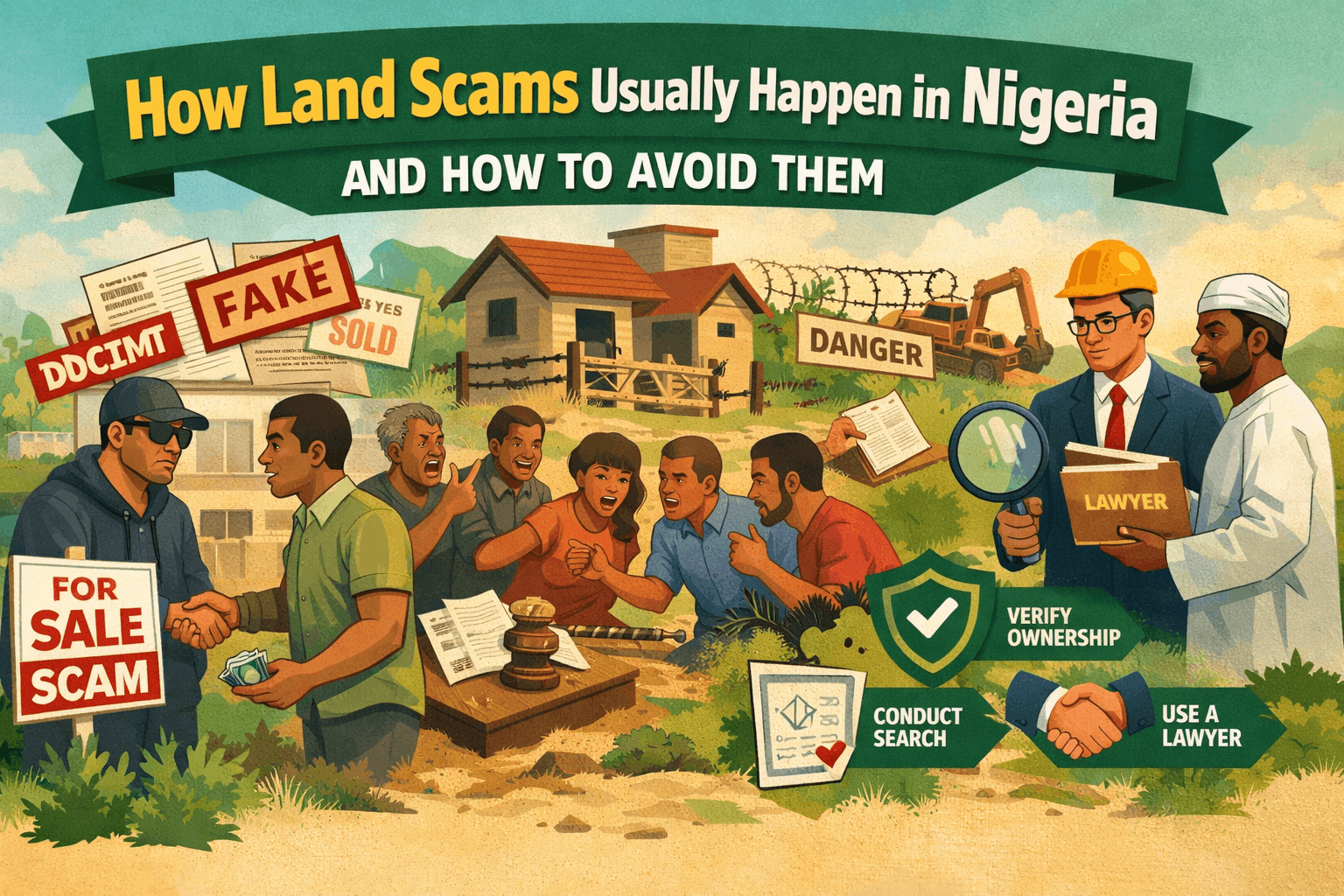
Common Ways Land Scams Usually Happen
Selling Family or Community Land Without Full Consent
This is one of the most common land scams in Nigeria. A single family member or youth leader presents himself as the rightful seller, even though other family members or stakeholders have not agreed to the sale.
After payment is made, other members of the family surface and claim the land was sold without consent. This often leads to disputes, court cases, or demands for additional payments.
This type of scam is common in ancestral or community-owned land where ownership is shared among many people.
Selling the Same Land to Multiple Buyers
In this scenario, the land exists and may even be genuinely owned, but the seller sells it to more than one buyer. Each buyer receives a receipt or allocation letter, and the scam only becomes obvious when development begins.
This happens frequently in areas where land is cheap and demand is high. Some sellers take advantage of the fact that buyers may not start building immediately.
Fake or Forged Land Documents
Some scammers use forged survey plans, fake receipts, or altered documents to make land appear legitimate. To an untrained eye, these documents may look real.
In some cases, the land exists, but the documents do not belong to that land. In other cases, both the land and the documents are fake.
Buyers often realize the truth only when they attempt to register the land or verify documents at the land registry.
Land Under Government Acquisition
Many people buy land that is already under government acquisition without knowing it. Scammers deliberately hide this information because such land cannot be legally owned without proper excision or allocation.
When buyers later discover that the land is under acquisition, they may lose both the land and their money, or be forced to pay large sums to regularize it, sometimes unsuccessfully.
Impersonation of Real Owners or Agents
Some scammers pose as caretakers, agents, or representatives of landowners. They may even have access to the land and show it confidently to buyers.
In reality, they have no authority to sell the land. Once payment is made, they disappear or deny responsibility.
This often happens when buyers do not meet the actual landowning family or verify the seller’s identity properly.
Pressure and Urgency Tactics
A very common red flag in land scams is urgency. Scammers often say things like “another buyer is ready,” “price will increase tomorrow,” or “this land will finish today.”
This pressure is designed to stop buyers from carrying out proper checks. Once money is paid, the truth gradually comes out.
How to Avoid Land Scams in Nigeria
Always Verify Ownership
Never rely on verbal claims. Ask questions and insist on seeing proof of ownership. If the land is family-owned, ensure that principal family members are aware of the sale.
Where possible, meet the landowners directly instead of dealing only with middlemen or agents.
Conduct a Land Search
Before paying for any land, conduct a search at the appropriate land registry to confirm the land’s status. This helps you know whether the land is free from government acquisition, disputes, or existing ownership claims.
Engaging a qualified surveyor or property lawyer can help interpret search results correctly.
Confirm the Survey Plan Properly
A survey plan should be verified with the Surveyor General’s office to ensure it is genuine and corresponds to the actual land location.
Do not assume a stamped document is real. Verification is a critical step many buyers skip.
Avoid Paying in Cash Without Records
Payments should always be traceable. Use bank transfers and ensure proper receipts are issued. Every payment should clearly state what it is for and who received it.
Avoid vague receipts that do not describe the land properly.
Involve Professionals
Using a registered surveyor, property lawyer, or reputable real estate firm greatly reduces risk. While it may cost extra, it often saves you from losing everything.
Professionals understand red flags that buyers may not notice.
Visit the Land Multiple Times
Do not visit the land only once. Visit at different times and speak with neighbors or people in the area. They often know the history of the land and can warn you of ongoing disputes.
Document Every Agreement
Ensure there is a proper deed of assignment or agreement prepared and signed by all relevant parties. Verbal agreements offer no protection in land matters.
Also ensure documents are registered where required to strengthen your claim.
Be Patient and Skeptical
If a deal sounds too good to be true, it usually is. Cheap land, rushed sales, and emotional pressure are all warning signs.
Take your time. A genuine seller will allow you to verify and ask questions.
Final Thoughts
Land scams in Nigeria thrive mainly because buyers rush, trust blindly, or skip verification steps. Most victims did not intend to be careless; they simply did not understand how the process really works.
By understanding how these scams happen and taking deliberate steps to verify ownership, documents, and sellers, you significantly reduce your risk. Land is a long-term investment, and patience during the buying process is not a weakness. It is protection.
At ProcesslyHub, the goal is simple: help you understand systems clearly so you can make better, safer decisions.

Daniel Okoye
Daniel Okoye is a writer and researcher at ProcesslyHub. I focus on explaining Nigerian systems, housing processes, and everyday business workflows in simple and practical terms. My goal is to help readers understand how real-world processes work so they can make informed decisions and avoid costly mistakes.

 Daniel Okoye