 Daniel Okoye
Changing your name in Nigeria is completely legal and more common than many people think. People change their names for different reasons such as marriage, divorce, religious conversion, personal preference, correction of spelling errors, cultural alignment, or family issues.
However, a name change is not just something you announce on social media. For it to be recognized by banks, schools, employers, government agencies, and international bodies, you must follow a formal legal process.
This guide explains clearly how the legal name change process works in Nigeria, the documents required, and how to update your records everywhere without stress.
What Does “Legal Name Change” Mean?
A legal name change means officially replacing your old name with a new one and having it recognized by:
• Government institutions
• Financial institutions
• Schools and universities
• Employers
• Immigration offices
• International bodies
Once completed, your new name becomes your lawful identity for all official purposes.
Simply using a new name without documentation can cause problems when opening bank accounts, processing passports, or verifying certificates.
Common Reasons Nigerians Change Their Names
Many people assume name changes only happen after marriage, but there are many valid reasons.
Personal or Family Reasons
• Marriage (adopting spouse’s surname)
• Divorce (reverting to maiden name)
• Adoption
• Family reconciliation
Cultural or Religious Reasons
• Traditional naming changes
• Religious conversion (Christian, Muslim, or traditional faith changes)
• Aligning with cultural heritage
Practical Reasons
• Correcting misspellings
• Removing embarrassing or difficult names
• Simplifying long names
• Rebranding for professional purposes
Whatever your reason, Nigerian law allows you to change your name as long as the process is not for fraud or criminal concealment.
Legal Requirements for Name Change in Nigeria
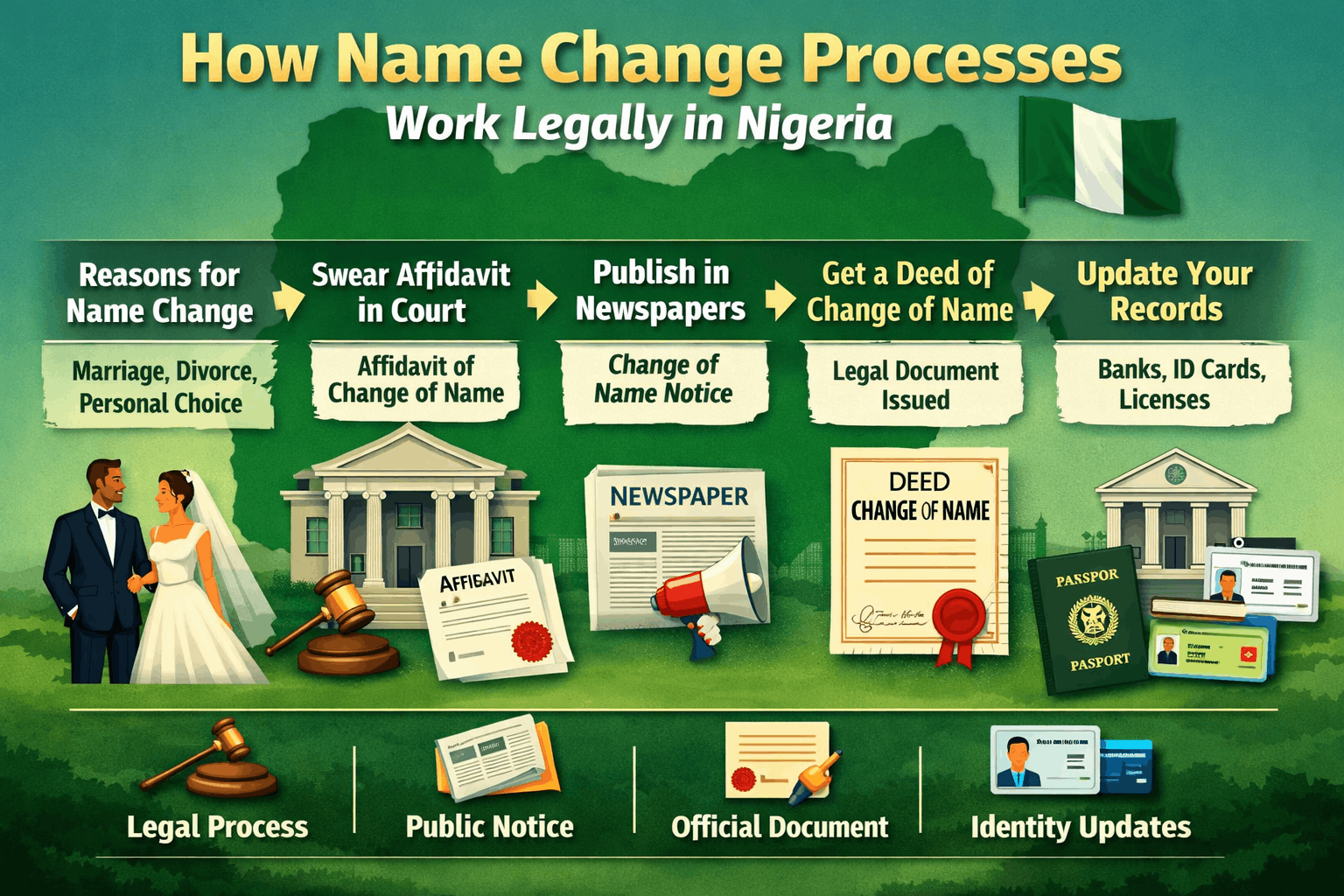
To legally change your name, you typically need three major steps:
• Sworn affidavit
• Newspaper publication
• Gazette publication (optional but strongly recommended)
Let’s break each step down.
Step 1: Sworn Affidavit at the High Court
The affidavit is the foundation of your name change. It is a sworn legal statement declaring your old name and new name.
Where to Get It
You can obtain this at:
• State High Court
• Federal High Court
• Any legal practitioner
What the Affidavit Contains
• Your old name
• Your new name
• Your address
• Your reason for the change
• A declaration that it is not for fraud
How It Works
• Draft the affidavit
• Sign before a Commissioner for Oaths
• Pay a small court fee
• Receive stamped and sealed copy
This affidavit serves as legal proof that you have formally changed your name.
Without this document, most institutions will not recognize the change.
Step 2: Newspaper Publication
After the affidavit, the next step is to publicly announce the change.
This is done by publishing your name change in a national newspaper.
Why This Is Important
It:
• Notifies the public
• Prevents fraud
• Creates public record
• Helps institutions verify authenticity
How to Do It
• Visit any major newspaper office
• Submit affidavit copy
• Provide old and new names
• Pay publication fee
Sample Format
“I formerly known and addressed as Adebayo Musa now wish to be known and addressed as Adebayo Daniel. All former documents remain valid. General public please take note.”
The notice usually appears in the classified or public announcements section.
Keep copies of that newspaper page as evidence.
Step 3: Gazette Publication (Highly Recommended)
Although not always compulsory, publishing your new name in the government gazette gives stronger legal recognition.
A gazette is an official government record of legal notices.
Benefits
• Stronger legal backing
• Accepted by embassies
• Required by some banks and agencies
• Useful for international travel documents
How to Publish
• Apply through Federal Government Printing Press or legal agents
• Submit affidavit and newspaper proof
• Pay fee
• Wait for publication
Once printed, your new name becomes officially recorded in government archives.
Updating Your Records After Name Change
After completing the process, you must update all your documents.
Important Places to Update
• Bank accounts
• Passport
• National ID
• Driver’s license
• Voter’s card
• School certificates
• Tax records
• Employment records
Documents You’ll Present
• Affidavit
• Newspaper publication
• Gazette copy (if available)
• Passport photographs
• Old ID
Each institution may have small additional requirements.
Special Cases
Marriage Name Change
Married women may use:
• Marriage certificate
• Affidavit
• Newspaper publication
Some institutions accept marriage certificate alone, but affidavit is safer.
Correction of Errors
If your name is misspelled on documents:
• Affidavit stating correction
• Supporting ID
• Sometimes newspaper notice
Child Name Change
Parents or guardians must:
• Provide birth certificate
• Sworn affidavit
• Court approval in some cases
How Much Does It Cost?
Costs vary by state and provider, but rough estimates:
• Affidavit: ₦2,000 – ₦5,000
• Newspaper publication: ₦5,000 – ₦15,000
• Gazette: ₦15,000 – ₦30,000
Total average: ₦20,000 – ₦50,000
Prices depend on location and urgency.
Common Mistakes to Avoid
• Skipping newspaper publication
• Losing copies of notices
• Not updating all documents
• Using different spellings
• Changing name for illegal purposes
Always keep multiple photocopies and scanned versions.
How Long Does It Take?
Typical timeline:
• Affidavit: same day
• Newspaper: 1–3 days
• Gazette: 2–6 weeks
• Updates: depends on institutions
Overall: 2–8 weeks
Final Thoughts
Changing your name legally in Nigeria is straightforward when you follow the right steps. The key is documentation.
Remember this simple order:
• Swear affidavit
• Publish in newspaper
• Publish in gazette
• Update all records
Once done properly, your new name becomes fully recognized nationwide and internationally.
If you’re planning a change, start early, keep copies of everything, and follow the process carefully. It saves you from future stress with banks, passports, and official paperwork.


 Daniel Okoye