 Daniel Okoye
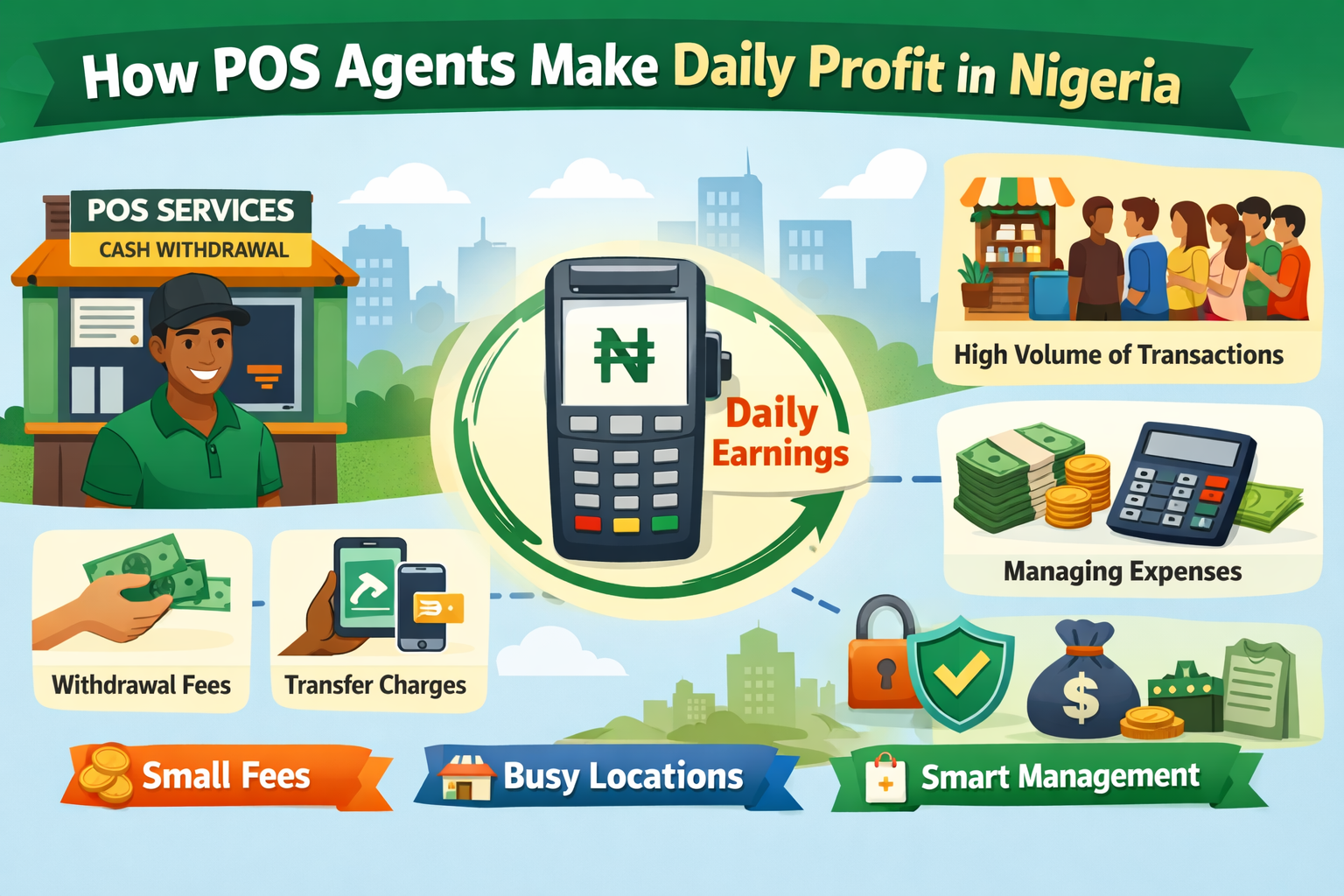
Point of Sale (POS) agents have become a common sight across Nigeria. From busy markets to quiet streets, POS stands are everywhere, helping people withdraw cash, transfer money, and pay bills. While many people use POS services daily, few truly understand how POS agents make their money and what determines whether they profit or struggle. This article explains, in clear terms, how POS agents make daily profit in Nigeria.
What a POS Agent Does
A POS agent acts as a human banking point. Instead of customers going to a bank branch or ATM, they visit a POS agent to carry out basic financial transactions. These include cash withdrawals, money transfers, bill payments, airtime purchases, and sometimes account opening or BVN-related services.
The agent uses a POS terminal connected to a bank or fintech provider. For every transaction carried out, the agent earns a fee, either paid directly by the customer or credited by the service provider.
The Main Sources of POS Income
POS agents do not rely on one income source. Daily profit usually comes from multiple small charges added together.
Withdrawal Charges
Cash withdrawal is the most common POS service in Nigeria. Agents charge customers a fee based on the amount withdrawn. For example, a customer withdrawing ₦5,000 may be charged ₦200, while ₦10,000 could attract ₦300 or more. The exact amount depends on location, competition, and customer urgency.
Some banks also pay agents a small commission per withdrawal, especially for off-bank transactions. This commission is usually lower than what the customer pays but still contributes to daily income.
Transfer Fees
Money transfers are another steady income source. POS agents help customers send money from one bank account to another. Agents charge a flat fee, often between ₦100 and ₦300 per transfer.
Since many Nigerians prefer using POS agents instead of mobile banking apps, transfers can happen frequently throughout the day, especially in markets and residential areas.
Bill Payments and Airtime Sales
Many POS agents also offer bill payment services such as electricity tokens, cable TV subscriptions, and airtime purchases. For these services, the agent earns a small commission from the service provider.
While the commission per transaction may be small, the volume adds up. Airtime sales, in particular, happen repeatedly and help stabilize daily income.
Account-Related Services
Some POS agents are registered to provide additional services like opening basic bank accounts, BVN updates, or fintech wallet registrations. These services often come with higher one-time commissions paid by the partnering bank or fintech company.
Though these transactions are not daily, they significantly boost income when they occur.
How Volume Determines Daily Profit
POS business is a volume-based business. Profit does not usually come from one large transaction but from many small ones.
An agent who handles:
-
30 withdrawals
-
20 transfers
-
15 airtime or bill payments
in a day can make a reasonable profit, even if each transaction earns a small amount.
Location plays a major role here. POS agents in busy areas such as markets, bus stops, student environments, or densely populated neighborhoods tend to record higher transaction volumes.
The Role of Location and Customer Trust
Trust is critical in POS business. Customers must believe that their money is safe with the agent. Agents who are known to be honest, patient, and consistent attract repeat customers.
Location also affects pricing. In areas with few POS agents or frequent cash shortages, agents can charge higher fees. In highly competitive areas, agents may lower charges to attract more customers, relying on volume to stay profitable.
Expenses That Affect POS Profit
While POS business looks simple, agents have daily expenses that reduce gross earnings.
Bank Charges and Commissions
Banks and fintech providers charge agents for certain transactions. For example, every withdrawal or transfer may attract a bank fee. Agents must factor these charges into their pricing to avoid losses.
Cash Management Costs
POS agents must always have cash available. This often means withdrawing large sums from banks or other agents, sometimes at a cost. In areas with cash scarcity, getting cash can be expensive and stressful.
Power and Internet
POS terminals need power and internet connectivity. Agents spend money on electricity, power banks, generators, or data subscriptions. Network downtime can also reduce the number of successful transactions in a day.
Security and Loss Risks
Handling cash comes with risk. Theft, fake transfers, chargebacks, or customer disputes can lead to losses. Smart agents put safety measures in place and avoid careless transactions.
How Successful POS Agents Increase Profit
Profitable POS agents do more than just process transactions.
They manage cash carefully, ensuring they have enough balance and physical cash throughout the day. They also adjust their charges based on demand, time of day, and location.
Many agents diversify by adding services like phone accessories sales, printing, or small retail items. This helps them earn extra income while waiting for POS customers.
Good customer service also plays a role. Friendly agents who explain charges clearly and resolve issues calmly build long-term customer loyalty.
Common Mistakes That Reduce POS Profit
Some POS agents struggle because of poor pricing, lack of cash planning, or weak record keeping. Charging too low without considering bank fees can lead to losses. Poor network selection can cause failed transactions and angry customers.
Another common mistake is mixing POS business money with personal funds. Successful agents keep clear records and separate business cash from personal spending.
What Most People Don’t Know About POS Profit
Many people think POS agents make huge profits daily. In reality, profits depend on consistency, volume, and discipline. Some days are very profitable, while others are slow.
What keeps POS agents in business is not one big win but steady daily earnings over time. When managed properly, POS business can provide reliable income and grow into a larger financial service operation.
Final Thoughts
POS agents make daily profit in Nigeria by providing essential financial services and earning small fees on each transaction. Through withdrawals, transfers, bill payments, and additional services, agents build income based on volume, trust, and smart management.
Understanding how the process works helps both customers and aspiring agents appreciate the effort behind every POS transaction and why pricing varies from place to place.


 Daniel Okoye