 Daniel Okoye
In Nigeria, a quit notice is a formal written notice issued by a landlord to a tenant, informing the tenant to vacate a rented property after a specified period. It is a legal requirement and a key step in ending a tenancy relationship.
A landlord cannot legally evict a tenant without first issuing the proper quit notice and following the correct legal process. Quit notices are designed to protect both parties. They ensure that tenants are not removed suddenly and that landlords recover their property lawfully.
Understanding how quit notices work is essential for anyone renting or leasing property in Nigeria.
What Is a Quit Notice?
A quit notice is a written document that communicates the landlord’s intention to terminate a tenancy. It clearly states that the tenant must leave the property after a specific notice period.
It is important to understand that a quit notice is not the same as an eviction order. A quit notice is only the first step. If the tenant does not leave after the notice period expires, the landlord must approach the court to obtain an eviction order.
A verbal instruction to vacate has no legal effect. For a quit notice to be valid, it must be written and properly served.
Legal Basis for Quit Notices in Nigeria
Quit notices are governed by tenancy laws, which may vary slightly from state to state. However, the general principles are similar nationwide.
Some of the relevant laws include:
-
The Recovery of Premises Act (applicable in many states)
-
Various state tenancy laws
These laws specify the type of notice required, the duration of notice, and the procedures landlords must follow before eviction.
Failure to comply with these legal requirements can render an eviction unlawful.
Types of Tenancy and Required Notice Periods
The required notice period depends on the type of tenancy agreement.
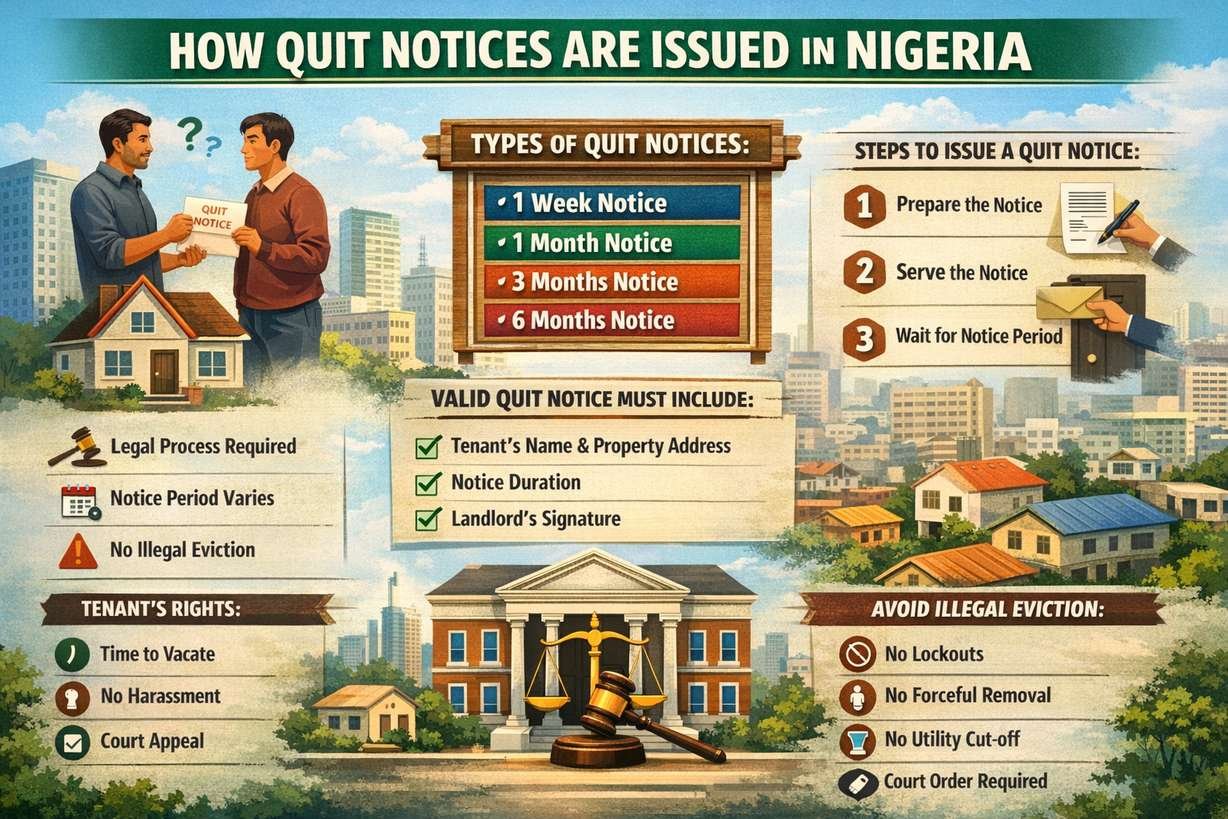
Weekly Tenancy
For tenants who pay rent weekly:
-
Required notice: One week
Monthly Tenancy
For tenants who pay rent monthly:
-
Required notice: One month
Quarterly Tenancy
For tenants who pay rent every three months:
-
Required notice: Three months
Half-Yearly Tenancy
For tenants who pay rent every six months:
-
Required notice: Six months
Yearly Tenancy
For tenants who pay rent annually, which is the most common type in Nigeria:
-
Required notice: Six months
This means that if you pay rent yearly, your landlord must give you at least six months’ notice before asking you to vacate.
Reasons Landlords Issue Quit Notices
Landlords may issue quit notices for several reasons, including:
-
Expiration of the tenancy agreement
-
Personal use of the property
-
Renovation or redevelopment
-
Non-payment of rent
-
Breach of tenancy agreement
-
Illegal use of the property
-
Sale of the property
Regardless of the reason, the legal process must still be followed.
Contents of a Valid Quit Notice
For a quit notice to be legally valid, it should contain:
-
Name of the tenant
-
Address of the rented property
-
Date the notice is issued
-
Type of tenancy
-
Required notice duration
-
Date the tenant is expected to vacate
-
Name and signature of the landlord or agent
If essential details are missing, the notice may be challenged in court.
How Quit Notices Must Be Served
Proper service of the notice is critical. A notice that is not properly served may be declared invalid.
Acceptable methods of service include:
-
Handing it directly to the tenant
-
Delivering it to an adult occupant at the premises
-
Pasting it on the door if the tenant refuses to accept it
-
Serving it through a lawyer
-
Serving it through a court bailiff
Improper delivery can delay the recovery process.
What Happens After the Notice Expires?
Once the quit notice period expires, two outcomes are possible.
If the tenant leaves voluntarily, the matter ends peacefully.
If the tenant refuses to leave, the landlord must issue a Seven Days’ Notice of Owner’s Intention to Recover Possession. This is another formal notice indicating that court action will follow.
After the seven days pass, the landlord can file a case in court.
Only a court can authorize eviction.
Illegal Eviction Practices
Some landlords attempt to remove tenants without following legal procedures. This is illegal.
Examples of illegal eviction include:
-
Changing the locks
-
Removing tenant belongings
-
Disconnecting electricity or water
-
Using threats or force
-
Removing roofing or damaging the property
Such actions can expose landlords to lawsuits or criminal charges.
Eviction can only be carried out by court order and enforced by court bailiffs.
Tenant Rights After Receiving a Quit Notice
Receiving a quit notice does not mean immediate eviction.
Tenants have the right to:
-
Remain in the property until the notice expires
-
Peaceful enjoyment of the premises
-
Freedom from harassment
-
Challenge improper notice in court
-
Due legal process
Tenants should carefully review the notice and confirm that it complies with legal requirements.
Role of Lawyers and the Court
Lawyers help ensure that quit notices are properly drafted and served.
They assist with:
-
Preparing valid notices
-
Serving legal documents
-
Filing recovery cases in court
-
Representing landlords or tenants
The court reviews the case and determines whether eviction is lawful. If approved, the court issues an eviction order, which is enforced by authorized officers.
Common Mistakes Landlords Make
Many eviction cases are delayed due to errors made by landlords.
Common mistakes include:
-
Issuing incorrect notice duration
-
Relying on verbal notice
-
Forcing tenants out without court order
-
Serving notice improperly
These errors can make the entire process invalid.
What Tenants Should Do After Receiving a Quit Notice
Tenants should:
-
Read the notice carefully
-
Confirm the notice period matches their tenancy type
-
Verify proper service
-
Begin preparing to move if valid
-
Seek legal advice if unsure
-
Attempt negotiation if appropriate
Ignoring the notice may result in court action.
Why Quit Notices Are Important
Quit notices create structure and fairness in tenancy relationships. They:
-
Protect tenants from sudden eviction
-
Protect landlords’ ownership rights
-
Provide clear timelines
-
Reduce conflict
-
Ensure compliance with the law
They are an essential part of Nigeria’s tenancy system.
Conclusion
A quit notice is a necessary legal step in ending a tenancy in Nigeria. Landlords must follow proper procedures and issue the correct notice based on the type of tenancy. Tenants, in turn, have rights and cannot be evicted without due process.
Understanding how quit notices work helps landlords avoid costly legal mistakes and helps tenants protect themselves from unlawful eviction.
Whether you are a landlord or tenant, knowing the proper procedure ensures that tenancy transitions happen smoothly and lawfully.


 Daniel Okoye