 Daniel Okoye
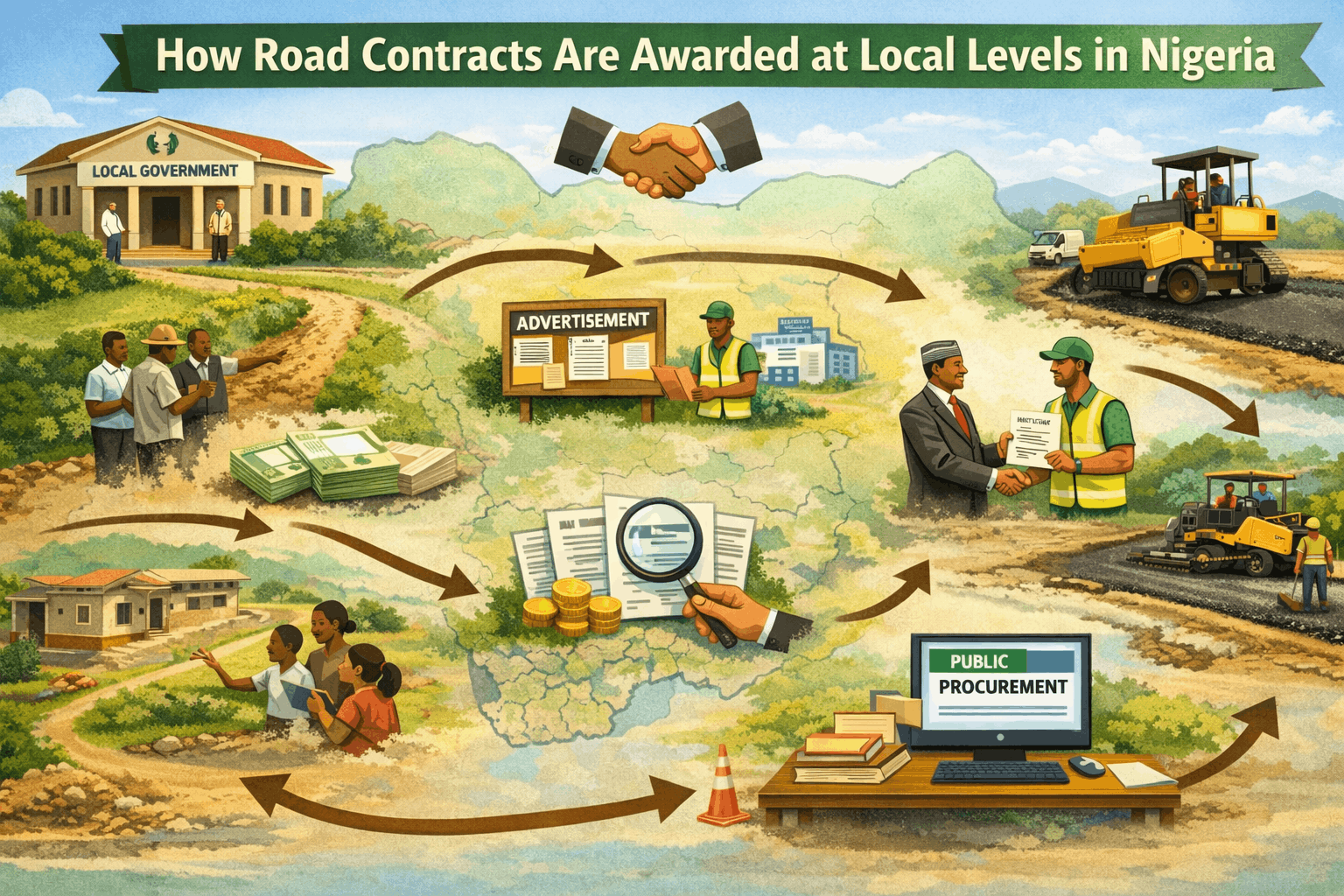
Road construction at the local level plays a major role in community development across Nigeria. From rural farm roads to inner-street drainage and asphalt projects, local roads connect markets, schools, hospitals, and businesses. These projects are usually handled by local governments or state agencies rather than the federal government. Understanding how these road contracts are awarded helps citizens, contractors, and stakeholders follow the process, ensure transparency, and reduce corruption.
Key benefits of local road projects include
• Easier transportation of goods and farm produce
• Better access to schools and healthcare
• Increased property value
• Improved local trade and economic growth
Who Is Responsible for Local Road Projects?
In Nigeria, road responsibilities are divided into three tiers of government.
• Federal Government — highways and interstate roads
• State Governments — major state roads and urban connectors
• Local Government Areas (LGAs) — inner streets, feeder roads, and rural access roads
Most inner streets and community roads fall under the local government’s jurisdiction.
However, many local governments lack sufficient funds or technical capacity. Because of this, state governments often supervise or co-fund local road projects through ministries such as the Ministry of Works or Rural Development.
Budgeting and Project Identification
The process begins with budgeting. Each year, local governments prepare an annual budget that includes capital projects like road construction and repairs. Community leaders, councillors, and stakeholders identify roads that need attention.
Common ways projects are selected include
• Community requests and petitions
• Needs assessments by engineers
• Political promises during campaigns
• Economic importance such as access to markets or schools
• Emergency repairs after flooding or erosion
After identifying priority roads, engineers or consultants prepare cost estimates. These estimates are then included in the approved budget.
Approval and Funding
Once the budget is passed by the local legislative council, funds are allocated. Without proper funding approval, no contract can legally proceed.
Funding may come from
• Monthly federal allocations
• State government grants
• Internally Generated Revenue (IGR)
• Special intervention or constituency funds
• Development partnerships or donor support
Procurement and Tendering Process
Procurement is the official process of selecting a contractor. Nigerian public procurement rules require openness, fairness, and competition to prevent favoritism.
The process typically follows these steps
• Advertisement
• Prequalification
• Tender submission
• Bid opening
• Evaluation
Advertisement
The local government or supervising ministry advertises the contract to invite bids.
Common channels include
• Notice boards at the secretariat
• Local newspapers
• Radio announcements
• Procurement portals
Prequalification
Contractors must prove they are capable of handling the project. Required documents often include
• Company registration (CAC documents)
• Tax clearance certificates
• Evidence of similar past jobs
• Financial statements
• List of equipment and manpower
• Professional certifications
Only qualified companies move forward.
Tender Submission
Prequalified contractors submit bids stating
• Total project cost
• Completion timeline
• Work method
• Technical proposal
Bids are sealed and submitted before a deadline to ensure fairness.
Bid Opening
Bids are opened publicly on a fixed date.
During this stage
• Company names are announced
• Prices are read out
• Officials and observers are present
• Records are documented for transparency
Evaluation and Contractor Selection
A tender evaluation committee reviews all bids carefully. The cheapest offer is not automatically chosen.
Evaluation focuses on
• Technical competence
• Past performance
• Financial strength
• Realistic pricing
• Equipment availability
• Delivery timeline
The contractor with the most responsive and technically sound bid is recommended for approval.
Contract Award and Documentation
After evaluation, the local government chairman or relevant authority approves the selected contractor. A formal award letter is issued, followed by contract signing.
The contract document usually includes
• Scope of work
• Project duration
• Payment structure
• Quality standards
• Penalties for delays
• Maintenance obligations
• Defect liability period
Contractors may also provide
• Performance bonds
• Bank guarantees
• Insurance coverage
Mobilization and Project Execution
Once the agreement is signed, the contractor receives a mobilization fee, often 20–30 percent of the contract sum.
This covers
• Moving equipment to site
• Purchasing materials
• Hiring workers
• Site preparation
Engineers and consultants supervise the work to ensure compliance.
They monitor
• Material quality
• Construction standards
• Work speed
• Safety compliance
• Environmental impact
Site meetings are held regularly to track progress.
Payment and Monitoring
Payments are made in stages called interim payments. Contractors are paid only after completed work is inspected and certified.
Examples of measurable stages include
• Clearing and earthworks completed
• Drainage installed
• Stone base laid
• Asphalt or concrete surface completed
• Final finishing and markings
This staged payment system reduces the risk of abandoned or poorly executed projects.
Challenges in Local Road Contracting
Despite formal procedures, several issues affect the system.
Common challenges include
• Political interference in contractor selection
• Inflated contract sums
• Delayed payments
• Poor supervision
• Abandoned projects
• Use of unqualified contractors
• Corruption and favoritism
These problems sometimes result in low-quality roads that deteriorate quickly.
Efforts to Improve Transparency
To improve accountability, reforms are being introduced across many states.
These include
• Adoption of public procurement laws
• Open competitive bidding
• Digital procurement platforms
• Independent audits
• Community monitoring
• Public disclosure of awarded contracts
Such measures help reduce corruption and improve quality.
Role of Citizens and Communities
Residents also play an important role in ensuring successful projects.
Communities should
• Monitor construction progress
• Report abandoned or poor-quality work
• Attend town hall meetings
• Engage councillors and officials
• Request project information
• Protect public infrastructure
When citizens are involved, contractors are more likely to deliver quality results.
Conclusion
Road contracts at the local level in Nigeria follow a structured process that includes budgeting, advertising, bidding, evaluation, contract signing, and supervision. Although challenges such as corruption and inefficiency remain, stronger procurement practices and community oversight are improving the system. Understanding how these contracts are awarded empowers contractors, citizens, and stakeholders to demand fairness, transparency, and durable roads that truly serve the people.


 Daniel Okoye