 Daniel Okoye
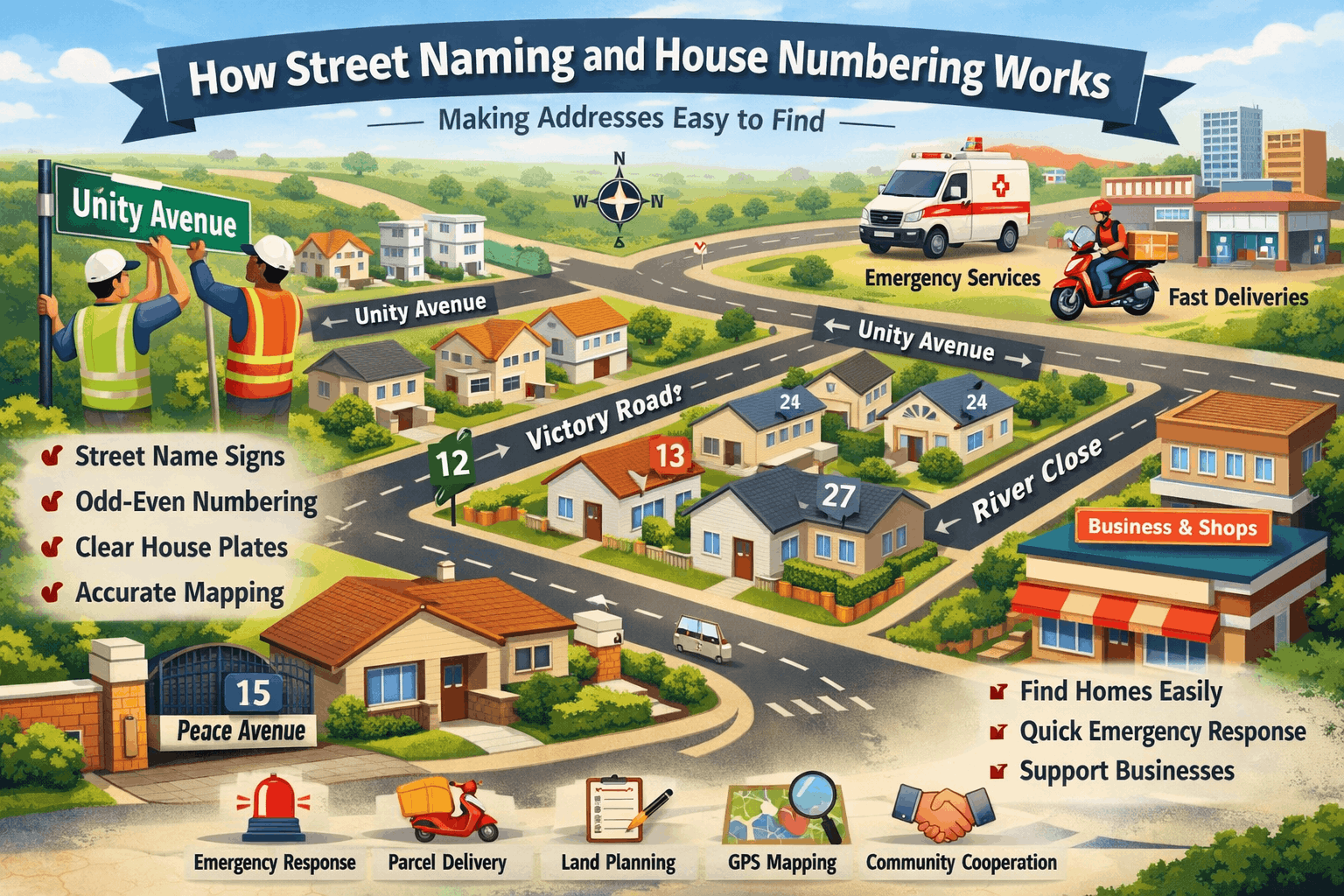
Street naming and house numbering may look like small details, but they are very important for how a city or community functions. Without clear street names and visible house numbers, people struggle to find homes, deliveries get lost, and emergency services waste valuable time.
As Nigerian cities continue to grow and more people use logistics services, ride-hailing apps, and online shopping, having a proper address system has become a necessity, not a luxury.
This guide explains how streets are named, how houses are numbered, who is responsible, and why it matters using simple explanations and bullet points for easy understanding.
What Is Street Naming and House Numbering?
Street naming and house numbering is the system that gives every road and building a unique identity so they can be easily located.
In simple terms:
-
Street = gets a name
-
House = gets a number
-
Both combine to form your address
Example:
-
No. 15, Peace Avenue, Unity Estate, Surulere, Lagos
Who Is Responsible?
Street naming and numbering are handled by local authorities and planning offices.
Usually managed by:
-
Local Government Authorities (LGAs)
-
Town planning departments
-
Surveyors
-
Urban planners
-
Community development associations
Their duties include:
-
Approving street names
-
Creating maps
-
Assigning numbers
-
Installing signage
-
Keeping address records
How Street Names Are Chosen
Street names are selected carefully to avoid confusion and reflect the community’s identity.
Common naming ideas:
-
Historical figures
-
Community leaders
-
National heroes
-
Cultural or local language names
-
Landmarks or rivers
-
Positive words like Peace, Unity, Freedom, Victory
Rules often followed:
-
Must be unique
-
Easy to pronounce
-
Easy to spell
-
Not offensive
-
Not too similar to another street nearby
The Street Mapping Process
Before naming or numbering begins, authorities must first map the area properly.
Steps involved:
-
Land survey
-
Road layout planning
-
Marking intersections
-
Identifying plots
-
Creating official maps
Why mapping matters:
-
Prevents numbering mistakes
-
Helps emergency services
-
Supports digital maps and GPS
-
Makes future development easier
How House Numbering Works
Once streets are named, each building is assigned a number using a logical system.
The Most Common Numbering Method (Odd–Even System)
This is the system used in most modern cities.
How it works:
-
One side of the street = odd numbers
-
Other side = even numbers
Example:
-
Left: 1, 3, 5, 7, 9
-
Right: 2, 4, 6, 8, 10
Benefits:
-
Easy to predict locations
-
Faster for deliveries
-
Faster for emergency response
-
Less confusion
Direction of Numbering
Numbers follow a clear direction.
Usually:
-
Starts from the main entrance or major road
-
Increases as you move forward
This means:
-
Smaller numbers = closer to entrance
-
Larger numbers = farther inside
Other Numbering Styles You May See
Some older areas or estates use different formats.
Examples:
-
Plot numbers (Plot 10, Plot 11)
-
Block and flat numbers (Block B, Flat 3)
-
Crescent or Close numbering
-
Compound numbering
But modern systems prefer:
-
Clear street numbers
-
Sequential order
-
Easy identification
Installing Signs and House Plates
Names and numbers must be visible to be useful.
Street signs:
-
Fixed at corners
-
Placed at intersections
-
Large and readable
House numbers:
-
Mounted on gates or walls
-
Visible from the road
-
Not hidden by plants or paint
Why Street Naming and Numbering Is Important
Key benefits:
-
Faster emergency response
-
Easy delivery of food and parcels
-
Better security patrols
-
Clear property identification
-
Accurate land records
-
Improved tax and utility services
-
Easy navigation for visitors
-
Helps businesses attract customers
Common Problems in Some Areas
Some communities still face challenges.
Typical issues:
-
No house numbers
-
Missing street signs
-
Duplicate street names
-
Random numbering
-
Informal settlements without planning
Results:
-
Lost deliveries
-
Delayed ambulances
-
Confusion for visitors
-
Poor government planning
How Residents Can Help
A good addressing system needs cooperation from everyone.
You can help by:
-
Displaying your house number clearly
-
Not removing official signs
-
Reporting damaged signs
-
Following approved numbers when building
-
Supporting community planning efforts
Role of Technology Today
Technology is improving how addresses work.
Modern tools include:
-
GPS mapping
-
GIS databases
-
Digital property records
-
Ride-hailing location systems
-
QR-coded or smart address plates
Benefits:
-
Faster navigation
-
Better planning
-
More accurate services
-
Easier property tracking
Conclusion
Street naming and house numbering are the backbone of an organized community. They help people find places quickly, support emergency services, improve businesses, and make cities easier to manage.
In summary:
-
Every street needs a unique name
-
Every house needs a clear number
-
Signs must be visible
-
Mapping must be accurate
-
Residents and government must cooperate
When these are done properly, life becomes smoother, safer, and more efficient for everyone.


 Daniel Okoye