 Daniel Okoye
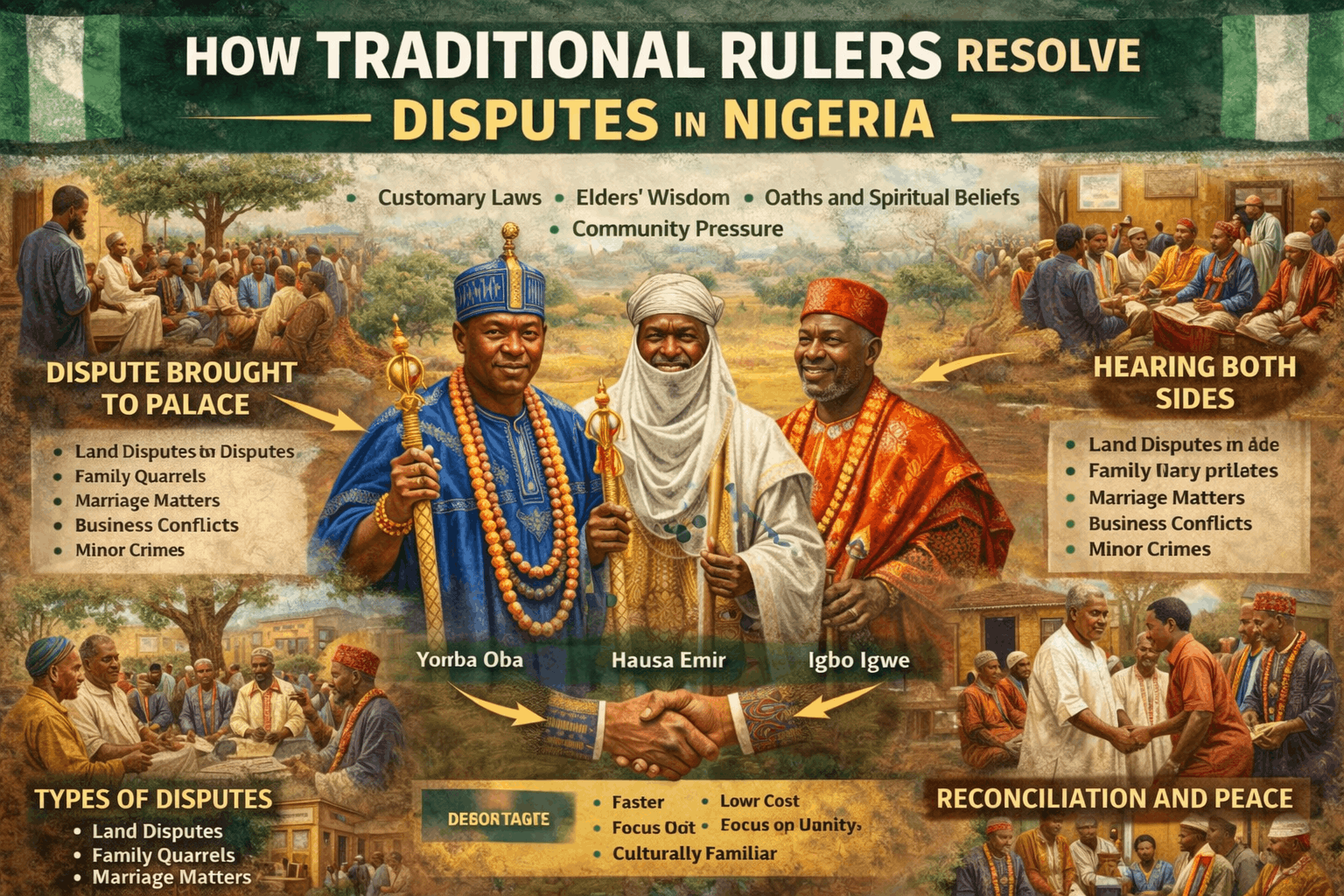
Long before police stations and courtrooms became common, Nigerian communities relied on traditional rulers and elders to settle conflicts. Even today, many people prefer taking disputes to the palace first because it is faster, cheaper, and more personal. Traditional rulers are seen as fathers of the land and custodians of culture, so their decisions carry strong respect and moral authority.
Instead of focusing only on punishment, their system emphasizes peace, reconciliation, and restoring relationships.
Who Are Traditional Rulers?
Traditional rulers are recognized cultural and community leaders who hold inherited or selected royal or chieftaincy positions. They serve as guardians of customs and mediators in disputes.
Common titles include
• Oba in Yoruba communities
• Igwe in Igbo communities
• Emir in northern emirates
Although they may not function exactly like judges, their influence is powerful because people trust them.
Types of Disputes They Handle
Traditional rulers typically resolve everyday conflicts that affect peace in the community, such as
• Land and boundary disputes
• Family misunderstandings
• Marriage or inheritance issues
• Debt and business disagreements
• Market or trade quarrels
• Minor assaults or insults
• Chieftaincy or leadership disagreements
Serious crimes like armed robbery or murder are usually referred to formal courts, but rulers may still help reconcile families afterward.
The Dispute Resolution Structure
The Palace Council
Cases are rarely handled by the ruler alone. He works with chiefs and elders who form a council.
This council usually includes
• Senior chiefs
• Family heads
• Religious or opinion leaders
• Community representatives
Their presence ensures fairness and collective wisdom.
Step-by-Step Dispute Resolution Process
Step 1: Complaint Submission
The process begins when someone reports a dispute at the palace.
• Complainant explains the issue
• Small registration fee may be paid
• The other party is invited respectfully
Step 2: Hearing Both Sides
Both parties present their stories openly.
• Each person speaks without interruption
• Witnesses may testify
• Elders ask clarifying questions
Step 3: Investigation
If facts are unclear, elders investigate.
• Visit land or property in dispute
• Check documents or agreements
• Consult neighbors or relatives
• Examine physical evidence
Step 4: Mediation and Dialogue
Rather than creating enemies, rulers aim for compromise.
• Encourage calm discussion
• Remind parties of family or community ties
• Promote forgiveness
• Suggest middle-ground solutions
Step 5: Decision or Settlement
After deliberation, the council announces a verdict.
Possible outcomes include
• Apology
• Compensation or repayment
• Return of property
• Community service
• Fines
• Warning or caution
Step 6: Reconciliation
Peace is the final goal.
• Handshakes or hugs
• Sharing drinks or kola nuts
• Public declaration of peace
• Blessings from elders
This restores relationships and prevents future conflict.
Methods and Tools Used
Traditional rulers rely on several tools to ensure justice
• Customary laws and traditions
• Elders’ wisdom and experience
• Oaths or spiritual affirmations
• Direct compensation instead of imprisonment
• Community pressure for compliance
Fear of losing respect often makes people obey decisions willingly.
Advantages of Traditional Dispute Resolution
This system remains popular because of many benefits
• Faster decisions compared to courts
• Low or no legal fees
• Less formal and less stressful
• Culturally familiar process
• Focus on unity rather than punishment
• Helps maintain long-term relationships
• Reduces burden on government courts
For many rural and semi-urban communities, this is the most practical form of justice.
Challenges and Limitations
Despite its strengths, the system has some weaknesses
• No strong legal enforcement powers
• Possibility of favoritism or bias
• Decisions may conflict with modern laws
• Lack of written records sometimes
• Less effective in large cities
Because of this, some cases still require formal courts.
Relationship with Government
Today, traditional rulers often cooperate with government authorities. They act as mediators before cases escalate.
Their roles include
• Settling minor cases locally
• Advising police or local councils
• Promoting peace and security
• Supporting alternative dispute resolution methods
This partnership helps maintain order at the grassroots level.
Conclusion
Traditional rulers continue to play a vital role in maintaining peace across Nigerian communities. By using dialogue, wisdom, and cultural values, they resolve disputes in ways that protect relationships rather than destroy them.
Their system shows that justice is not only about punishment but also about healing, forgiveness, and unity. Even in modern Nigeria, the palace remains a trusted place where conflicts are settled and har

 Daniel Okoye