 Daniel Okoye
Waste collection is one of those everyday services most people interact with but rarely understand. From household trash to market refuse and industrial waste, Nigeria’s waste collection system operates through a mix of government agencies, private operators, and informal collectors. The structure differs from state to state, but the underlying processes are largely similar.
Understanding how waste collection works helps households, businesses, and landlords manage waste better and avoid common problems like illegal dumping, fines, or sanitation issues.
Who Is Responsible for Waste Collection?
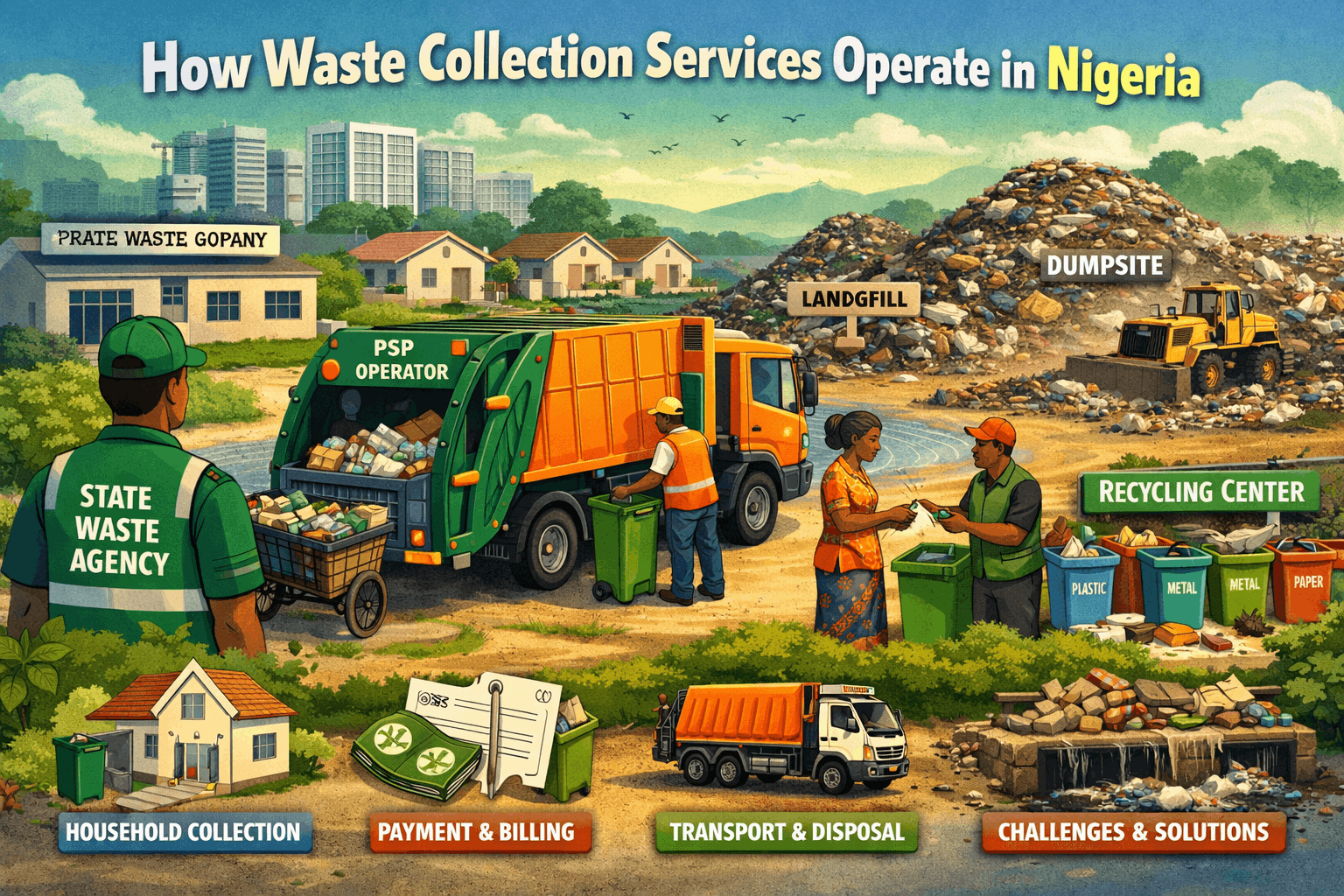
In Nigeria, waste collection is primarily the responsibility of state and local governments, usually handled through environmental or waste management agencies. Examples include state waste authorities and environmental protection agencies.
However, government agencies rarely do everything alone. They often:
-
Contract private waste management companies
-
License registered PSP (Private Sector Participation) operators
-
Tolerate or indirectly rely on informal waste collectors, especially in densely populated areas
This creates a hybrid system where multiple actors handle different parts of the waste chain.
Types of Waste Collected
Waste collection services typically deal with several categories of waste:
-
Household waste (food waste, packaging, plastics)
-
Commercial waste (shops, offices, restaurants)
-
Market waste (organic waste, cartons, nylons)
-
Construction waste (rubble, wood, metal scraps)
-
Industrial waste (regulated separately)
Most government-backed collectors focus on non-hazardous waste. Hazardous and medical waste are usually handled by specialized firms.
How Household Waste Collection Works
In most urban areas, households are assigned to a waste collection operator. The process usually works like this:
Residents store waste in bins, sacks, or drums within their compound. On scheduled days, waste collection trucks move through neighborhoods to pick up the waste. In some areas, residents bring their waste to a designated collection point where trucks collect it later.
Payment for household waste collection may be:
-
Monthly levies collected by government agencies
-
Fees paid directly to private operators
-
Charges embedded in rent by landlords
In many cases, residents pay whether the service is regular or not, which is one of the major complaints people have about the system.
Role of Private Waste Operators
Private waste management companies play a big role, especially in cities. They are usually licensed by the state and assigned specific zones.
Their responsibilities include:
-
Providing waste bins or bags (sometimes optional)
-
Collecting waste on scheduled days
-
Transporting waste to approved dumpsites or landfills
These operators earn money through:
-
Monthly fees from households and businesses
-
Contracts with estates, malls, and institutions
-
Payments from government agencies in some cases
Service quality often depends on how well the operator is funded, monitored, and managed.
Informal Waste Collectors and Recyclers
In many Nigerian communities, informal waste collectors are part of daily life. These are individuals or small groups who:
-
Collect waste using wheelbarrows, tricycles, or small trucks
-
Focus on recyclable items like plastics, metals, and cartons
-
Charge small fees per trip or per bag
While they are not always officially recognized, they play a major role in reducing waste volumes and supporting recycling.
Informal collectors often sell recovered materials to recycling depots, which then process or export them. This informal recycling chain helps reduce landfill pressure, even though it operates outside formal regulation.
How Waste Is Transported and Disposed
Once waste is collected, it is transported to:
-
Dumpsites
-
Landfills
-
Transfer stations (where waste is consolidated before final disposal)
In many parts of Nigeria, open dumpsites are still common. These sites may not have proper environmental controls, which leads to issues like pollution, odor, and health risks.
Some states are moving toward engineered landfills and waste-to-energy projects, but these are still limited compared to the volume of waste generated daily.
Payment and Billing Structure
Waste collection fees vary widely depending on location and service type.
Factors that influence pricing include:
-
Size of the household or business
-
Volume of waste generated
-
Frequency of collection
-
Location (urban vs semi-urban)
In estates and gated communities, waste fees are often bundled with service charges. In informal settlements, payments may be irregular or collected manually by local agents.
One common issue is lack of transparency. Many residents are unsure what they are paying for, how fees are calculated, or who to complain to when services fail.
Challenges in Nigeria’s Waste Collection System
Waste collection services in Nigeria face several challenges:
-
Irregular collection schedules
-
Insufficient trucks and equipment
-
Poor road access in some neighborhoods
-
Non-payment or delayed payment by residents
-
Weak enforcement of waste regulations
-
Over-reliance on open dumpsites
These challenges often lead to illegal dumping in gutters, vacant land, and waterways, especially during the rainy season.
What Most People Don’t Know
Many people assume waste collection is free or fully government-funded. In reality:
-
Most services depend heavily on user payments
-
Operators struggle when fees are not paid
-
Government agencies often lack sufficient budget support
Another lesser-known fact is that waste collection is closely tied to public health. Poor waste management contributes to flooding, disease outbreaks, and environmental degradation.
How Residents Can Improve Waste Management
Residents can support better waste collection by:
-
Paying waste fees promptly
-
Using proper bins and storage methods
-
Separating recyclable materials where possible
-
Reporting missed collections or illegal dumping
-
Avoiding dumping waste in drains and open spaces
Small actions at the household level can significantly improve the overall efficiency of the system.
Final Thoughts
Waste collection services in Nigeria operate through a complex mix of government oversight, private participation, and informal effort. While the system has its weaknesses, it continues to function largely because of shared responsibility between authorities, operators, and residents.
Understanding how the process works helps people make informed decisions, hold service providers accountable, and contribute to cleaner, healthier communities.

 Daniel Okoye