 Daniel Okoye
Fuel prices in Nigeria often feel unpredictable. One day the price is stable, the next day it changes slightly or sometimes significantly without clear explanation. Many people assume fuel station owners simply increase prices to make extra profit, but the reality is more complex. Pump prices are shaped by a combination of supply costs, government policies, logistics, and daily market realities.
This article explains how fuel stations in Nigeria actually determine their pump prices, in simple and practical terms.
The Base Cost of Fuel Supply
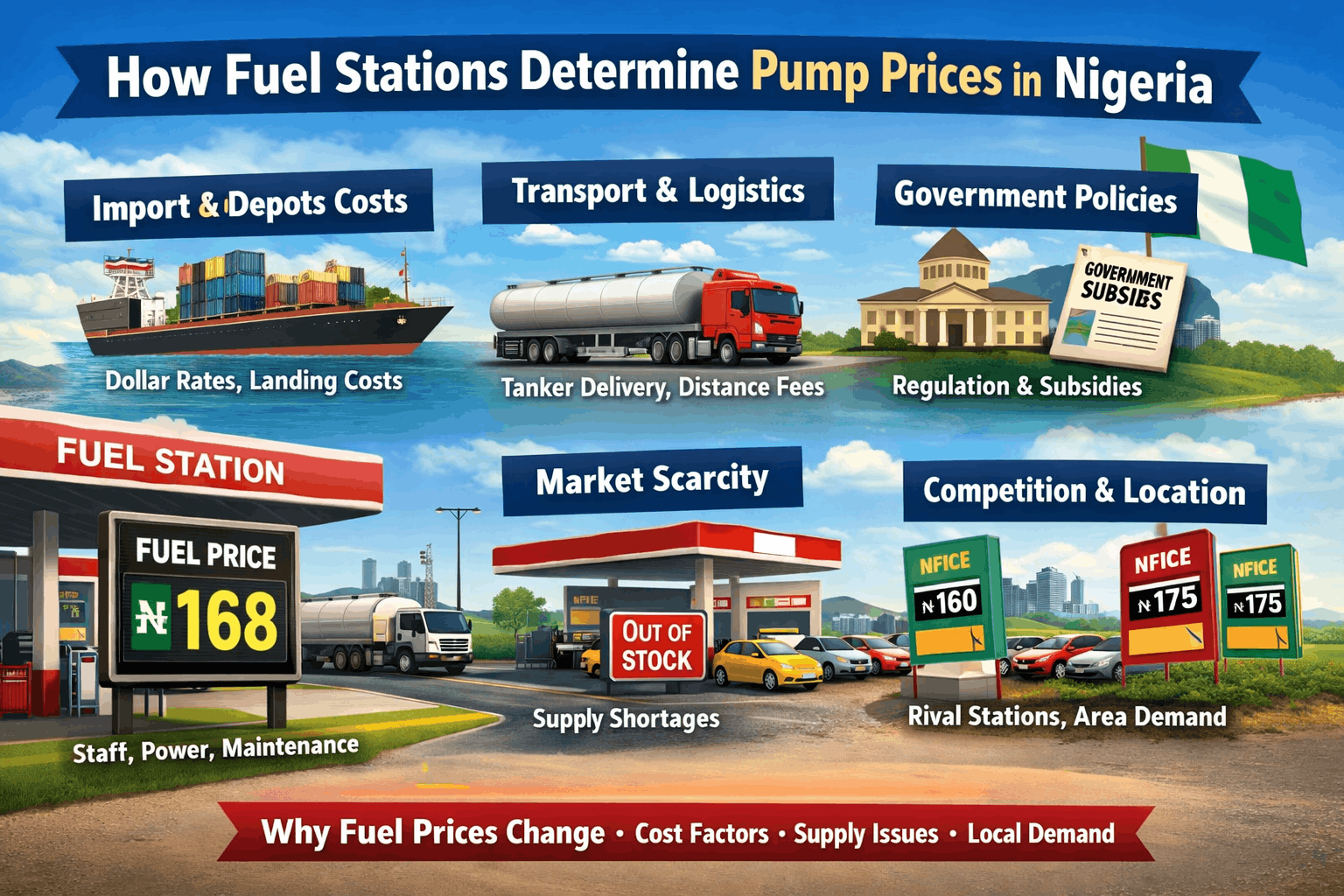
The first factor in pump pricing is how much the fuel costs before it even reaches the station. Fuel sold in Nigeria comes mainly from imported refined petroleum products, even though the country produces crude oil. Because of this, the cost of fuel is influenced by international market prices, foreign exchange rates, shipping costs, and port charges.
When fuel is imported, marketers pay in foreign currency. If the naira weakens against the dollar, the landing cost of fuel automatically increases. This higher cost flows down the supply chain and affects what filling stations must charge to avoid losses.
Role of Depots and Ex-Depot Prices
Fuel stations do not buy fuel directly from ships. They purchase fuel from depots operated by major marketers or independent depot owners. Each depot sets an ex-depot price, which is the price at which fuel is sold to marketers and station owners.
The ex-depot price changes frequently depending on supply availability, import costs, and demand pressure. When depots increase their prices, filling stations must adjust their pump prices accordingly. A station that refuses to adjust may sell at a loss and risk shutting down.
Transportation and Logistics Costs
After fuel leaves the depot, it must be transported to filling stations across the country. This is mostly done using tanker trucks. Transportation costs depend on distance, road conditions, fuel availability, security risks, and truck maintenance expenses.
Stations located far from major depots or ports usually face higher transportation costs. For example, moving fuel to northern or remote areas costs more than supplying stations close to coastal depots. These logistics costs are built into the final pump price.
Government Policies and Price Regulation
Government policy plays a major role in fuel pricing. In the past, fuel prices were heavily regulated and subsidized, meaning the government fixed pump prices and paid the difference to marketers. Under such systems, filling stations had little flexibility in pricing.
In periods of partial or full deregulation, stations are allowed to sell fuel within a price range influenced by market forces. When subsidies are reduced or removed, stations must recover the full cost of fuel, logistics, and operations directly from consumers. This often leads to price increases, even when stations themselves are not making excessive profits.
Competition and Location Factors
Fuel stations also consider nearby competition when setting prices. In areas where many stations operate close to each other, prices tend to be similar and relatively competitive. A station that charges significantly higher than others nearby may lose customers.
However, in areas with limited access to fuel or fewer stations, prices may be higher. Stations in high-traffic locations such as highways, city centers, or areas with frequent fuel scarcity may charge more because demand remains strong regardless of price changes.
Operating Costs of Fuel Stations
Running a fuel station involves many recurring expenses beyond buying fuel. These include staff salaries, generator fuel, maintenance of pumps, rent or land costs, taxes, security, and regulatory fees.
During periods of electricity shortages, stations rely heavily on generators, increasing operational expenses. Rising costs in these areas often force station owners to adjust pump prices slightly to stay afloat.
Market Scarcity and Supply Disruptions
Fuel scarcity significantly affects pump prices. When supply is low due to import delays, depot shutdowns, strikes, or distribution bottlenecks, prices usually increase. Stations may raise prices to manage limited stock or to slow down demand so fuel lasts longer.
Scarcity also increases black market activity, which indirectly pushes prices higher as stations compete with informal sellers who operate without regulatory oversight.
Role of Marketers and Middlemen
Between depots and filling stations, marketers and distributors sometimes act as middlemen. Each layer in the supply chain adds its margin to cover costs and profit. While margins are usually small per liter, they add up over large volumes.
Stations that buy fuel through multiple intermediaries may pay higher prices than those that buy directly from major marketers or depots, leading to differences in pump prices between stations.
Why Prices Differ Between Stations
It is common to see different pump prices within the same city. This happens because not all stations buy fuel at the same time or from the same depot. A station that bought fuel at a lower ex-depot price earlier may sell cheaper than one that restocked after a price increase.
Ownership structure also matters. Stations owned by major marketers often have more stable supply arrangements, while independent stations may face higher volatility in pricing.
Common Misunderstandings About Fuel Pricing
Many people believe fuel station owners fix prices arbitrarily. In reality, most stations operate on thin margins and adjust prices mainly to cover costs. Sudden price changes are often reactions to upstream increases rather than personal decisions.
Another misconception is that all stations make the same profit per liter. Profit margins vary widely depending on supply source, operating efficiency, and location.
Conclusion
Fuel pump prices in Nigeria are determined by a combination of international market forces, depot pricing, transportation costs, government policies, operating expenses, and local competition. While price changes can be frustrating, they are usually driven by cost pressures rather than deliberate exploitation.
Understanding how these factors work helps consumers make sense of price differences and recognize that fuel pricing is part of a broader system shaped by economics, policy, and logistics—not just the decisions of individual station owners.


 Daniel Okoye