 Daniel Okoye
Purchasing property in Nigeria is often described as a “due diligence marathon.” Because land ownership is governed by the Land Use Act, which vests all land in the state Governor, verifying the legal status of a parcel at the Land Registry is the most critical step to avoid fraud.
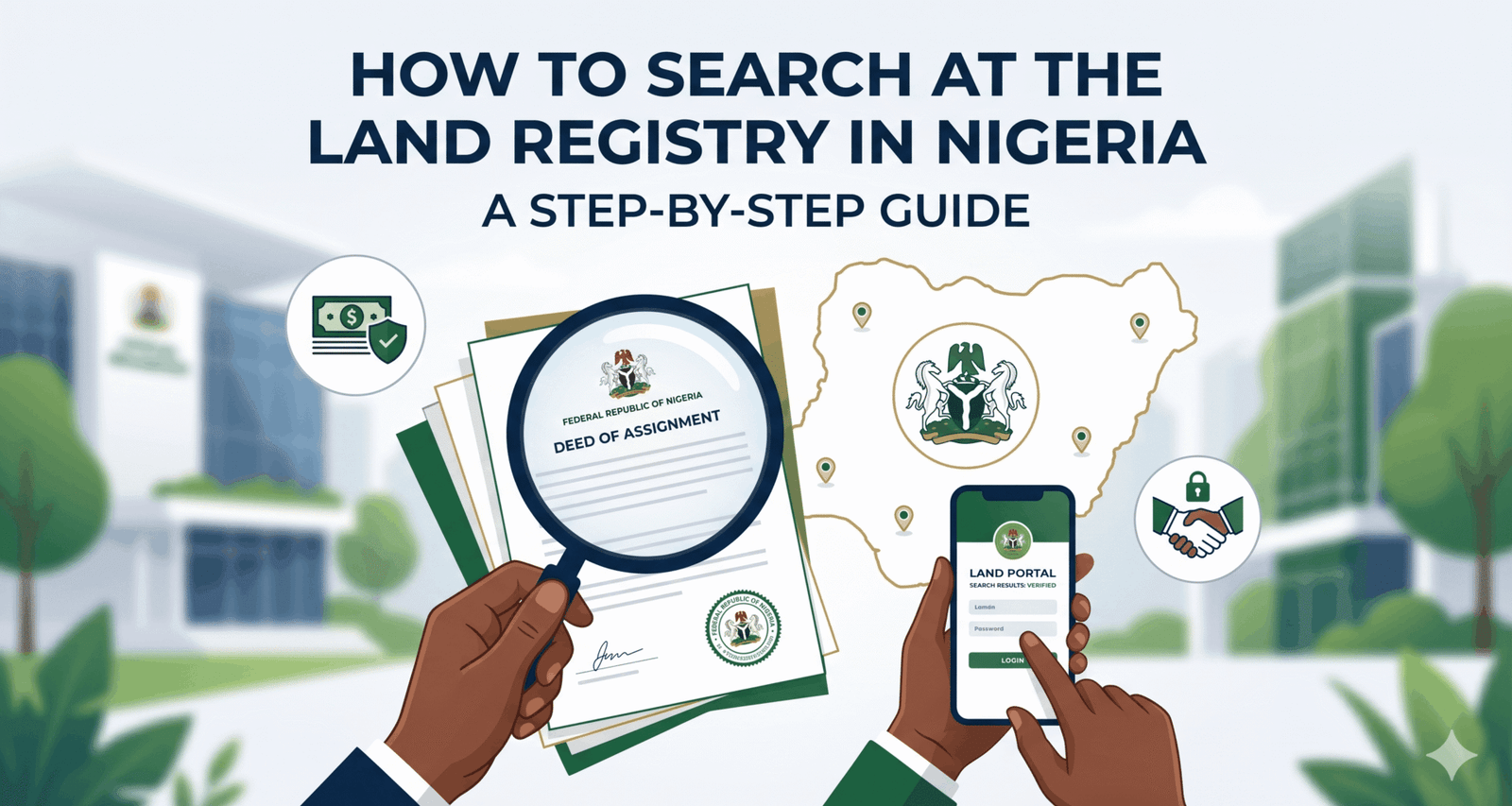
As of 2026, many states have digitized their processes, but the core legal requirements remain rigorous. Here is a comprehensive guide on how to conduct a search at the Land Registry in Nigeria.
1. Pre-Search Requirements
Before visiting the registry, you must obtain specific documents from the vendor. You cannot conduct a search without a specific reference point.
-
A Copy of the Land Title: This could be a Certificate of Occupancy (C of O), a Governor’s Consent, or a registered Deed of Assignment.
-
A Survey Plan: This shows the precise coordinates and boundaries of the land.
-
Letter of Authority: While some registries allow public searches, many require a letter from the current owner authorizing you or your legal representative to conduct the search.
2. The Search Process
The Manual Method
In states where records are not fully digitized, you will need to visit the State Ministry of Lands.
-
Application: Complete a “Search Application Form.”
-
Affidavit: In some jurisdictions, you must attach a sworn affidavit of purpose, stating why you are conducting the search.
-
Payment: Pay the official search fee at a designated bank and obtain a government receipt. Fees typically range from ₦15,000 to ₦50,000 depending on the state and property value.
-
Submission: Submit the form and receipt to the Registrar of Titles.
-
The Report: After processing, the registry will issue an Official Search Report.
The Digital Method
Several states have introduced electronic portals to streamline the process.
-
Account Creation: Register on the state’s official land administration portal.
-
Information Entry: Enter the File Number or Folio/Volume Number found on the title document.
-
Online Payment: Pay via the integrated payment gateway.
-
Retrieval: Depending on the system’s status, you may get an instant preview or a PDF report sent to your email within a few business days.
3. What the Search Report Reveals
A successful search provides a “snapshot” of the land’s legal health. Look for the following:
-
Registered Owner: Does the name on the registry match the name of the person trying to sell to you?
-
Encumbrances: Is the land currently being used as collateral for a bank loan? Is there a court injunction or “caveat” on it?
-
Government Acquisition: Is the land part of a “committed” government area reserved for future public infrastructure?
-
Title History: A chain of ownership showing how the land moved from the original owner to the current seller.
4. Beyond the Land Registry
A registry search is vital, but it is not exhaustive. To ensure full protection, consider these additional steps:
-
Charting the Survey: Visit the Office of the Surveyor General to “chart” the coordinates. This confirms the land actually exists where the seller says it does and isn’t overlapping with a neighbor’s plot.
-
Probate Registry Search: If the seller is an heir to a deceased person, verify that they have the “Letters of Administration” or “Probate” to legally sell the property.
-
Physical Inspection: Never buy land you haven’t walked on. Check for “Caveat Emptor” signs or local residents who might claim ownership.
Professional Assistance
While an individual can initiate these steps, it is highly recommended to involve a property lawyer. Land laws in Nigeria are complex, and a legal professional can identify “red flags” in the title chain, such as a missing signature or an unperfected Governor’s Consent—that a layperson might miss.
Final Note: If a seller is rushing you to pay without allowing time for a search, it is best to be cautious. A legitimate land search is the primary safeguard against land-grabbing schemes and long-term legal disputes.

 Daniel Okoye