 Daniel Okoye
Tailoring and fashion services are a major part of everyday life in Nigeria. From sewing native wear for weddings and ceremonies to making office clothes and casual outfits, tailors help people look presentable and confident. However, many customers are often confused about how tailors set their prices. Two people can sew the same style and pay different amounts, and sometimes prices change after measurements or during production.
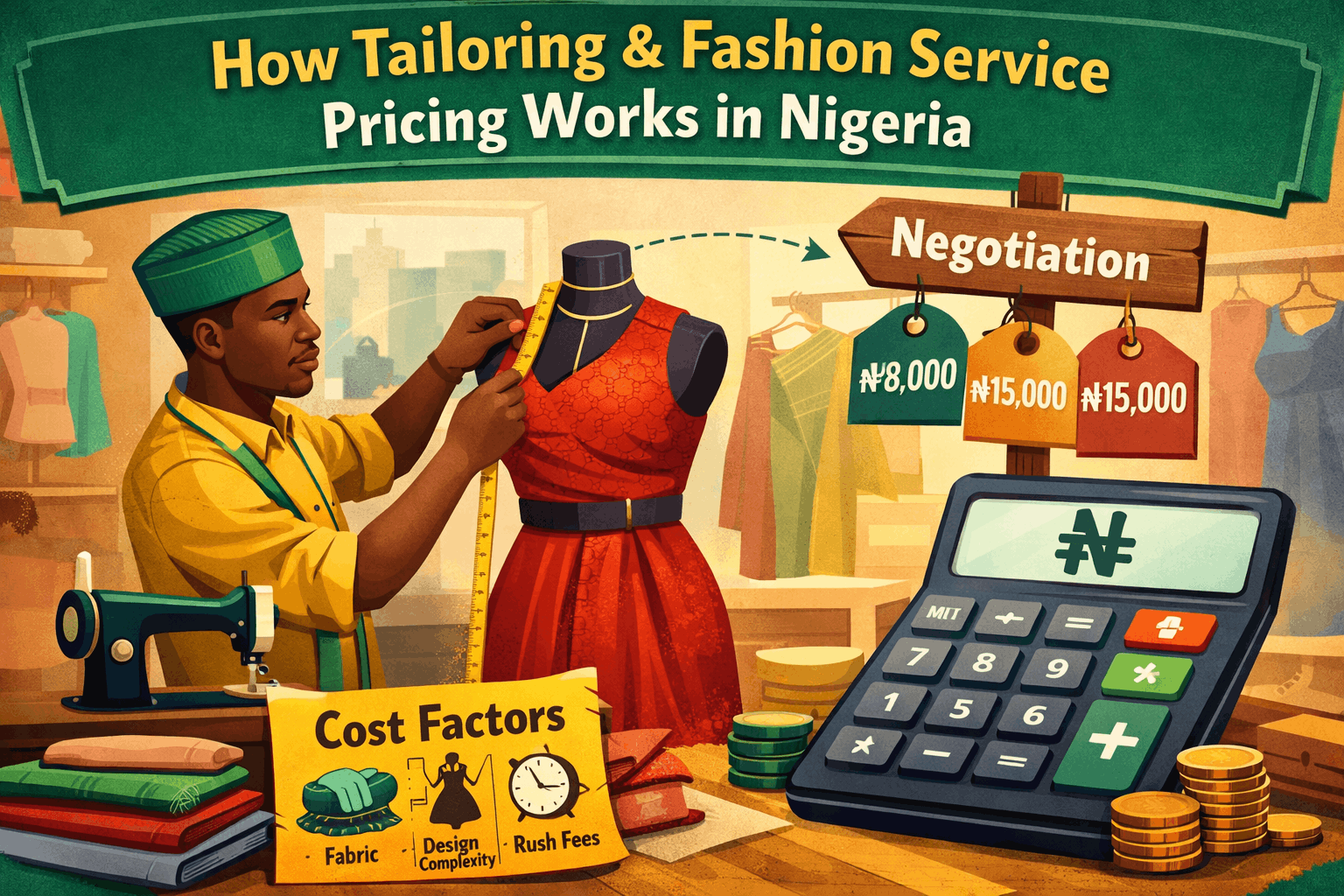
This happens because tailoring pricing in Nigeria is not fixed. It is influenced by several practical factors such as design complexity, fabric type, location, experience, and urgency. Understanding how pricing works helps customers plan better and avoid misunderstandings.
The Two Main Pricing Methods Tailors Use
Most Nigerian tailors use one of two major pricing methods when charging for their services.
The first is style-based pricing. In this method, the tailor charges based on the design and structure of the outfit. Simple styles such as plain gowns, trousers, or senator wear have standard base prices. However, once additional features like lining, embroidery, corsets, pleats, or special sleeves are added, the price increases because of the extra work involved.
The second method is effort-based pricing. Some tailors do not follow fixed price lists. Instead, they calculate the cost based on how much time, energy, and attention the outfit requires. During busy periods such as weddings, festive seasons, or December holidays, prices often increase because tailors handle more orders and have limited time.
Type of Outfit Affects the Price
Different types of clothing have different price ranges. Native outfits such as agbada, senator wear, iro and buba, and kaftans are priced differently from English wear like suits, shirts, or office dresses.
Bridal outfits and ceremonial wear usually cost more because they require detailed finishing, multiple fittings, and precise measurements. For example, sewing a simple gown may cost ₦8,000 to ₦20,000, while sewing a bridal dress may cost ₦50,000 or more depending on the complexity.
The level of attention and precision required influences the final price.
Design Complexity Is a Major Pricing Factor
The complexity of the design plays a major role in determining the cost. Simple straight dresses or basic trousers are easier and faster to sew, so they cost less.
However, styles that include corsets, layered fabrics, hand embroidery, structured jackets, or detailed sleeves require more time and skill. These additional design elements increase the workload and the price.
Tailors often mentally estimate how stressful and time-consuming a design will be before quoting a price.
Fabric Type Influences the Cost
The type of fabric also affects tailoring prices. Some fabrics are easy to sew, while others require more care and experience.
Fabrics such as lace, velvet, silk, chiffon, and heavily decorated materials are more difficult to handle. They require careful cutting, special stitching techniques, and sometimes extra lining.
If mistakes occur while sewing expensive fabric, the loss can be significant. Because of this risk, tailors often charge more when working with delicate or expensive materials.
Tailor’s Location Affects Pricing
Where the tailor operates also affects how much they charge. Tailors working in major cities like Lagos, Abuja, or Port Harcourt often charge more than tailors in smaller towns.
Tailors who operate in shopping plazas or fashion studios usually have higher business expenses such as rent, electricity, and staff salaries. These operating costs are included in their pricing.
On the other hand, roadside or neighborhood tailors may charge lower prices because their operating costs are lower.
Urgency and Deadline Increase the Cost
Urgent jobs usually cost more. If a customer needs an outfit completed within a few days, the tailor may charge extra because they have to adjust their schedule and prioritize the job.
For example, during wedding seasons or festive periods, tailors may add rush fees because demand is high and production time is limited.
Customers who allow flexible timelines often pay lower prices.
Experience and Skill Level of the Tailor
Experienced tailors usually charge more because they provide better finishing and more reliable results. Skilled tailors invest in training, equipment, and workspace improvements.
Customers often pay more for experienced tailors because they trust the quality of their work.
Less experienced tailors may charge lower prices but may require more adjustments or corrections later.
Why Prices Sometimes Change After Measurement
Customers sometimes notice that prices increase after measurements or fabric inspection. This happens when the tailor discovers that the job is more complex than initially expected.
For example, the tailor may realize that:
-
The fabric is difficult to sew
-
The design requires extra lining or support
-
Additional fittings are needed
-
The customer adds new design features
These changes increase the workload and affect pricing.
Clear communication at the beginning helps avoid such changes.
Deposit Payment Is Standard Practice
Most Nigerian tailors require customers to pay a deposit before starting work. This deposit is usually 50 percent of the total cost.
The deposit helps the tailor commit time and resources to the job. It also protects the tailor from losses if the customer fails to collect the finished outfit.
The remaining balance is usually paid after completion or during final fitting.
Negotiation Is Common in Tailoring Services
Negotiation is a normal part of tailoring services in Nigeria. Many tailors expect customers to negotiate politely.
Negotiation is more likely to succeed when:
-
The design is simple
-
The deadline is flexible
-
The customer is a regular client
However, highly complex or urgent jobs often have limited room for negotiation.
Respectful communication usually produces better results.
How Customers Can Avoid Overpaying
Customers can avoid unnecessary expenses by taking simple steps before agreeing on a price.
These steps include:
-
Showing the tailor a clear picture of the design
-
Asking what the price includes
-
Confirming the deadline
-
Asking about fitting adjustments
Comparing prices from different tailors also helps customers understand the market rate.
Final Thoughts
Tailoring and fashion service pricing in Nigeria is influenced by practical factors such as design complexity, fabric type, location, urgency, and tailor experience. Prices may vary, but they usually reflect the time, effort, and skill required to complete the outfit.
When customers understand how tailoring pricing works, they can negotiate fairly, plan their budgets, and build better relationships with tailors. Tailoring is not just about sewing clothes—it involves skill, precision, and professional effort that determines its true value.

Daniel Okoye
Daniel Okoye is a writer and researcher at ProcesslyHub. I focus on explaining Nigerian systems, housing processes, and everyday business workflows in simple and practical terms. My goal is to help readers understand how real-world processes work so they can make informed decisions and avoid costly mistakes.

 Daniel Okoye