 Daniel Okoye
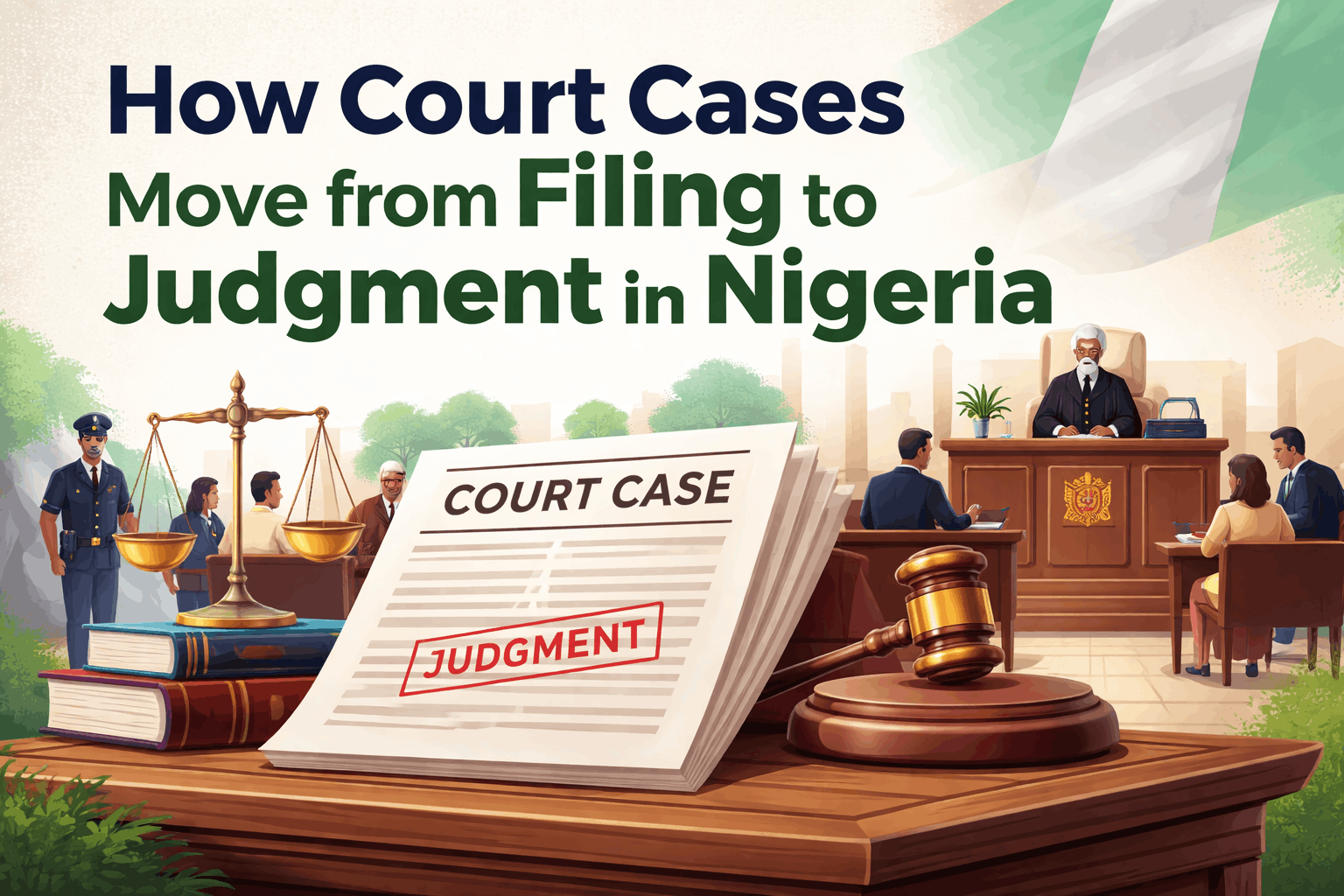
Understanding how court cases progress in Nigeria is important for anyone involved in a legal dispute. Whether the matter involves land, business, debt, crime, or contracts, the Nigerian legal system follows a structured process from filing to judgment. Knowing these steps helps individuals avoid mistakes, reduce delays, and protect their legal rights.
Nigeria operates a hierarchical court system headed by the Supreme Court of Nigeria, followed by the Court of Appeal, High Courts, and Magistrate Courts. Each court has specific powers depending on the nature and seriousness of the case.
Filing the Case
Every court case begins when a person, company, or government authority files a formal complaint before a court with proper jurisdiction. In civil matters, the person filing the case is called the plaintiff, while in criminal cases, the government prosecutes the accused person through agencies such as the police or the Ministry of Justice.
Civil cases usually begin with documents such as:
-
Writ of summons
-
Statement of claim
-
Supporting documents and evidence
Criminal cases often begin after investigation by the Nigeria Police Force or other authorized agencies, followed by filing a charge sheet in court.
The choice of court depends on the seriousness and value of the matter. For example, Magistrate Courts handle smaller civil disputes and minor criminal cases, while High Courts handle more serious matters such as land disputes, major commercial cases, and serious criminal offenses.
You can learn more about Nigeria’s court structure from the official website of the National Judicial Council: https://njc.gov.ng
Payment of Filing Fees
After preparing the case documents, the plaintiff or their lawyer must pay filing fees at the court registry. These fees vary depending on:
-
The type of court
-
The value of the claim
-
The type of legal matter
For example, filing a civil case involving ₦500,000 will usually cost less than filing a case involving ₦20,000,000.
Once payment is made, the court registry officially assigns a case number and begins processing the case.
Failure to pay filing fees correctly can delay or prevent the case from proceeding.
Service of Court Documents
After filing, the court must formally notify the defendant that a case has been filed against them. This is done through a process called “service.”
Court officials or authorized agents deliver documents such as:
-
Writ of summons
-
Hearing notices
-
Charge sheets
This ensures the defendant is aware of the case and has an opportunity to respond.
Proper service is required by law. If the defendant is not properly served, the case may be delayed or dismissed.
First Court Appearance and Preliminary Hearings
After service, the court schedules the first hearing date. At this stage, the judge confirms:
-
That both parties are present or represented
-
That the court has jurisdiction
-
That documents are properly filed
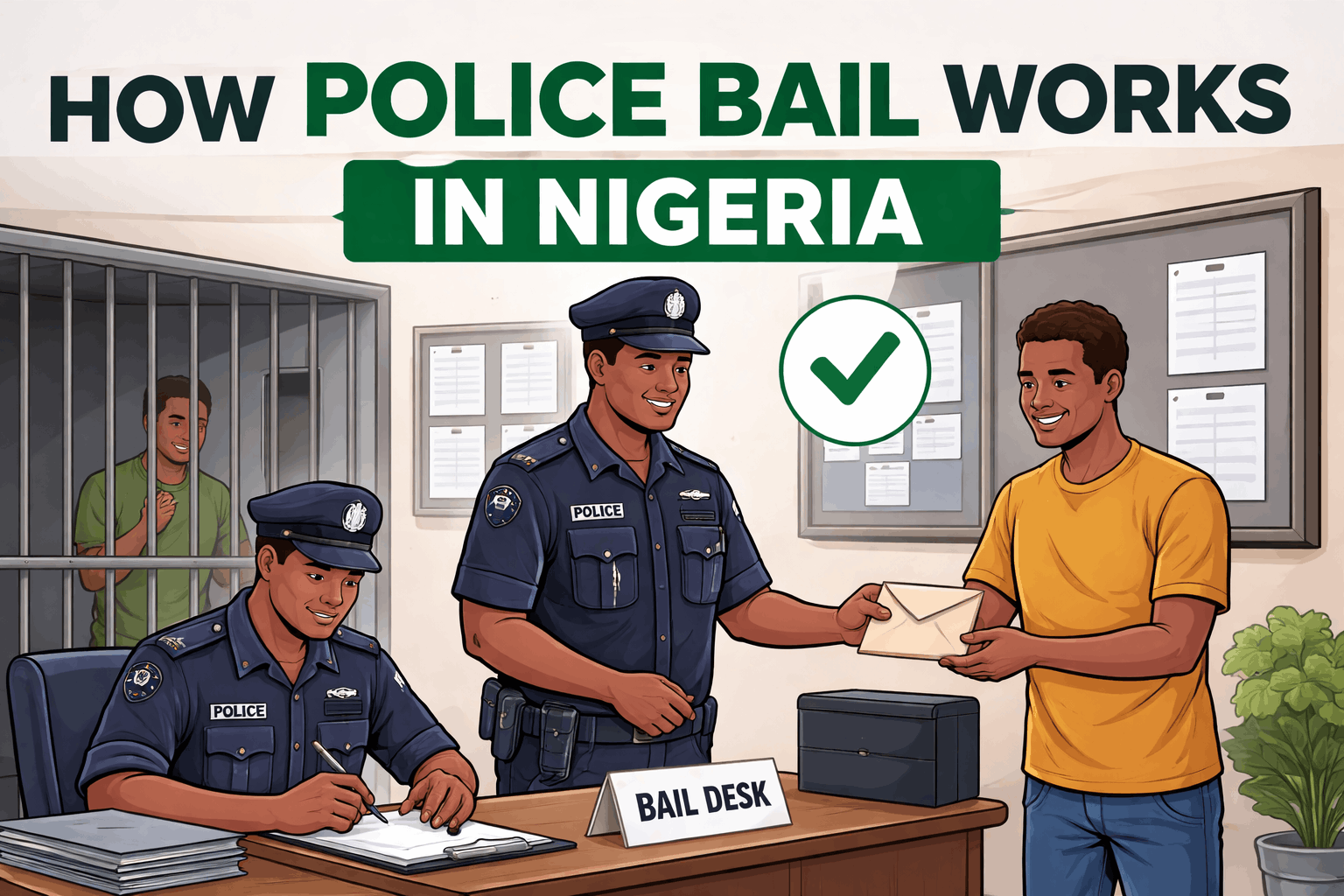
In criminal cases, the accused person may apply for bail. Bail allows the accused to remain free while the trial continues, depending on the seriousness of the offense.
In civil cases, the court may encourage settlement through mediation or negotiation to avoid lengthy trials.
Some courts, such as the Lagos Multi-Door Courthouse, specialize in resolving disputes through mediation instead of full trials.
Official website: https://lmdc.gov.ng
Exchange of Pleadings
In civil cases, both parties exchange formal written statements called pleadings.
The plaintiff presents their claims and supporting facts, while the defendant responds with defenses or counterclaims.
This stage defines the issues the court will decide.
In criminal cases, the accused person enters a plea of guilty or not guilty. If the accused pleads guilty, the court may proceed directly to judgment. If not guilty, the case proceeds to trial.
Trial Stage
The trial is the main stage where both sides present their evidence.
The plaintiff or prosecution presents:
-
Witnesses
-
Documents
-
Physical evidence
The defendant has the right to cross-examine witnesses and present their own evidence.
The judge listens to both sides and ensures fair procedures are followed.
Trials in Nigeria may last weeks, months, or sometimes years, depending on:
-
Complexity of the case
-
Availability of witnesses
-
Court workload
Court delays are common due to congestion and adjournments.
Judgment Delivery
After hearing all evidence, the judge delivers a judgment. This decision determines the outcome of the case.
In civil cases, the court may order:
-
Payment of money
-
Return of property
-
Enforcement of contracts
In criminal cases, the court may order:
-
Acquittal (release)
-
Fine
-
Imprisonment
Sometimes judges reserve judgment, meaning they take additional time to review evidence before delivering their decision.
Appeal Process
If either party is dissatisfied with the judgment, they have the right to appeal to a higher court, such as the Court of Appeal of Nigeria.
Appeals must be filed within a specific period, usually 30 days in civil cases.
The appellate court reviews whether the lower court made errors in law or procedure.
Learn more about appeals from the Court of Appeal website: https://courtappeal.gov.ng
Enforcement of Judgment
Winning a case does not automatically guarantee payment or compliance.
If the losing party refuses to obey the judgment, the court can enforce its decision through:
-
Court bailiffs
-
Asset seizure
-
Garnishee proceedings (deducting money from bank accounts)
This ensures the successful party receives what the court awarded.
Common Causes of Delay in Nigeria
Court delays are caused by several factors, including:
-
Large number of cases
-
Frequent adjournments
-
Missing witnesses
-
Poor documentation
For example, land disputes in Nigeria sometimes last several years due to complex ownership claims.
Practical Tips for Handling Court Cases
To improve your chances of a smooth process:
-
Hire a qualified lawyer
-
File complete and accurate documents
-
Attend court hearings regularly
-
Avoid unnecessary delays
-
Consider mediation where possible
Alternative dispute resolution can save time and money.
Conclusion
Court cases in Nigeria follow a structured process from filing to judgment. The key stages include filing, service of documents, hearings, trial, judgment, and possible appeal.
Understanding these steps helps individuals and businesses prepare properly, avoid delays, and protect their rights. While the process can take time, knowing how it works makes it easier to navigate Nigeria’s legal system effectively.


 Daniel Okoye