 Daniel Okoye
Property ownership in Nigeria comes with many financial responsibilities, and one of the most important is property tax. While owning rental property can generate steady income and long-term wealth, landlords must understand how property taxes affect their profit, pricing, and overall investment strategy. Property taxes are imposed by state and local governments to generate revenue for public services such as roads, drainage, security, and infrastructure development. For landlords, these taxes are both a legal obligation and a key factor in managing rental property successfully.
What Are Property Taxes in Nigeria
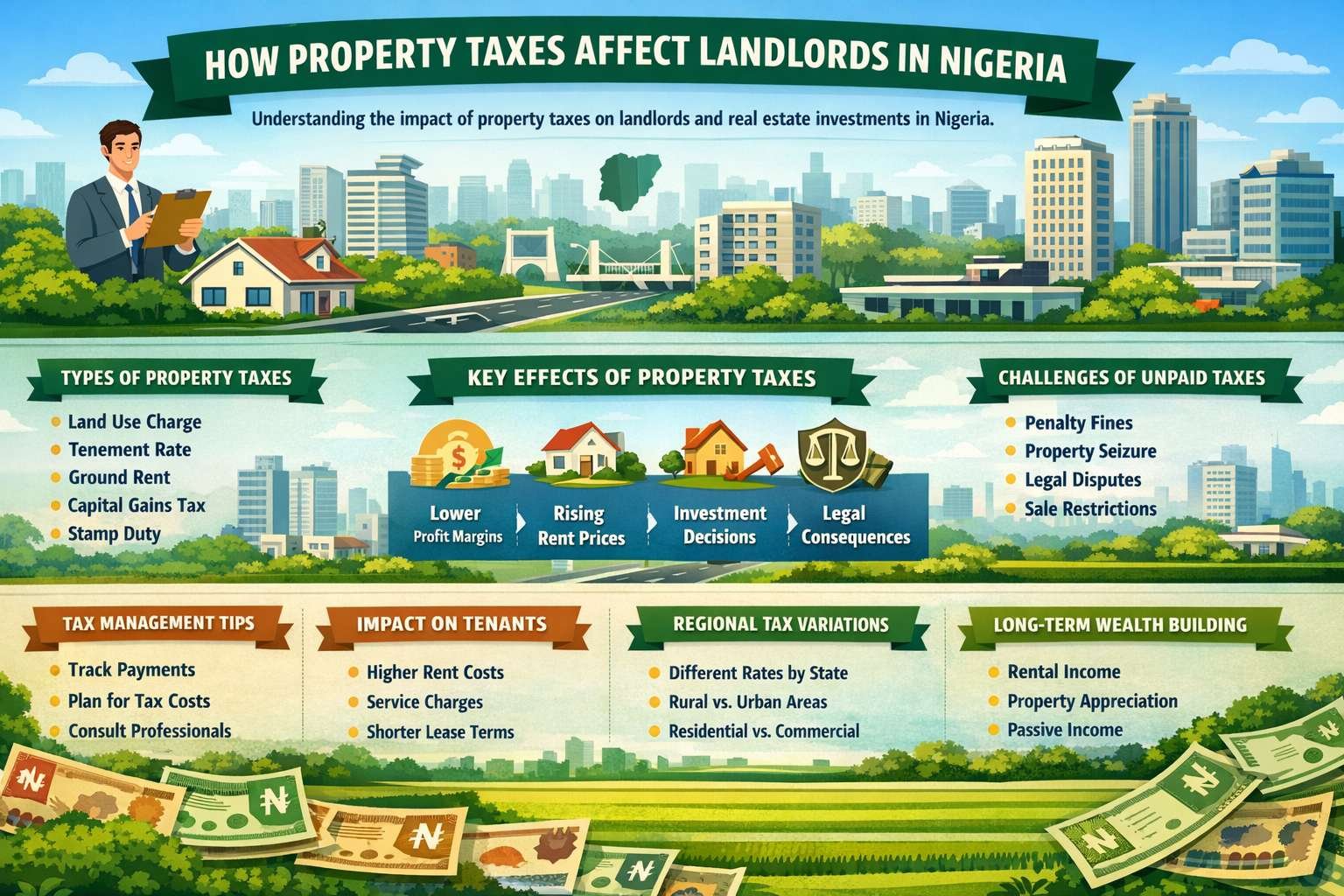
Property tax refers to the compulsory payment imposed on property owners by government authorities. In Nigeria, property taxes are mostly administered at the state and local government levels. The most common property-related taxes landlords encounter include:
-
Tenement Rate
-
Ground Rent
-
Capital Gains Tax (when selling property)
-
Stamp Duty (during property transactions)
These taxes are based on factors such as property location, size, usage, and value. Landlords must pay these taxes regularly to avoid penalties or legal consequences.
Land Use Charge and Its Impact on Landlords
Land Use Charge is one of the most significant property taxes in Nigeria, especially in states like Lagos. It combines several older taxes such as ground rent and tenement rate into one single payment.
The Land Use Charge directly affects landlords in the following ways:
-
It increases the cost of owning rental property
-
It reduces the net profit landlords earn from rent
-
It forces landlords to factor taxes into rent pricing
-
It creates a yearly financial obligation regardless of rental income
For example, if a landlord earns ₦2,000,000 annually from rent and pays ₦200,000 as Land Use Charge, that amount reduces their actual profit.
Tenement Rate and Local Government Charges
Tenement rate is charged by local governments on buildings within their jurisdiction. It applies mainly to developed properties that generate income or provide residential use.
Effects of tenement rate on landlords include:
-
Additional annual expenses on property ownership
-
Increased operational costs for rental property
-
Potential legal notices if unpaid
-
Possible sealing of property by local authorities
Although tenement rates may appear small compared to rent income, they accumulate over time and affect overall returns.
Ground Rent and State Government Obligations
Ground rent is paid to the state government as a condition for occupying land under the Certificate of Occupancy (C of O). Since land in Nigeria legally belongs to the government under the Land Use Act, landlords are required to pay ground rent to maintain their legal rights.
Ground rent affects landlords by:
-
Creating recurring yearly expenses
-
Affecting legal ownership status if unpaid
-
Potentially delaying property transactions or documentation
Failure to pay ground rent may result in penalties or complications when selling or transferring property ownership.
How Property Taxes Reduce Landlord Profit
Property taxes directly reduce the amount of profit landlords earn. Rental income may look high on paper, but taxes and other expenses reduce the actual earnings.
Expenses landlords must deduct include:
-
Property taxes
-
Maintenance costs
-
Repairs
-
Agency fees
-
Legal fees
-
Security and sanitation costs
For example:
-
Annual rent income: ₦3,000,000
-
Property tax: ₦300,000
-
Maintenance: ₦400,000
Remaining income: ₦2,300,000
This example shows how taxes reduce profit margins.
How Landlords Transfer Tax Costs to Tenants
Many landlords adjust rental prices to compensate for property taxes. This means tenants indirectly bear part of the tax burden through increased rent.
Landlords may:
-
Increase annual rent to cover tax expenses
-
Introduce additional service charges
-
Adjust rent during renewal periods
-
Prefer shorter lease terms to allow flexible rent adjustments
This is one reason rent tends to increase over time, especially in areas with high property taxes.
Effect of Property Taxes on Property Investment Decisions
Property taxes influence whether landlords choose to invest in certain locations. Areas with high taxes may discourage some investors, while areas with lower taxes attract more landlords.
Property tax considerations affect decisions such as:
-
Choosing which state or city to invest in
-
Deciding between residential or commercial property
-
Determining expected return on investment
-
Evaluating long-term profitability
Landlords often compare tax levels across locations before buying property.
Legal Risks of Not Paying Property Taxes
Failure to pay property taxes in Nigeria can lead to serious consequences. Government authorities have legal power to enforce compliance.
Possible consequences include:
-
Penalty charges and fines
-
Legal notices
-
Property sealing
-
Difficulty selling the property
-
Loss of government approvals
In extreme cases, persistent non-payment may lead to government enforcement actions that disrupt rental income.
Effect on Property Value and Marketability
Property taxes also affect how attractive a property is to buyers and investors. Properties with unpaid taxes may discourage potential buyers.
Buyers often check:
-
Land Use Charge status
-
Ground rent payment records
-
Tax clearance history
Properties with clean tax records are easier to sell and more valuable in the market.
How Property Taxes Encourage Infrastructure Development
Although taxes reduce landlord profit, they also support infrastructure development. Government uses tax revenue to improve public services that benefit property owners.
These improvements include:
-
Better road networks
-
Drainage systems
-
Security services
-
Waste management
-
Urban development
Improved infrastructure increases property value and rental demand.
Differences in Property Taxes Across Nigerian States
Property tax policies vary from state to state. Lagos State has one of the most structured property tax systems, while other states may have less strict enforcement.
Factors that affect tax differences include:
-
State government policies
-
Property location (urban vs rural)
-
Property use (commercial vs residential)
-
Property value
Landlords must understand the specific tax laws of their state.
How Smart Landlords Manage Property Taxes
Successful landlords treat property taxes as part of their investment planning. They calculate tax expenses before buying property to ensure profitability.
Good tax management practices include:
-
Keeping proper tax records
-
Paying taxes early to avoid penalties
-
Including taxes in rental pricing strategy
-
Consulting property professionals when necessary
-
Investing in high-demand areas to offset tax costs
Planning helps landlords avoid financial surprises.
Impact on Long-Term Wealth Building
Property ownership remains one of the best ways to build wealth in Nigeria, even with taxes. Property taxes are part of the cost of owning valuable assets that appreciate over time.
Despite taxes, landlords benefit from:
-
Rental income
-
Property appreciation
-
Inflation protection
-
Passive income opportunities
When managed properly, the benefits of property ownership outweigh the tax costs.
Conclusion
Property taxes are an unavoidable part of owning rental property in Nigeria. They affect landlord profit, rent pricing, investment decisions, and property management. Taxes such as Land Use Charge, tenement rate, and ground rent create financial obligations that landlords must plan for. While property taxes reduce short-term income, they also contribute to infrastructure development that increases property value over time. Landlords who understand property taxes and manage them properly can still achieve strong returns and long-term financial success in Nigeria’s real estate market.

Daniel Okoye
Daniel Okoye is a writer and researcher at ProcesslyHub. I focus on explaining Nigerian systems, housing processes, and everyday business workflows in simple and practical terms. My goal is to help readers understand how real-world processes work so they can make informed decisions and avoid costly mistakes.
 Daniel Okoye