 Daniel Okoye
Buying land in Nigeria can be a valuable investment, but it also comes with risks if proper documentation is not verified. Many land disputes and property fraud cases occur because buyers fail to understand the importance of land titles and documents. These documents provide legal proof of ownership and show whether the government recognizes a particular property.
Understanding the different land titles and documents used in Nigeria is essential for anyone planning to buy, sell, or invest in real estate. This article explains what land titles are, the common types used in Nigeria, and how to verify them before making any purchase.
What Are Land Titles?
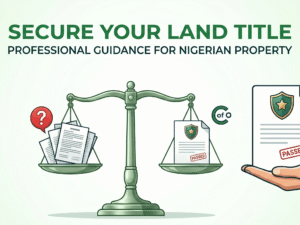
Land titles are official documents that prove ownership or legal rights to a piece of land. They show who owns the land, how the land was acquired, and whether the government recognizes the ownership.
A proper land title protects the property owner from disputes and government demolition. It also allows the owner to transfer the property legally, obtain loans using the land as collateral, and develop the land according to government regulations.
Without a valid land title, ownership of land can be questioned, and buyers may face serious legal problems.
Why Land Documents Are Important
Land documents serve several important purposes in Nigeria’s property system.
They help to:
• Prove ownership of land
• Prevent land disputes
• Protect buyers from fraud
• Allow transfer of ownership legally
• Enable property development approvals
• Provide security for investment
Land without proper documentation may be subject to government acquisition, multiple sales, or family disputes.
Common Land Titles and Documents in Nigeria
There are several types of land titles and documents used in Nigeria. Each document serves a different purpose and offers different levels of security for land ownership.
Certificate of Occupancy (C of O)
The Certificate of Occupancy is one of the most recognized land titles in Nigeria. It is issued by the state government and confirms that the holder has been granted the legal right to occupy and use the land.
The Certificate of Occupancy is usually issued for a period of 99 years, after which it may be renewed.
This document contains important details such as:
• Name of the landowner
• Location of the land
• Size of the land
• Purpose of the land use
• Date of issuance
Land with a valid Certificate of Occupancy is considered secure because the government has officially recognized the ownership.
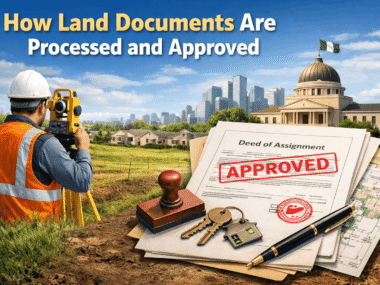
Deed of Assignment
A Deed of Assignment is a legal document that transfers ownership of land from one person to another.
When someone buys land from a previous owner, the transaction is documented through a Deed of Assignment. This document shows that the seller has transferred all rights, interest, and ownership of the land to the buyer.
A typical Deed of Assignment includes:
• Details of the buyer and seller
• Description of the property
• Purchase price
• Date of transfer
• Signatures of both parties
• Witness signatures
The document is usually prepared by a lawyer and registered at the land registry.
Survey Plan
A Survey Plan is a document that shows the exact location and boundaries of a piece of land.
It is prepared by a licensed surveyor and contains technical details such as:
• Coordinates of the land
• Boundary measurements
• Land size
• Beacon numbers
• Location information
Survey plans are important because they help determine whether land is under government acquisition or located in a restricted area.
Without a survey plan, it is difficult to confirm the true boundaries of the land.
Governor’s Consent
Governor’s Consent is required when land ownership is transferred from one person to another.
Under the Land Use Act of 1978, all land in a state is held in trust by the governor. Because of this, any transfer of land ownership must receive the governor’s approval.
Governor’s Consent confirms that the government recognizes the transfer of ownership.
It is usually endorsed on the Deed of Assignment and recorded at the land registry.
Gazette
A Gazette is an official government publication that confirms land has been released from government acquisition and returned to the original community.
When land is excised and recorded in the government gazette, it means the land is legally recognized as belonging to the community.
Gazette documents contain information such as:
• Name of the community
• Size of the land
• Location details
• Survey description
• Government approval reference
Land covered by a gazette is generally considered safer than land still under government acquisition.
Excision
Excision refers to the process by which the government releases a portion of land from its acquisition and returns it to the indigenous community.
Once excision is approved, the community can legally sell the land to individuals or developers.
However, excision must be approved and gazetted before it becomes legally recognized.
Land with excision in progress is still under government acquisition and may carry some risk.
Registered Survey
A registered survey is a survey plan that has been officially recorded at the Surveyor General’s office.
This registration confirms that the land boundaries and coordinates are recognized by government authorities.
A registered survey also makes it easier to conduct land searches and confirm the status of the land.
How to Verify Land Documents in Nigeria
Before buying any land, it is important to verify the authenticity of all land documents. Verification helps ensure the land is genuine and free from legal problems.
Important steps for verification include:
Conduct a Land Search
Visit the state land registry to confirm the ownership and status of the property. This search will reveal whether the land is registered and if there are any existing claims on it.
Verify the Survey Plan
Take the survey plan to the Surveyor General’s office to check whether the land falls under government acquisition or restricted zones.
This process is called charting.
Confirm Government Records
If the land has a Certificate of Occupancy or Governor’s Consent, verify the document at the Ministry of Lands to confirm it is genuine.
Check Community Claims
For land purchased from families or communities, confirm that the seller has the authority to sell the property.
Family land disputes are common in Nigeria, so it is important to verify ownership.
Use a Property Lawyer
A qualified property lawyer can help examine documents, conduct searches, and ensure the transaction is legally secure.
Legal guidance significantly reduces the risk of buying problematic land.
Common Mistakes Land Buyers Make
Many land buyers make costly mistakes because they ignore proper verification procedures.
Common mistakes include:
• Buying land without a survey plan
• Ignoring government acquisition status
• Failing to verify land registry records
• Trusting agents without confirmation
• Not using a lawyer during the transaction
These mistakes often lead to land disputes or financial loss.
Importance of Proper Land Documentation
Proper land documentation provides peace of mind for property owners.
It ensures:
• Legal protection of ownership
• Easier transfer of property
• Ability to obtain loans using property
• Recognition by government authorities
• Increased property value
Investors and developers usually prefer land with strong documentation because it reduces risk.
Conclusion
Land titles and documents play a crucial role in property ownership in Nigeria. They provide legal proof that a person has the right to own and use a piece of land. Documents such as the Certificate of Occupancy, Deed of Assignment, Survey Plan, Gazette, and Governor’s Consent all contribute to securing land ownership.
Before buying land, it is important to verify all documents through government offices and professional advisers. Proper documentation protects buyers from fraud, disputes, and government demolition.
Understanding land titles not only protects your investment but also ensures that your property ownership is legally recognized.


 Daniel Okoye