Daniel Okoye
Owning land in Nigeria is a dream for many, but the reality of paperwork can quickly turn that dream into a legal headache. If you’ve bought land from a local family (Omonile) or acquired property that falls within a “Government Acquisition,” you are likely holding a document that isn’t yet fully recognized by the state.
This is where Title Regularization (often called Ratification) comes in. In 2026, with the push for digital land registries (e-GIS) across states like Lagos and Ogun, regularizing your title is no longer just a “good idea” it’s a necessity for protecting your investment.
What is Title Regularization?
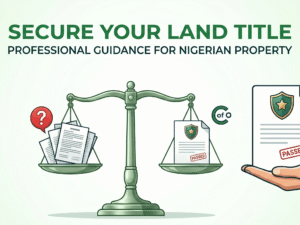
In simple terms, regularization is the process of asking the government to “forgive” the fact that you bought land that technically belongs to them, and to grant you a legal title (Certificate of Occupancy) in exchange for a fee.
Under the Land Use Act of 1978, all land in a state is vested in the Governor. If you buy land that hasn’t been formally “excised” (released) to the public, your ownership is technically invalid. Regularization bridges this gap, moving your status from a squatter to a legal leaseholder.
Why You Can’t Afford to Wait
-
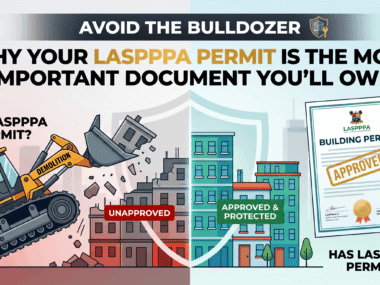
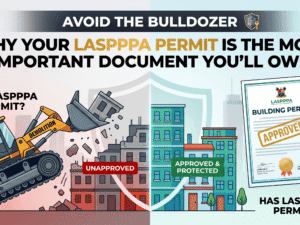
Avoid Demolition: Governments are increasingly using satellite imagery to track unapproved structures. Regularized properties are safe; unregularized ones risk being flagged for “illegal occupation.”
-
Collateral Power: You cannot use a “family receipt” or a “Deed of Agreement” to get a bank loan. Banks only recognize a registered Certificate of Occupancy (C of O) or a Governor’s Consent.
-
Appreciation: A property with a “Regularization in Progress” or a clean C of O can double in market value compared to one with vague documentation.
-
Digital Transparency: With the new e-GIS portals in Lagos and OLARMS in Ogun, the government can now see exactly who owns what. The days of “hiding” under the radar are over.
The Step-by-Step Process
While each state has its quirks, the general flow for regularization is now largely digital:
1. The Land Information Search
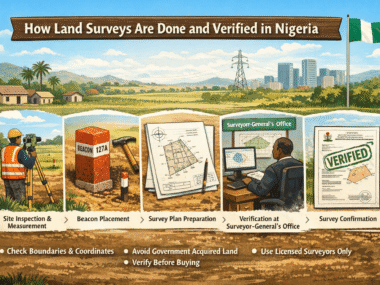
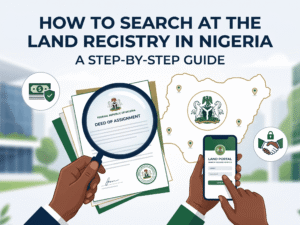
Before applying, you must conduct a “Land Information” search at the Surveyor General’s office. This tells you if the land is “Committed” (set aside for roads, power lines, etc.) or “Uncommitted” (eligible for regularization). If it’s committed, you likely won’t get a title.
2. Documentation
You will typically need:
-
A formal application letter.
-
The Sun-print Survey Plan (showing the exact coordinates).
-
Purchase receipts and a Deed of Assignment.
-
Recent Passport photographs.
-
Tax Clearance Certificates (this is a big one in 2026, the government wants to see your tax history).
3. Payment of Statutory Fees
This is where most owners stall. You will be required to pay:
-
Fair Market Value (Land Charges): A percentage of the current value of the land.
-
Stamping Duty.
-
Survey and Charting Fees.
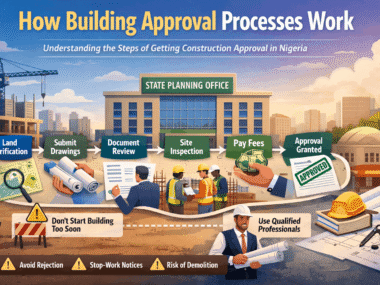
4. Site Inspection and Approval
Officials from the Lands Bureau will visit the site to confirm the building (if any) matches the survey and doesn’t infringe on public space. Once cleared, the file moves to the Governor’s desk for final signing.
Regularization vs. Rectification: Don’t Confuse Them!
-
Regularization (Ratification): You are asking the government to grant you title over land they technically own.
-
Rectification: You already have a registered title, but there is a mistake on it (like a misspelled name or wrong survey coordinates) that needs fixing.
Final Pro-Tip
If you are in Lagos, utilize the e-GIS portal to start your application online. If you are in Ogun, the OLARMS (Ogun State Land Administration and Revenue Management System) platform has simplified the process significantly, often offering “amnesty” windows with discounted rates.
The Bottom Line: Don’t wait for a “Red X” to be painted on your gate. Start the regularization process today and sleep soundly knowing your land is truly yours.
Disclaimer: Land laws vary by state and are subject to change. Always consult with a registered surveyor and a property lawyer to verify the current status of your specific plot.


 Daniel Okoye