 Daniel Okoye
The Lagos State Physical Planning Permit Authority (LASPPPA) is the statutory body responsible for the processing and issuance of physical planning permits in Lagos State. In an era where urbanization in Lagos has reached unprecedented levels, the authority serves as the gatekeeper for orderly, safe, and sustainable development. Despite the critical importance of these permits, data suggests that only about 25% of building plans in Lagos are officially approved by planning and building control agencies, highlighting a significant gap in regulatory compliance (Policy Awareness, 2026).
The Mandate of LASPPPA
LASPPPA operates under the Physical Planning Permit Regulation 2019, which empowers the agency to enforce local setbacks and ensure that all physical developments align with the state’s master plans (Legal Appraisal, n.d.). The authority’s primary goal is to prevent chaotic urbanization, which often results in slum proliferation, environmental degradation, and inefficient land use (Environmental Impacts, 2025).
The jurisdiction of LASPPPA is exclusive to state-level physical planning. While the Federal Government owns certain lands in Lagos, legal precedents have established that the Federal Government does not have the competence to legislate on physical planning or development control within the state (Legal Appraisal, n.d.).
The Step-by-Step Permit Process
Obtaining a building permit in Lagos is a structured process designed to verify the safety, aesthetics, and environmental impact of a proposed structure.
-
Pre-submission Consultation: Developers are encouraged to consult with LASPPPA officials to understand the zoning regulations and specific requirements for their chosen location.
-
Documentation: Applicants must submit a comprehensive dossier, including architectural drawings, structural engineering designs, mechanical and electrical plans, and evidence of land ownership (such as a Certificate of Occupancy or Governor’s Consent).
-
Vetting and Site Inspection: LASPPPA officials conduct site visits to ensure the land is not under government acquisition or located in a “committed” area, such as wetlands or floodplains (Environmental Impacts, 2025).
-
Payment of Fees: Once the plans are vetted, the applicant must pay the prescribed planning permit fees. These fees vary based on the building type, location, and volume.
-
Issuance of Permit: After all technical and financial requirements are met, the physical planning permit is issued, granting the developer the legal right to commence construction.
Key Regulatory Requirements
To secure an approval, a building plan must comply with several technical standards:
-
Setbacks: Buildings must maintain a specific distance from the road, neighboring properties, and drainage channels (Legal Appraisal, n.d.).
-
Floor Area Ratio (FAR): This limits the total floor area of a building in relation to the size of the land it sits on.
-
Building Height: Regulations often restrict building heights in certain residential zones to preserve the aesthetic and infrastructural balance of the neighborhood (Environmental Impacts, 2025).
-
Energy Efficiency: Recent policy trends emphasize Passive Climate-Responsive Retrofitting, encouraging designs that prioritize natural ventilation, shading, and thermal mass to reduce energy consumption (Policy Awareness, 2026).
The Consequences of Non-Compliance
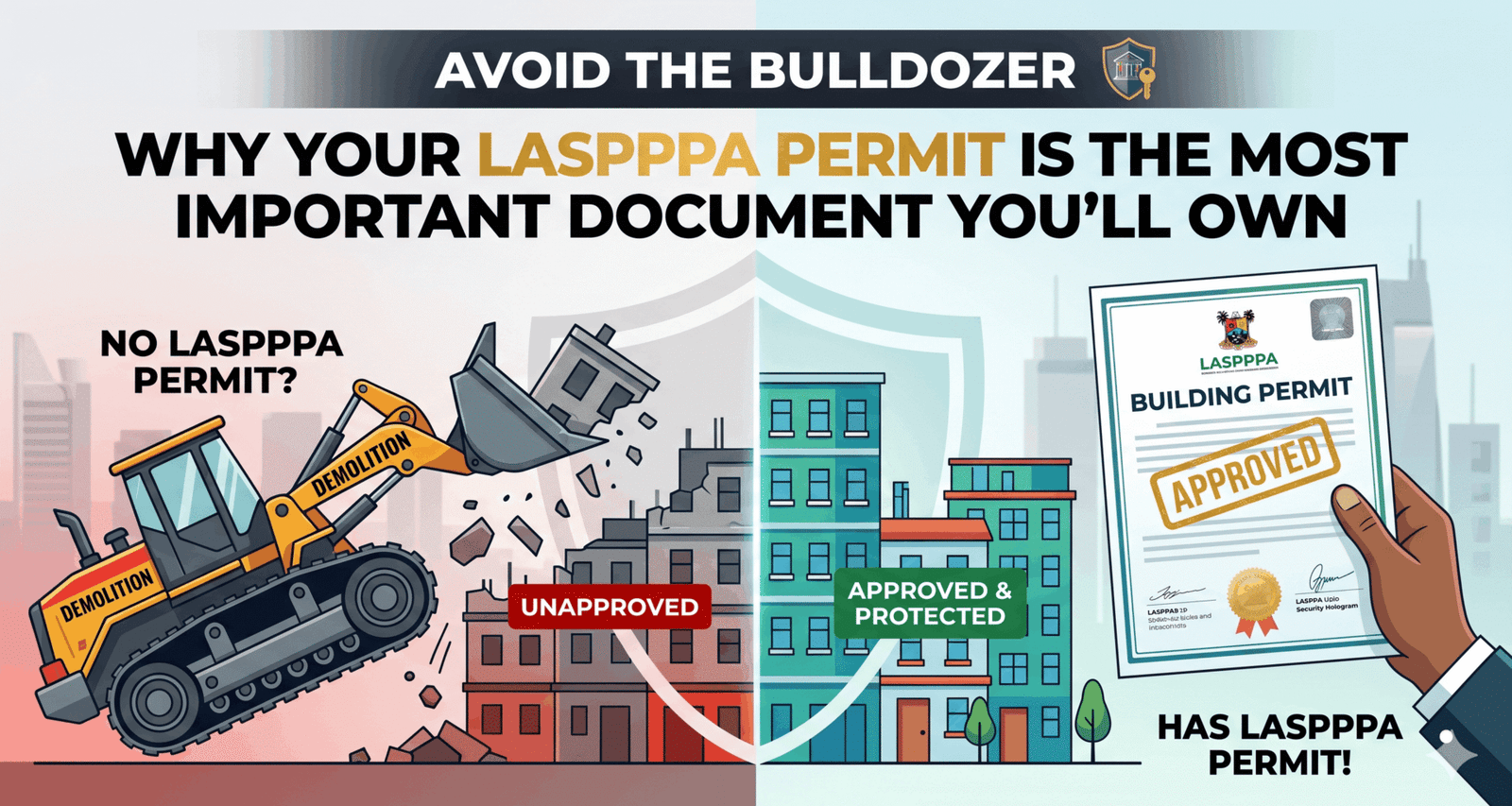
Building without a permit from LASPPPA is a high-risk venture. The agency frequently laments the proliferation of unauthorized structures that obstruct roads and drainage paths (Environmental Impacts, 2025).
-
Demolition: Unauthorized structures are liable to be marked for demolition to restore the master plan.
-
Environmental Hazards: Non-compliant construction in wetlands and floodplains exacerbates flooding and disruptions to the local ecosystem (Environmental Impacts, 2025).
-
Infrastructural Strain: Developments that bypass planning regulations often overburden existing sewage, water, and road networks, leading to increased maintenance costs for the state (Environmental Impacts, 2025).
Challenges in the Approval Process
Stakeholders often cite several barriers to obtaining permits, including:
-
Lack of Awareness: Many homeowners and property managers are unaware of specific passive retrofitting regulations or the full extent of the Physical Planning Permit Regulation 2019 (Policy Awareness, 2026).
-
Bureaucracy and Corruption: Perceptions of corruption and a lack of procedural fairness sometimes discourage developers from seeking official approval (Perceptions on Corruption, 2020).
-
Poverty and Ignorance: In peri-urban areas like Badagry, factors such as poverty and cultural resistance to formal regulations drive non-compliance (Environmental Impacts, 2025).
Modernizing Land Administration
The Lagos State Government has moved toward digitalizing LASPPPA’s operations to improve transparency and speed. Through online portals, developers can now track the status of their applications. Furthermore, the authority works alongside professional bodies like the Nigerian Institute of Architects (NIA) and the Nigerian Institute of Town Planners to ensure that restoration and redevelopment projects, especially for colonial or heritage buildings, meet modern safety standards while preserving cultural value (Valorization and Destruction, 2025).
Conclusion
A building permit from LASPPPA is more than a piece of paper; it is a validation that a structure is safe for habitation and harmonious with its environment. As Lagos continues to expand, adhering to these regulatory frameworks is essential for preventing disasters and ensuring that the “Center of Excellence” remains a liveable city for future generations.


 Daniel Okoye