 Daniel Okoye
Salary payment is one of the most important processes in any Nigerian company. For employees, it determines financial stability and trust. For employers, it reflects structure, compliance, and professionalism. While salary payment may look simple from the outside, the system behind it involves several steps, decisions, and variations depending on the company, industry, and size of the organization.
This article explains how salary payment systems work in Nigerian companies, from how salaries are structured to how payments are processed and what challenges commonly arise.
Understanding Salary Structure in Nigeria
In most Nigerian companies, salaries are not paid as a single lump sum without breakdown. They are usually structured into components that define how much an employee earns and what deductions apply.
The common components include basic salary, allowances, and deductions. The basic salary is the fixed part of the employee’s pay and often forms the basis for calculating pensions, taxes, and other benefits. Allowances may include housing, transport, meal, utility, or responsibility allowances, depending on the company. Deductions may include pension contributions, tax deductions, cooperative savings, loan repayments, or other agreed deductions.
Some companies operate a consolidated salary system, where all components are combined into one figure. In such cases, deductions like tax and pension are calculated from the total amount rather than separated allowances.
How Companies Determine Salary Amounts
Salary amounts in Nigerian companies are influenced by several factors. Industry standards play a major role, as salaries in banking, oil and gas, tech, and telecommunications are often higher than those in retail, education, or small service businesses. Company size also matters. Larger companies with stronger revenue streams usually pay more structured and competitive salaries than smaller firms.
Employee role, qualifications, experience, and negotiation skills also affect salary levels. In many Nigerian companies, especially private firms, salaries are negotiated individually rather than strictly fixed.
Location is another factor. Companies operating in major cities like Lagos, Abuja, or Port Harcourt may offer higher pay due to higher living costs.
Salary Payment Frequency
Most Nigerian companies pay salaries on a monthly basis. This is the standard across both public and private sectors. However, some companies, especially in manufacturing, construction, or security services, may operate weekly or bi-weekly payment systems.
Daily or task-based payments are also common in informal or contract roles, such as casual labor, field agents, or artisans. In these cases, payment is tied directly to work completed rather than a fixed monthly salary.
The payment date varies by company. Some pay at the end of the month, others in the first week of the following month, and some on a fixed date like the 25th or 30th.
Salary Processing and Approval
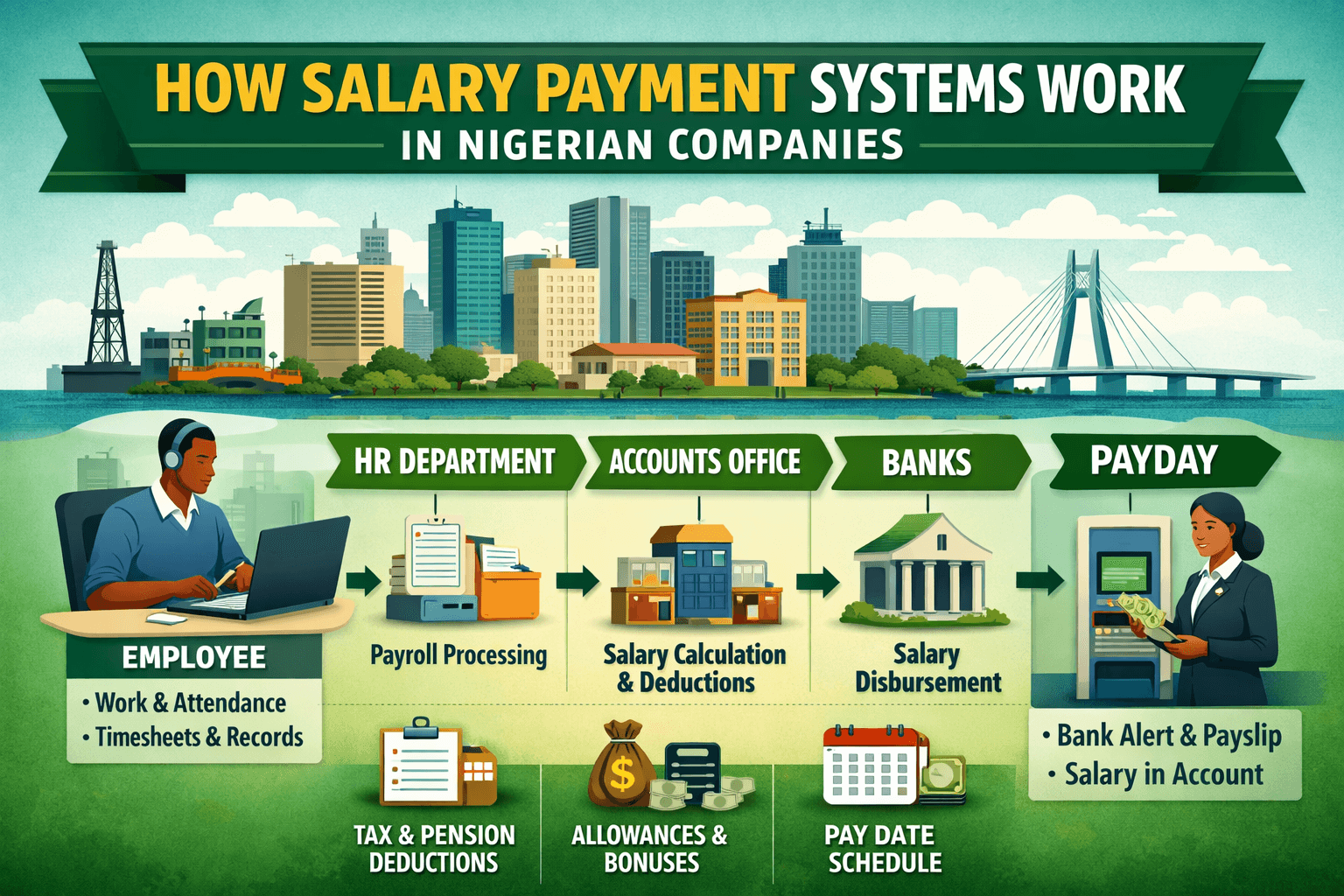
Before salaries are paid, most companies go through a salary processing stage. This usually starts with attendance tracking or performance confirmation. In companies that use attendance systems, employee presence, lateness, or absences may affect final salary figures.
The human resources or accounts department typically prepares the payroll. This involves calculating each employee’s gross pay, deductions, and net pay. The payroll is then reviewed and approved by management or the finance head before payment is released.
In smaller companies, this process may be handled by one person or even the business owner. In larger organizations, multiple layers of approval exist to prevent errors or fraud.
Payment Methods Used in Nigeria
Bank transfers are the most common method of salary payment in Nigerian companies. Salaries are paid directly into employees’ bank accounts using online banking platforms, bulk payment systems, or payroll software.
Some small businesses still pay salaries in cash, especially where employees do not have bank accounts or where banking access is limited. However, this method is gradually declining due to security and accountability concerns.
Mobile money and fintech platforms are also becoming more common, especially among startups and remote teams. These platforms allow faster transfers and easier record-keeping.
Regardless of the method used, companies are expected to provide some form of payment record, such as a payslip or transaction alert.
Tax and Statutory Deductions
Salary payment systems in Nigeria involve statutory deductions required by law. One of the most important is Pay As You Earn (PAYE) tax, which is deducted from employees’ salaries and remitted to the relevant state tax authority.
Pension contributions are also mandatory for companies with a certain number of employees. Both the employer and employee contribute a percentage of the employee’s salary to a registered pension fund administrator.
Other deductions may include National Housing Fund contributions, cooperative savings, union dues, or company loan repayments. These deductions must be clearly communicated to employees to avoid disputes.
Common Challenges in Salary Payment Systems
One major challenge in Nigerian companies is delayed salary payment. This often occurs due to cash flow issues, poor financial planning, or delayed client payments. Delays can affect employee morale and productivity.
Another challenge is lack of transparency. In some companies, employees do not fully understand how their salaries are calculated or why certain deductions are made. This can lead to mistrust and dissatisfaction.
Errors in payroll calculation are also common, especially in companies that rely on manual processes. Incorrect deductions, missed payments, or inconsistent salaries can create ongoing issues if not addressed promptly.
What Employees Should Pay Attention To
Employees should always understand their salary structure and know what deductions apply to their pay. Requesting a payslip or salary breakdown helps clarify how net pay is calculated.
It is also important to confirm payment schedules and methods during employment discussions. Knowing when and how salary will be paid reduces confusion and unrealistic expectations.
Employees should also monitor deductions like tax and pension to ensure they are properly remitted.
Conclusion
Salary payment systems in Nigerian companies involve more than just sending money to employees. They include salary structure, approval processes, statutory deductions, and payment methods. While systems vary across companies and industries, transparency, consistency, and proper communication are key to effective salary management.
Understanding how these systems work helps both employers and employees avoid misunderstandings and build trust in the workplace.

Daniel Okoye
Daniel Okoye is a writer and researcher at ProcesslyHub. I focus on explaining Nigerian systems, housing processes, and everyday business workflows in simple and practical terms. My goal is to help readers understand how real-world processes work so they can make informed decisions and avoid costly mistakes.

 Daniel Okoye